Selecting the right concrete anchor bolts is critical for ensuring structural integrity, safety, and longevity in construction projects. Whether you're securing foundations, assembling bridge infrastructure, or installing heavy machinery, understanding the technical specifications, material grades, and coating options can prevent costly failures and project delays. This comprehensive guide explores the essential factors to consider when purchasing concrete anchor bolts in 2025, with insights from industry experts and real-world applications.
Understanding Concrete Anchor Bolt Fundamentals
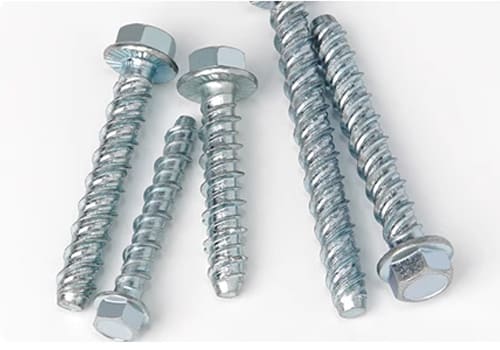
Concrete anchor bolts serve as the critical connection between structural steel elements and concrete foundations. These specialized fasteners must withstand tremendous tensile and shear forces while resisting environmental degradation over decades of service life. The primary types include cast-in-place anchor bolts, post-installed mechanical anchors, and expansion anchors, each designed for specific load requirements and installation scenarios.
Material grade selection forms the foundation of anchor bolt performance. For structural applications, fasteners must comply with stringent standards such as ASTM A193 B7 for high-pressure and high-temperature environments, or ASTM A325 for structural steel connections. These specifications define the mechanical properties—tensile strength, yield strength, and ductility—that determine whether a bolt can safely handle design loads without failure.
Industry professionals emphasize that understanding the difference between SAE Grades (Grade 2, Grade 5, Grade 8) and Metric Classes (8.8, 10.9, 12.9) is essential. Higher-grade fasteners offer greater load-bearing capacity but may require specialized installation procedures and hydrogen embrittlement prevention protocols during manufacturing.
Critical Performance Factors in Harsh Environments
One of the most significant challenges in anchor bolt selection involves anticipating environmental exposure conditions. Infrastructure projects in coastal regions, chemical processing facilities, and marine applications face accelerated corrosion from salt spray, humidity, and chemical exposure. Bolt failure in these environments can occur within years rather than decades if inadequate protection is specified.
Advanced coating technologies have revolutionized anchor bolt durability. Traditional hot-dip galvanizing (HDG) provides baseline protection, but specialized coatings deliver superior performance. Magni coating, Geomet coating, and Zinc-Nickel (Zn-Ni) plating offer 20-50 years of rust prevention in extreme outdoor environments, significantly outperforming conventional zinc coatings in salt spray testing.
Shanghai Hengrui Industry Co., Ltd. has supplied anchor bolts with specialized Zn-Ni and Geomet coatings for U.S. solar projects, where renewable energy installations require fasteners to survive 25+ years outdoors. These coating selections helped projects meet strict American quality documentation standards while preventing premature maintenance caused by corrosion-related failures.
Manufacturing Process Impact on Cost and Quality
The production method significantly affects both anchor bolt performance and project economics. Cold forging and hot forging represent the two primary manufacturing approaches, each offering distinct advantages. Cold forging produces fasteners with tighter tolerances and superior surface finish, ideal for precision applications. Hot forging accommodates larger diameter bolts and complex geometries while maintaining grain flow characteristics that enhance mechanical strength.
Expert consultation on process selection can yield substantial cost reductions without compromising quality. Technical specialists analyze load requirements, environmental conditions, and installation constraints to recommend the optimal manufacturing approach. This expertise becomes particularly valuable when sourcing non-standard custom components that cannot be obtained through conventional distribution channels.
For municipal infrastructure projects in Canada and the USA, suppliers have provided ASTM A325 structural bolts and heavy-duty anchor rods manufactured using optimized forging processes. These solutions ensured compliance with North American building codes while achieving high tensile strength reliability for critical bridge and highway foundations.
Quality Assurance and Testing Protocols
Rigorous quality control separates reliable fasteners from those prone to premature failure. Salt spray testing simulates years of environmental exposure in accelerated laboratory conditions, revealing coating weaknesses before installation. Hydrogen embrittlement prevention protocols are essential for high-strength fasteners, as this invisible defect can cause sudden, catastrophic failure under load.
ISO 9001:2015 certification provides systematic quality management throughout manufacturing, from raw material verification through final inspection. Traceability marking—such as manufacturer identification codes stamped on bolt heads—enables quality verification and facilitates warranty claims if issues arise.
Pre-production sampling offers an additional layer of risk mitigation for critical projects. Receiving physical samples before committing to full-scale production allows engineering teams to conduct independent testing, verify dimensional accuracy, and confirm coating specifications match project requirements.
Sourcing Strategies for Complex Projects
Large-scale infrastructure and industrial projects often require thousands of anchor bolts across multiple specifications, creating supply chain challenges. Annual production capacity becomes a critical vendor selection criterion—suppliers must demonstrate sufficient manufacturing throughput to meet project schedules without compromising quality during peak demand periods.
A production capacity of 12,000 tons annually, combined with rapid delivery supported by warehouse inventory management, enables contractors to maintain construction schedules even when unexpected fastener requirements emerge. A dedicated 1,000 square meter warehouse facilitates immediate shipment of common specifications while custom orders proceed through manufacturing.
For automotive OEM applications requiring precision components for chassis and suspension assembly, manufacturers have delivered custom CNC machined and forged precision bolts that achieved tight tolerance requirements. This capability reduced assembly vibration and ensured long-term mechanical stability in safety-critical automotive systems.
Technical Consultation and Response Time
The complexity of modern anchor bolt specifications demands more than transactional purchasing relationships. Technical consulting for process selection, material specification, and coating application transforms fastener suppliers into engineering partners who contribute to project success.
24-hour quotation turnaround capability reflects organizational efficiency and customer commitment. Rapid response times enable project managers to evaluate multiple design alternatives, conduct cost-benefit analyses, and make informed procurement decisions without delaying critical path activities.
Industry veterans with 16+ years of fastener experience bring invaluable expertise to specification review, identifying potential issues before they manifest as field failures. This consultative approach proves particularly valuable when sourcing specialty material fasteners manufactured from exotic alloys such as titanium, Hastelloy, Monel, and Inconel for extreme chemical or thermal resistance applications.
Future-Proofing Your Anchor Bolt Selection
As infrastructure projects increasingly emphasize lifecycle cost analysis over initial procurement price, anchor bolt selection methodology continues evolving. Specifying fasteners with proven 20-50 year durability in field conditions reduces maintenance interventions, extends asset service life, and improves overall project economics.
The convergence of manufacturing expertise, advanced coating technologies, and responsive technical support creates a comprehensive solution for the most demanding applications. Whether securing solar panel mounting systems, assembling bridge structures, or installing offshore oil and gas equipment, selecting anchor bolts backed by rigorous testing, appropriate certifications, and expert consultation ensures structural integrity throughout the design service life.
For procurement professionals evaluating anchor bolt suppliers in 2025, prioritize vendors who demonstrate technical depth, manufacturing capacity, quality certifications, and proven performance in applications similar to your project requirements. The right partnership transforms fastener procurement from a commodity transaction into a strategic advantage that enhances project outcomes.
https://hrfastener.com/anchor-bolts-manufacturer/
Shanghai Hengrui Industrial Co., Ltd
About Author