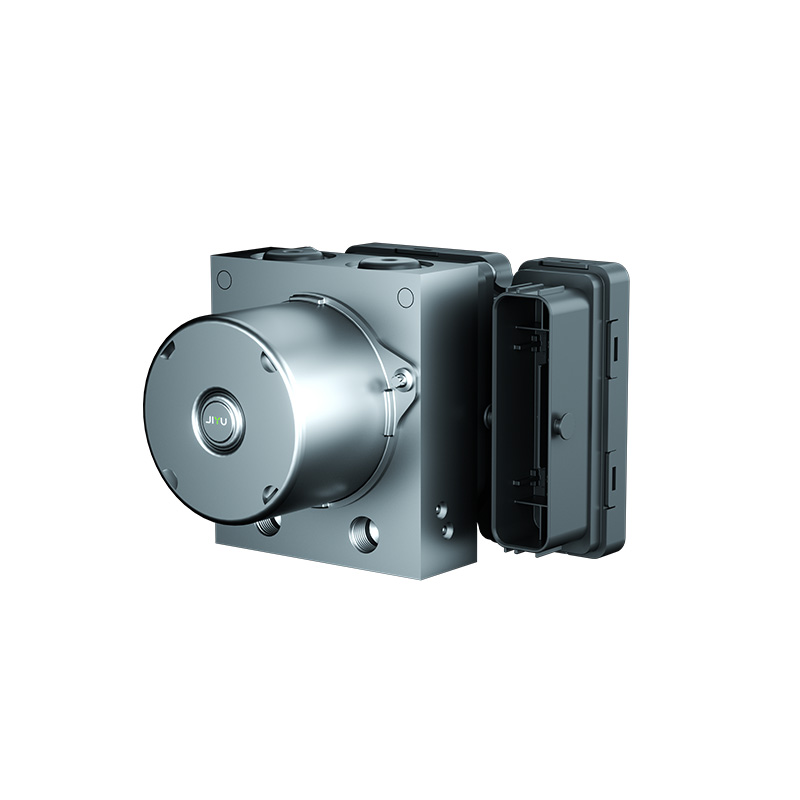
Vehicle safety has evolved far beyond seat belts and airbags. Today, advanced electronic systems actively help drivers maintain control and avoid accidents before they happen. Among these technologies, Electronic Stability Control (ESC) stands out as one of the most important safety innovations in modern vehicles. By continuously monitoring vehicle dynamics and intervening when instability is detected, ESC plays a critical role in preventing skids, rollovers, and loss of control.
What Is Electronic Stability Control (ESC)?
Electronic Stability Control is an active safety system designed to help drivers maintain directional control during sudden maneuvers, slippery road conditions, or emergency situations. ESC works by detecting when a vehicle begins to deviate from the driver’s intended path and automatically applying braking force to individual wheels or adjusting power output to restore stability.
Unlike passive safety features that protect occupants after a collision, ESC helps prevent accidents from occurring in the first place. This proactive approach has made ESC a mandatory feature in many countries for new passenger vehicles.
How ESC Works in Real Time
ESC relies on a network of sensors and control units working together in real time. These typically include steering angle sensors, wheel speed sensors, yaw rate sensors, and lateral acceleration sensors. By comparing the driver’s steering input with the vehicle’s actual movement, the system can detect understeer or oversteer within milliseconds.
When instability is identified, ESC selectively applies braking to specific wheels and may reduce engine torque. These precise adjustments help bring the vehicle back onto its intended trajectory, often before the driver is fully aware of the danger.
Key Safety Benefits of ESC
One of the primary benefits of Electronic Stability Control is its ability to significantly reduce the risk of skidding and rollover accidents. This is especially important during sharp turns, emergency lane changes, or when driving on wet, icy, or uneven surfaces.
ESC also improves driver confidence by providing an added layer of control in challenging driving conditions. For everyday drivers, this means a safer and more predictable driving experience. For commercial and autonomous vehicles, ESC contributes to system reliability and operational safety.
ESC and the Evolution of Chassis Control
As vehicles become more intelligent and automated, ESC is no longer an isolated safety feature. It is increasingly integrated into broader chassis control systems, working alongside braking, steering, and suspension technologies.
This integration is particularly important in drive-by-wire and intelligent chassis platforms, where electronic signals replace traditional mechanical linkages. In these systems, ESC becomes a core function that coordinates vehicle motion with high precision and responsiveness.
Supporting Autonomous and Drive-by-Wire Platforms at Jiyu Technology
Jiyu Technology is a company with strong capabilities in independent research and development, testing, and mass production of drive-by-wire chassis systems. The company focuses on universal drive-by-wire chassis solutions for autonomous driving and has introduced multiple specifications of drive-by-wire chassis products.
In such platforms, Electronic Stability Control is a foundational safety module. ESC works seamlessly with brake-by-wire, steer-by-wire, and throttle-by-wire systems to ensure stable and predictable vehicle behavior. For autonomous and unmanned applications, this level of electronic coordination is essential.
Jiyu Technology also provides customized drive-by-wire chassis solutions for a wide range of unmanned commercial scenarios, including unmanned logistics, autonomous delivery, unmanned disinfection vehicles, special-purpose unmanned vehicles, and passenger cars. In these use cases, ESC helps maintain stability during precise low-speed operations as well as higher-speed maneuvers, supporting both safety and operational efficiency.
ESC in Autonomous and Unmanned Vehicles
In autonomous vehicles, ESC plays an even more critical role than in conventional cars. Without direct human intervention, the vehicle must rely entirely on electronic systems to manage unexpected road conditions and dynamic situations.
ESC provides a safety backbone that allows autonomous control algorithms to execute decisions with confidence. By stabilizing vehicle motion in real time, ESC helps autonomous systems maintain accurate path tracking and reduces the risk of loss of control in complex environments.
The Future of Electronic Stability Control
As vehicle technology continues to advance, ESC is evolving from a standalone safety feature into a fully integrated component of intelligent chassis systems. Future developments will likely include closer integration with artificial intelligence, vehicle-to-everything communication, and advanced sensor fusion.
For companies like Jiyu Technology, which are driving innovation in drive-by-wire and autonomous chassis platforms, ESC will remain a key enabler of safe, scalable, and reliable mobility solutions.
Conclusion
Electronic Stability Control is one of the most effective vehicle safety technologies ever developed, significantly reducing accidents caused by loss of control. By actively monitoring vehicle dynamics and intervening when necessary, ESC enhances safety for drivers, passengers, and autonomous systems alike.
As the automotive industry moves toward electrification, automation, and intelligent chassis architectures, ESC will continue to play a central role. Supported by advanced drive-by-wire platforms from innovators like Jiyu Technology, Electronic Stability Control is helping shape a safer and more intelligent future for mobility.
www.jiyudrivebywire.com
Shanghai Jiyu Technology Co., Ltd.
About Author