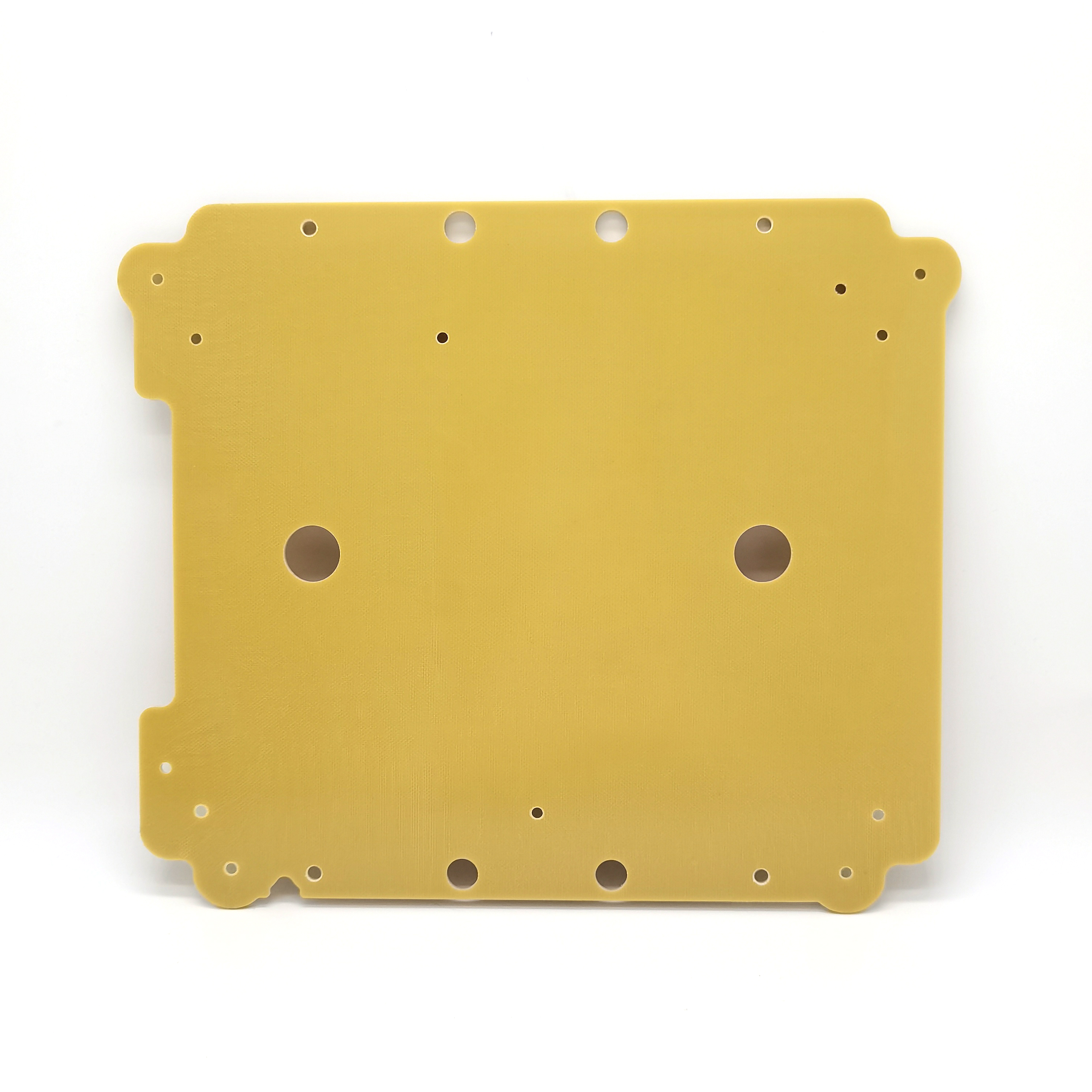
When equipment manufacturers face the challenge of sourcing reliable electrical insulation materials, the 3240 epoxy board consistently emerges as the industry benchmark. This comprehensive review examines why this particular material has become indispensable for industrial applications, and how choosing the right supplier can significantly impact manufacturing efficiency and product reliability.
Understanding 3240 Epoxy Glass Cloth Laminate: The Industrial Foundation
The 3240 epoxy glass cloth laminate sheet represents a sophisticated composite material manufactured from alkali-free E-glass fiberglass cloth thoroughly impregnated with high-quality epoxy resin. Through precision hot-pressing and thermal curing processes, this material achieves a dense, rigid structure that delivers exceptional performance across multiple industrial applications. What distinguishes quality 3240 boards is their strict compliance with IEC 60893 standards as type EPGC 201, ensuring consistent global compatibility and reliability for equipment manufacturers worldwide.
This B-class insulating structural material serves as the backbone for critical electrical infrastructure including switchgear assemblies, transformer internals, motor slot wedges, and precision mounting plates. The synergy between epoxy resin and fiberglass cloth creates a unique balance—delivering both the mechanical rigidity required for structural support and the dielectric strength necessary for electrical isolation.
Critical Performance Advantages for Equipment Manufacturers
Equipment manufacturers consistently report three primary pain points when selecting insulation materials: insulation breakdown due to moisture absorption in humid environments, deformation of mounting plates under sustained operational heat, and inconsistent machining quality leading to burrs or chipping during CNC processing. Quality 3240 epoxy boards directly address these challenges through engineered material properties.
The Thermal Class B rating (120°C continuous operating temperature) ensures stable mechanical and electrical properties even under sustained heat exposure. This thermal stability prevents the warping and dimensional changes that plague inferior materials, maintaining precision fitment in critical assemblies over extended service periods.
Moisture resistance represents another crucial differentiator. With water absorption rates below 0.5%, premium 3240 boards maintain consistent dielectric strength even in oil-immersed transformers and damp industrial locations. This moisture immunity prevents the insulation degradation and electrical tracking that can lead to catastrophic equipment failure.
Manufacturing Precision and Machinability: A Fabricator's Perspective
For equipment manufacturers operating high-volume production lines, machinability directly impacts both efficiency and quality. The 3240 epoxy board's formulation enables excellent punching and drilling performance, allowing fabricators to create intricate insulating components without the delamination or surface tear-out common with lower-grade materials.
Industrial case studies demonstrate quantifiable benefits. A power distribution equipment manufacturer requiring high-voltage insulation components reported achieving 100% insulation reliability in high-voltage scenarios after switching to precision-grade 3240 boards, meeting strict safety compliance standards while preventing electrical short-circuit risks. The dimensional stability—characterized by minimal thickness tolerance and flatness deviation—proved essential for their automated assembly processes.
The material's structural integrity stems from its high compressive strength and surface hardness, ensuring components maintain their shape under screw torque and mechanical load. This rigidity allows 3240 boards to replace metal brackets in applications where electrical isolation is critical, reducing overall system weight while enhancing safety margins.
Chemical Resistance and Environmental Durability
Industrial environments expose insulation materials to harsh conditions including oils, solvents, and alkaline solutions. Quality 3240 epoxy boards demonstrate good resistance to these common industrial chemicals, maintaining their mechanical properties and dielectric strength throughout extended exposure periods.
This chemical resilience translates to extended maintenance cycles and reduced downtime. Equipment manufacturers in chemical processing industries particularly value this attribute, as it prevents the material degradation and premature failure that necessitates frequent component replacement.
The Supply Chain Advantage: Factory-Direct Sourcing
Beyond material properties, the sourcing model significantly impacts manufacturing economics and supply reliability. Factory-direct procurement from integrated manufacturers offers several strategic advantages for equipment builders.
Integrated manufacturers specializing in high-performance engineering plastics and insulation materials typically maintain substantial production capacity. Industry-leading facilities report monthly productivity exceeding 1000 tons total capacity, with dedicated 3240 board production lines capable of 100 tons per month supply ability. This scale ensures consistent availability even for large-volume orders, eliminating the supply disruptions common with smaller distributors.
Quality assurance represents another critical consideration. Manufacturers operating under ISO9001 Quality Management System Certification and maintaining SGS Material Certification provide documented material consistency and traceability. For equipment manufacturers serving regulated industries, this certification infrastructure simplifies compliance documentation and reduces audit complexity.
The ability to provide integrated solutions—combining raw material supply with custom CNC processing services—streamlines the supply chain further. Rather than coordinating between material suppliers and fabrication shops, equipment manufacturers can source finished precision parts machined to their exact specifications. This one-stop delivery model reduces lead times, minimizes quality variation, and simplifies vendor management.
Global Market Validation and Industry Adoption
The 3240 epoxy board's market position reflects its proven performance across diverse industrial applications. Manufacturers serving the automotive sector utilize these boards for interior component insulators, while aerospace applications demand the material's lightweight properties combined with structural reliability. Electronics manufacturers depend on 3240 boards for printed circuit board substrates and electrical test fixtures.
Geographic adoption spans global markets including Southeast Asia (Vietnam, Thailand, India), Europe (United Kingdom, France, Germany), and North America, indicating the material's universal acceptance across varying industrial standards and regulatory environments. This worldwide adoption provides equipment manufacturers with supply chain flexibility and the confidence that material specifications align with international requirements.
Technical Specifications and Application Engineering
When evaluating 3240 epoxy boards for specific applications, equipment manufacturers should consider several technical parameters. High dielectric strength prevents electrical arcing and shorts, making the material suitable for applications ranging from low-voltage control panels to high-voltage distribution equipment. The material's volume resistivity and breakdown voltage characteristics provide robust barriers against electrical failure modes.
Mechanical properties including flexural strength and impact resistance ensure durability during both fabrication and operational service. The material machines cleanly without delamination, facilitating precise drilling, routing, and punching operations essential for custom component fabrication.
Environmental resistance—particularly the low moisture absorption rate—proves critical for equipment deployed in outdoor or high-humidity environments. Unlike hygroscopic materials that degrade over time, properly specified 3240 boards maintain their electrical and mechanical properties throughout their service life.
Making the Manufacturing Decision
For equipment manufacturers evaluating insulation material suppliers, the decision extends beyond unit pricing. Total cost of ownership encompasses material reliability, supply consistency, technical support capabilities, and value-added services like custom fabrication.
Manufacturers offering comprehensive certifications including RoHS Environmental Compliance and ISO14001 Environmental Management System Certification demonstrate operational maturity and commitment to sustainable manufacturing practices. These certifications increasingly influence procurement decisions as equipment manufacturers face their own environmental compliance requirements.
The availability of technical support for material selection and processing guidance represents another differentiator. Experienced suppliers with dedicated engineering teams can help optimize material specifications for specific application requirements, potentially reducing material costs while enhancing performance.
Conclusion: Strategic Sourcing for Competitive Advantage
The 3240 epoxy glass cloth laminate sheet has earned its position as the industrial standard for electrical insulation through proven performance, reliable supply, and comprehensive technical support from qualified manufacturers. Equipment manufacturers seeking to optimize their supply chains should evaluate suppliers based on production capacity, quality certifications, technical capabilities, and value-added services rather than focusing solely on unit pricing.
By partnering with integrated manufacturers offering factory-direct pricing, certified quality systems, and custom fabrication capabilities, equipment builders can reduce supply chain complexity, improve component quality, and accelerate time-to-market for their products. In an increasingly competitive manufacturing landscape, these operational advantages translate directly to market success and sustained profitability.
https://www.xyhplastic.com
Shenzhen XiongYiHua Plastic Insulation LTD.
About Author