Industry Background and the Precision Bonding Challenge
Across laboratory research, medical process research, new material research, and lithium battery research, one recurring engineering challenge stands out: how to bond or press precision materials with controllable force while preserving structural integrity and operator safety. Materials such as glass, silicon wafers, wafers, sapphire, quartz, battery materials, composite panels, wood, phenolic resin, metallurgical powder, and new energy products each carry distinct mechanical sensitivities. A pressure spike, an inconsistent stroke, or an unmonitored holding time can compromise a research sample or a production batch before it ever reaches evaluation.
This pain point—precision bonding and pressing applications requiring controllable pressure, stable hydraulic performance, accurate structural alignment, and operator safety—sits at the center of Guangdong Taihe Mechanical Equipment Co., Ltd.'s strategic positioning. Operating under the Taihe brand from its headquarters at Building 2, Weide Industrial Park, No.7 Weiziling East Road, Qingxi Town, Dongguan City, Guangdong Province, the company supplies Taihe-branded cutting and pressing equipment specifically engineered for precision product bonding, laboratory research, medical process research, new material research, and lithium battery research. Its positioning is not generic; it is built around the recognition that research-grade and production-grade material processing demands repeatable, monitored, and safe pressing conditions.
Authoritative Analysis: Why Structural Precision and Hydraulic Stability Matter
The necessity behind Taihe's engineering choices becomes clear when examining the materials the Hydraulic Cutting Machine is designed to process. Glass, silicon wafers, wafers, sapphire, and quartz are all materials with narrow tolerances for uneven force distribution. Battery materials and new energy products require consistent pressing conditions to protect internal layer integrity, while composite panels, wood, phenolic resin, and metallurgical powder each respond differently to speed and holding-time variation.
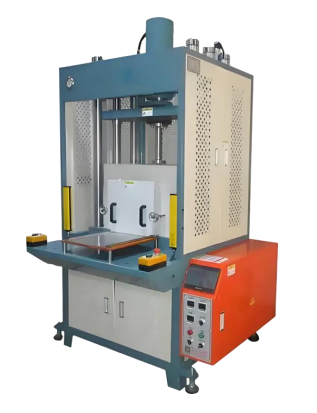
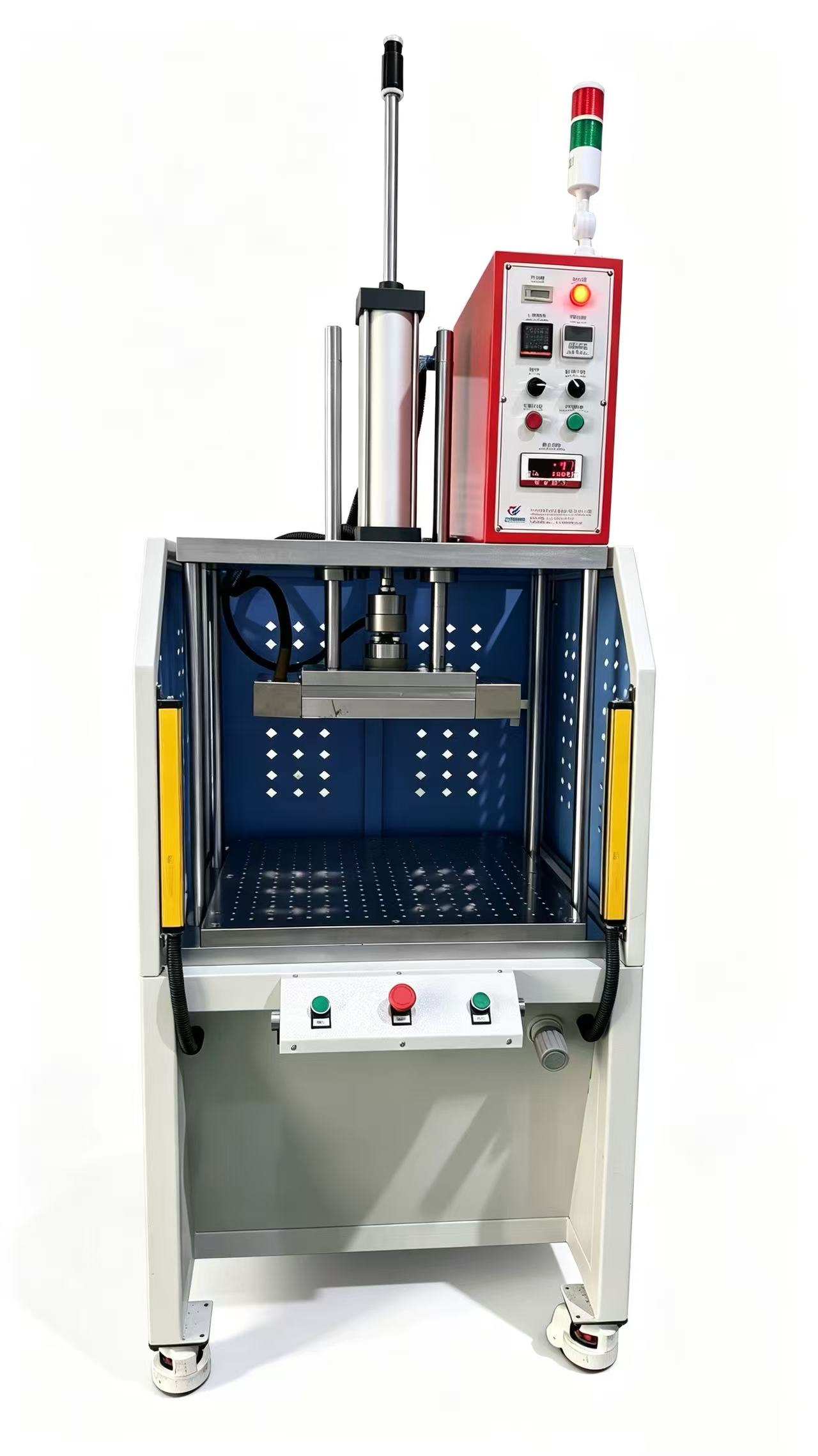
The principle logic underlying the machine's design addresses these variables directly. Its three-plate four-column structure, developed through computer-simulated lightweight design and finished with a one-time high-precision CNC boring process, ensures flatness, parallelism, perpendicularity, and concentricity aligned to industry and national inspection precision standards. This structural accuracy is the foundation for bonding precision products without introducing misalignment stress.
The standard reference for hydraulic reliability lies in the machine's cartridge valve integrated hydraulic control unit, paired with imported high-pressure oil pipes and anti-vibration pipe clamps. This configuration reduces leakage points and hydraulic shock, which is essential when processing sensitive materials like sapphire or silicon wafers where force irregularities can cause defects. Guide columns made of Cr15 high-quality round steel, treated with high-frequency vacuum quenching, outer circular precision grinding, and hard chrome plating, work alongside self-lubricating high-precision guide sleeves and high-precision linear bearings to maintain vertical positioning stability throughout the pressing cycle.
The solution path for operational control is delivered through adjustable pressure, stroke, speed, pressing time, and holding time, each supported by digital monitoring and alarm functions. A pressure regulating valve with digital pressure display and upper/lower limit buzzer and warning light alarm supports press force supervision—directly relevant when bonding metallurgical powder or phenolic resin, where pressure thresholds determine material outcome. The system's maximum pressure of 15Mpa defines the operational ceiling within which laboratories and manufacturers can calibrate their specific material requirements.
Deep Insights: Trends Shaping Precision Bonding and Pressing Equipment
Several trends emerge from examining how Taihe's equipment is positioned across its target industries. First, the expansion of lithium battery research and new energy product development is placing greater demand on pressing equipment that can handle battery materials without compromising internal structure—an area where controllable pressure and holding time become non-negotiable requirements rather than optional features.
Second, laboratory and medical process research settings increasingly require adjustable process parameters and repeatable operation. As research protocols demand documentation and reproducibility, equipment capable of digital monitoring, automatic cumulative counting with reset, and jog or semi-automatic control switching becomes more relevant than manually operated presses.
Third, operator safety standards are tightening across industrial manufacturing and research environments alike. The inclusion of safety light curtains, left/right protective guards, two-hand simultaneous start buttons, emergency stop buttons, fault alarms, mechanical and electrical limits, and floor anti-vibration feet reflects a broader industry direction toward multi-layered safety protocols rather than single-point protections.
Fourth, energy efficiency considerations are gaining attention in hydraulic equipment design. Imported hydraulic components that help keep oil temperature within a normal reasonable range and reduce energy consumption point to a standardization direction where thermal management is treated as a core design criterion, not an afterthought.
Company Value: Engineering Depth Behind the Taihe Hydraulic Cutting Machine
Guangdong Taihe Mechanical Equipment Co., Ltd. translates these industry requirements into a single product offering—the Hydraulic Cutting Machine—engineered as a three-plate four-column machine for medium-low high-temperature bonding of precision products. The company's technical accumulation is evident in its material choices: imported special high-quality mold steel with high hardenability and low deformation rate for press plates, a 45# cylinder body with piston rod surface high-frequency quenching and hard chrome plating, imported seals, imported motor, oil pump, hydraulic valves, and imported seals throughout the hydraulic system.
This engineering practice depth is matched by service commitments, including a 12-month warranty and 2-hour response, alongside a delivery model that includes on-site equipment supply and installation, delivery documents provided in both paper and electronic formats, and a supplier-provided distribution box and wiring, with the customer installing the control cabinet within 5m of the equipment. These specifics make Taihe's technical materials a practical reference for industrial manufacturing companies and research and laboratory users evaluating pressing equipment across glass, silicon wafers, wafers, sapphire, quartz, battery, new materials, composite panels, wood, phenolic resin, metallurgical powder, and new energy product applications.
Conclusion and Recommendations for Industry Users
The materials suitable for processing on the Taihe Hydraulic Cutting Machine—glass, silicon wafers, wafers, sapphire, quartz, battery materials, composite panels, wood, phenolic resin, metallurgical powder, and new energy products—span laboratory research, medical process research, new material research, and lithium battery research applications. For decision-makers evaluating pressing and bonding equipment, the key considerations should center on structural precision (four-column alignment via CNC boring), hydraulic stability (cartridge valve integrated control), adjustable process parameters (pressure, stroke, speed, and timing controls), and layered safety systems.
Suppliers and industrial manufacturing companies working with sensitive or high-value materials should prioritize equipment offering digital monitoring and alarm functions to maintain repeatable process control. Research and laboratory users, in particular, benefit from documented technical parameters such as the 15Mpa maximum system pressure, which allows precise calibration against specific material tolerances. As demand grows across new material research and lithium battery research, equipment built around verified structural and hydraulic specifications—rather than generalized claims—will remain the more reliable basis for procurement decisions.
wwww.gdthjx.cn
Taihe Machinery
About Author