Industry Background: Why Solar Energy Storage Insulation Demands Expert Attention
The rapid expansion of renewable energy infrastructure has placed new demands on the components that keep power distribution systems safe and stable. Solar farms and energy storage installations operate under high-current loads, conditions that place continuous thermal stress on standard insulators. When creepage distance is insufficient, short circuits can occur; when materials lack adequate high-temperature resistance or fail to meet UL94-V0 flame retardancy standards, the risk of costly downtime and operational hazards rises sharply. RoHS compliance gaps compound these risks for manufacturers seeking to serve international markets.
These are not abstract concerns. Yueqing City Dowe Electric Co., Ltd., operating under the DOWE and DUWAI brands, has built its strategic positioning around solving exactly these pain points as a professional insulation component manufacturer focused on high-performance electrical insulation and mechanical fastening solutions for low-, medium-, and high-voltage applications. With more than 14 years of expertise in manufacturing and R&D for electrical insulation scenarios, the company's background offers a useful lens for understanding what reliable solar energy storage insulator design actually requires.
Authoritative Analysis: The Technical Logic Behind Reliable Solar Insulation
Necessity
In one benchmark case, a large-scale solar power developer required robust busbar supports for central inverters. The business scenario was direct: outdoor exposure and high-current loads were causing thermal stress on standard insulators, threatening stable power distribution across green energy boxes. This illustrates why insulator selection cannot be treated as a commodity decision in solar energy storage systems.
Principle Logic
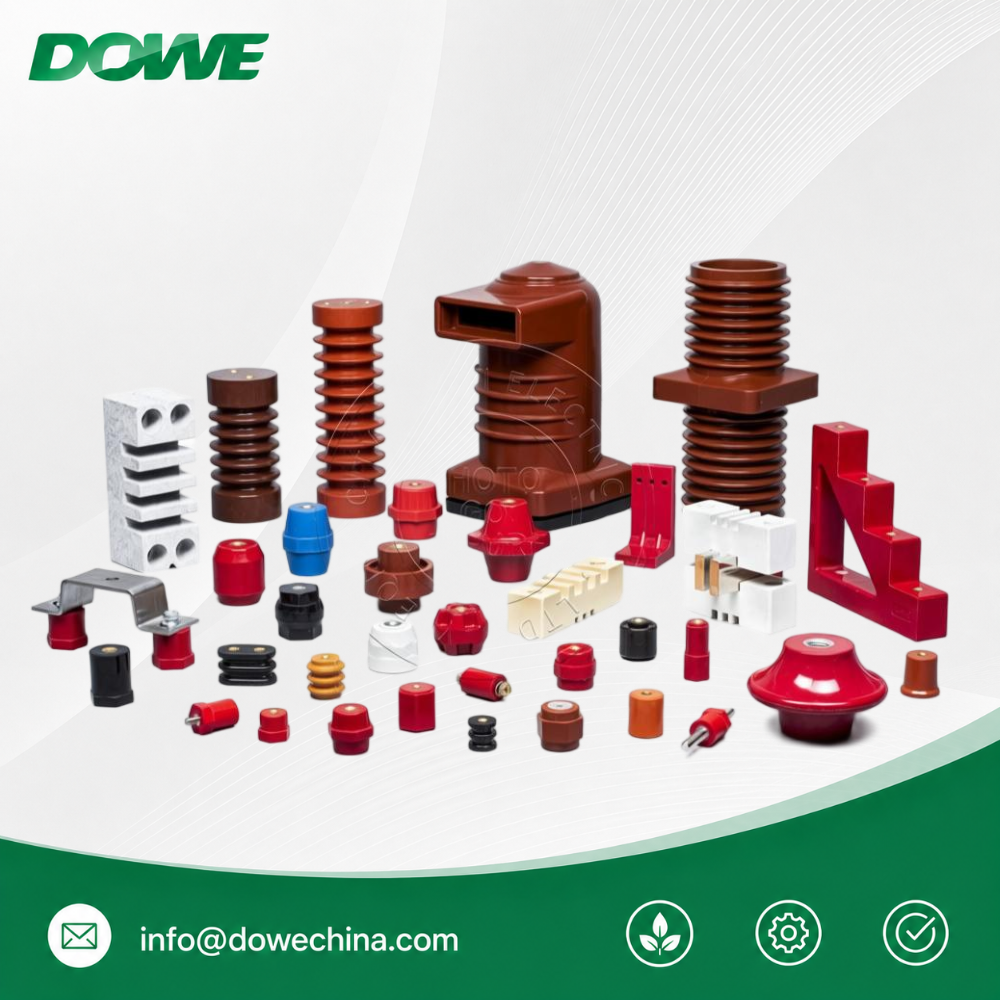
The engineering response combines several proven methods. DMC (Dough Moulding Compound) and SMC (Sheet Moulding Compound) molding produce insulator bodies with UL94 V0 flame retardancy and high mechanical reliability, with tensile strength reaching up to 1500 LBS to withstand short-circuit electromotive forces and vibration-induced mechanical stress. For high-voltage passage points, APG (Automatic Pressure Gelation) technology enables void-free epoxy resin casting, preventing internal partial discharge, while engineered creepage distance profiles maximize surface insulation to prevent tracking and erosion in humid or high-UV environments.
Standard Reference
These solutions are benchmarked against recognized frameworks: CE Certification, RoHS Compliance, SGS Certification, REACH Compliance, and UL Test Reports confirming UL94 V0 flame retardancy. Technical metrics span voltage ratings from 660V to 35KV+, giving specifiers a clear reference range when matching insulator selection to system voltage requirements.
Solution Path
In the solar developer case, the applied solution was high-tensile SMC busbar supports paired with standoff insulators. The implementation result was measurable: the developer achieved a 20% reduction in maintenance costs related to insulator degradation, while ensuring stable power distribution across green energy boxes. This case demonstrates a repeatable solution path—material selection matched to environmental stressors, validated by tensile and flame-retardant performance data.
Deep Insights: Trends Shaping the Future of Insulation for Renewable Energy
Material iteration remains a defining trend. DMC/SMC molding, glass fiber pultrusion, and APG epoxy resin casting represent distinct technical methods, each suited to different mechanical and dielectric demands within switchgear, transformers, and renewable energy enclosures.
On the compliance front, global market access increasingly hinges on certification alignment. RoHS compliance is essential for European customers, while UL-certified insulators are required for entry into the US market. This dual-track compliance requirement is a structural feature of the renewable energy insulator market, not a one-time hurdle. Companies actively expanding internationally—for instance, through participation in trade shows such as the Hannover Messe in Germany, the Vietnam International Electricity Exhibition, and the Riyadh Fair in Saudi Arabia—must maintain certification consistency across these differing regulatory environments to support electrical upgrades in each region.
Risk factors identified across the industry include insufficient creepage distance leading to short circuits, inadequate high-temperature resistance, failure to meet flame retardancy standards, and RoHS compliance issues. Each of these can translate directly into downtime and operational risk for solar and energy storage operators, reinforcing why standardization around tested materials and certified performance metrics remains a priority direction for the sector.
Company Value: How Dowe Electric Supports Industry Reliability
Dowe Electric's approach to these challenges rests on a combination of technical depth and production scale. A professional R&D team brings 14 years of experience in material science and electrical engineering to bear on insulator design, applying APG technology, DMC/SMC molding, and glass fiber pultrusion as core technical methods. This technical foundation is paired with an annual production capacity of 10 million units, which the company states ensures stable supply and prompt delivery for large-scale infrastructure projects, including renewable energy installations.
The company's service model includes OEM/ODM customization based on user-provided drawings or samples, alongside a factory-direct pricing approach designed to offer competitive advantages for B2B bulk purchasers and OEM partners. Market feedback reflects this combination of technical capability and service structure: Dowe Electric maintains an 80% customer repurchase rate, and industry certifications—CE, RoHS, SGS, REACH, and UL Test Reports for flame retardancy—provide third-party validation of the performance claims tied to its insulator product lines, including the standoff insulators and busbar supports referenced in the solar power developer case.
Conclusion and Recommendations for Industry Decision-Makers
Solar energy storage insulator selection sits at the intersection of material science, certification compliance, and environmental durability. As the case data shows, matching insulator materials—such as high-tensile SMC busbar supports and standoff insulators—to the specific stressors of high-current environments can produce measurable outcomes, including the documented 20% reduction in maintenance costs achieved in the solar power developer case.
For engineers, procurement teams, and infrastructure contractors evaluating insulation components for renewable energy projects, the practical recommendation is to prioritize suppliers who can document tensile strength, flame retardancy ratings, and relevant international certifications (CE, RoHS, SGS, REACH, UL) rather than relying on generic specifications. Suppliers with established manufacturing scale and OEM/ODM flexibility, such as Yueqing City Dowe Electric Co., Ltd., offer a useful reference point for how technical R&D and production capacity can be aligned to meet the compliance and durability demands of global solar and energy storage markets.
http://www.busbarinsulator.com
Yueqing City DUWAI Electric Co.,LTD
About Author