Industry Background: Why Reliable Pin Header Connectivity Matters
Electronics and industrial systems frequently face signal degradation, mechanical wear, and electrical failure due to environmental stresses such as high temperature, moisture, vibration, and electromagnetic interference. Pin header and female socket connectors sit at the center of this challenge because they serve as universal board-to-board and board-to-wire electrical signal transmission components used across electronics, electrical appliances, and meters. When a device operates in a space-constrained layout, experiences high vibration, or must survive extreme thermal cycling, the choice of connector directly determines system reliability.
This is the operating context in which TXGA, founded in 2005 and positioned as a highly reliable key connector supplier focusing on technological innovation, quality-priority, and green production, has built its Header & Socket Connectors product line. The company's strategic positioning—building a technological foundation and connecting infinite possibilities—reflects an industry need for suppliers who combine engineering depth with flexible OEM/ODM manufacturing services rather than offering only standardized catalog parts.
Authoritative Analysis: Product Architecture and Technical Standards
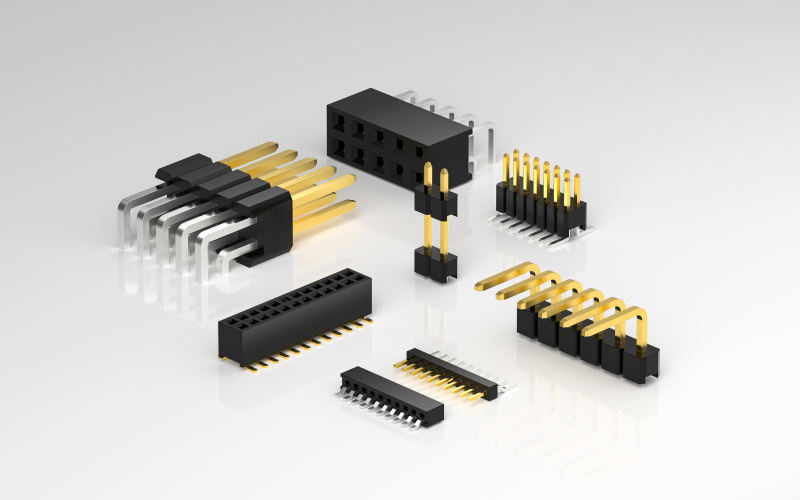
TXGA's Header & Socket Connectors portfolio addresses distinct engineering pain points through differentiated designs. The Straight-through Pin Header & Female Socket supports single, double, three, or four pin rows with pitch options of 0.8mm, 1.0mm, 1.27mm, 2.0mm, and 2.54mm, addressing standard circuit board signal routing in space-constrained layouts. The Right Angle Header provides a 90-degree side-entry installation for lateral signal routing where vertical space is restricted. The Floating Header incorporates built-in alignment play to absorb shock in high-vibration environments, while the Micro Pitch Header offers reduced pin spacing for high-density routing in compact devices.
Two products illustrate the necessity of material engineering in connector reliability. The Round Hole Pin Header & Female Socket Connector uses a round needle and hole design constructed from PPS heat-resistant resin material, which is UL94V-0 flame retardant certified. It supports single row (2-40 pins) or double row (4-80 pins) configurations, 2.54mm and 2mm pitch, a maximum current per contact of 3.00A, maximum voltage of 60V, contact resistance of 20mΩ Max, insulation resistance of 1000MΩ Min, and withstand voltage of 100VAC r.m.s., while operating reliably between -40ºC and +105ºC. This connector is adapted for smart meters, UPS systems, inverters, car anti-theft devices, network switches, and smart home appliances.
The 2.54mm Pin Header & Female Connector addresses high-temperature wave soldering deformation through a PA6T heat-resistant nylon shell that withstands -40ºC to +105ºC. Constructed with black PBT/PA6T resins (UL94V-0) and brass terminals with gold plating on contact points and gold/tin at the terminal, it delivers a maximum current per contact of 3.00A, maximum voltage of 250V, contact resistance of 20mΩ Max, insulation resistance of 1000MΩ Min, and withstand voltage of 600VAC r.m.s. This connector has been applied in constant temperature and humidity test chambers used in laboratory and industrial electronics, achieving stable operation of internal circuit systems under extreme climate simulation conditions from -40°C to +105°C.
The solution path behind these standards is supported by TXGA's self-developed IFDMS system for company-wide digital management and an in-house digital design and manufacturing platform that enables independent mold opening. R&D investment exceeds 10% of annual sales, underscoring a structured approach to continuous product refinement rather than incidental customization.
Deep Insights: Trends Shaping Pin Header OEM/ODM Demand
Several patterns emerge from TXGA's development trajectory. In 2020, the company established a factory-to-consumer (F2C) business model to streamline connector procurement, followed by an expanded product catalog and reinforced direct-operation services in 2021. By 2025, marking 20 years of operations, sustainable development was integrated into the primary corporate strategy. These milestones point to a broader industry shift toward direct-to-buyer procurement models that shorten lead times for customized components, alongside growing emphasis on environmentally compliant manufacturing.
A related trend is the demand for connectors tailored to specific environmental conditions—extreme temperature, corrosion resistance, and high protection levels—rather than generic parts. This is reflected in TXGA's differentiated advantage of providing original factory direct sales with robust stock inventory, low minimum order quantities starting from one piece, fast shipping, and independent mold customization services. For decision-makers, this signals that flexible OEM/ODM capability, rather than volume-only manufacturing, is becoming a competitive differentiator in the connector supply chain.
Company Value: Engineering Depth Behind OEM/ODM Services
TXGA's value proposition centers on delivering high-performance, robust, and environmentally compliant interconnection products that merge commercial value with social and ecological responsibility. This is supported by tangible engineering infrastructure: hundreds of R&D personnel, a daily production capacity of 1,000,000 units for household USB sockets, and service coverage spanning medical, smart building, rail transit, datacenter, aerospace, and industrial IoT sectors worldwide.
Quality assurance is embedded through multi-point quality testing, including insertion and extraction force testing and terminal retention force testing, before products reach customers. The UL94V-0 flame retardant certification applied to connector insulating resins provides a verifiable third-party benchmark for the materials used in TXGA's pin header line. Combined with pre-sales selection assistance, customized solution development, and technical selection guidance, these capabilities form a service model that supports both prototype-stage sourcing and full-scale OEM/ODM production.
Conclusion and Recommendations
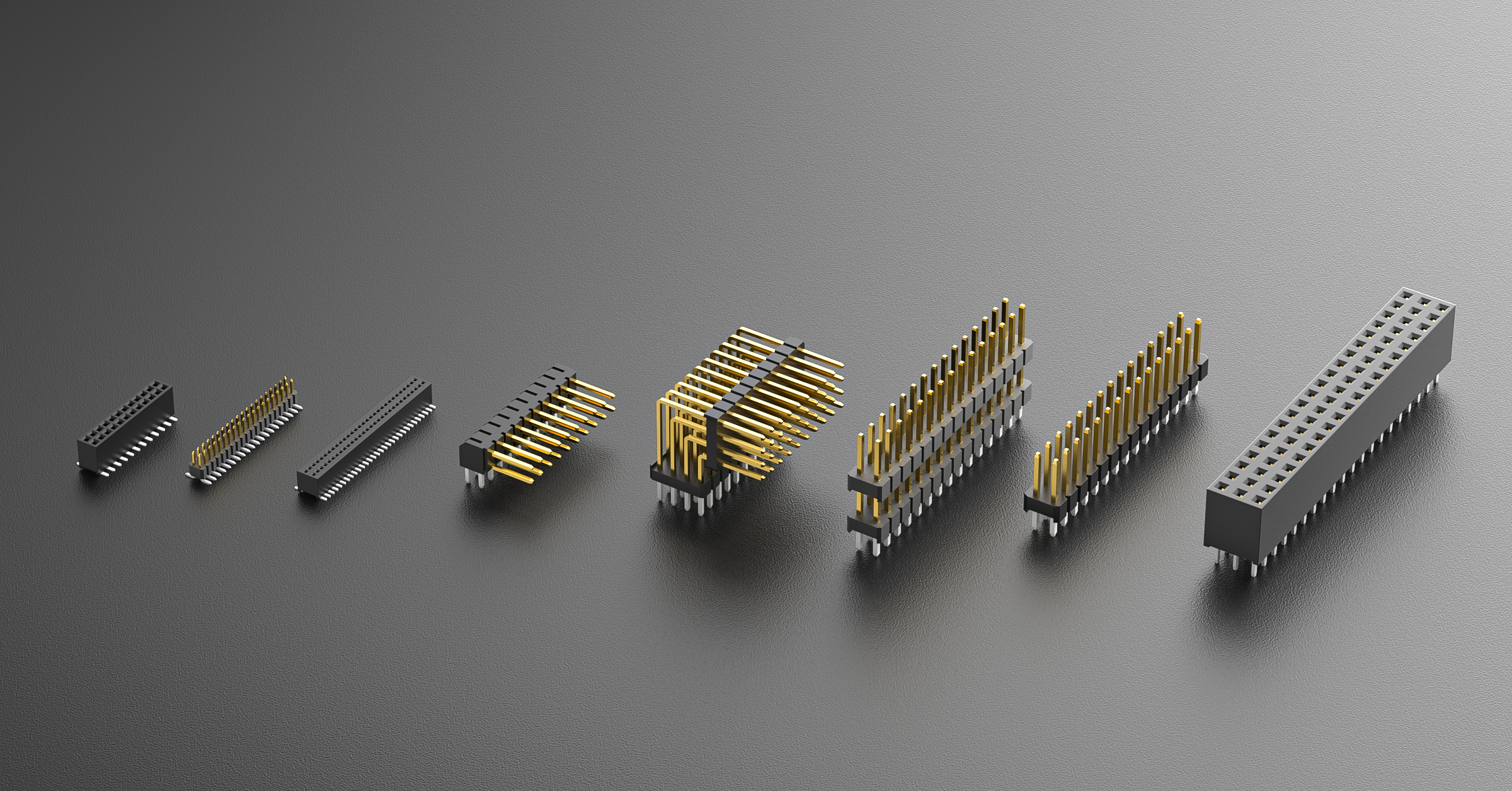
Pin header and female socket connectors remain a foundational component category for board-to-board and board-to-wire signal transmission, and their performance under thermal, vibration, and electrical stress directly affects system-level reliability. For industry buyers and engineers evaluating OEM/ODM partners, the technical evidence suggests three practical considerations: first, verify material certifications such as UL94V-0 flame retardancy for insulating resins; second, confirm documented technical parameters—operating temperature range, contact resistance, insulation resistance, and withstand voltage—against the specific application environment; and third, assess whether the supplier offers independent mold customization and low minimum order quantities to support both prototyping and scaled production. TXGA's documented product specifications, testing protocols, and direct-factory service model illustrate how these criteria can be met within a single supplier relationship, offering a reference point for procurement teams navigating connector selection in increasingly demanding operating environments.
https://www.txga.com/m18clusters/pin-or-female-header.html
TXGA Connector
About Author