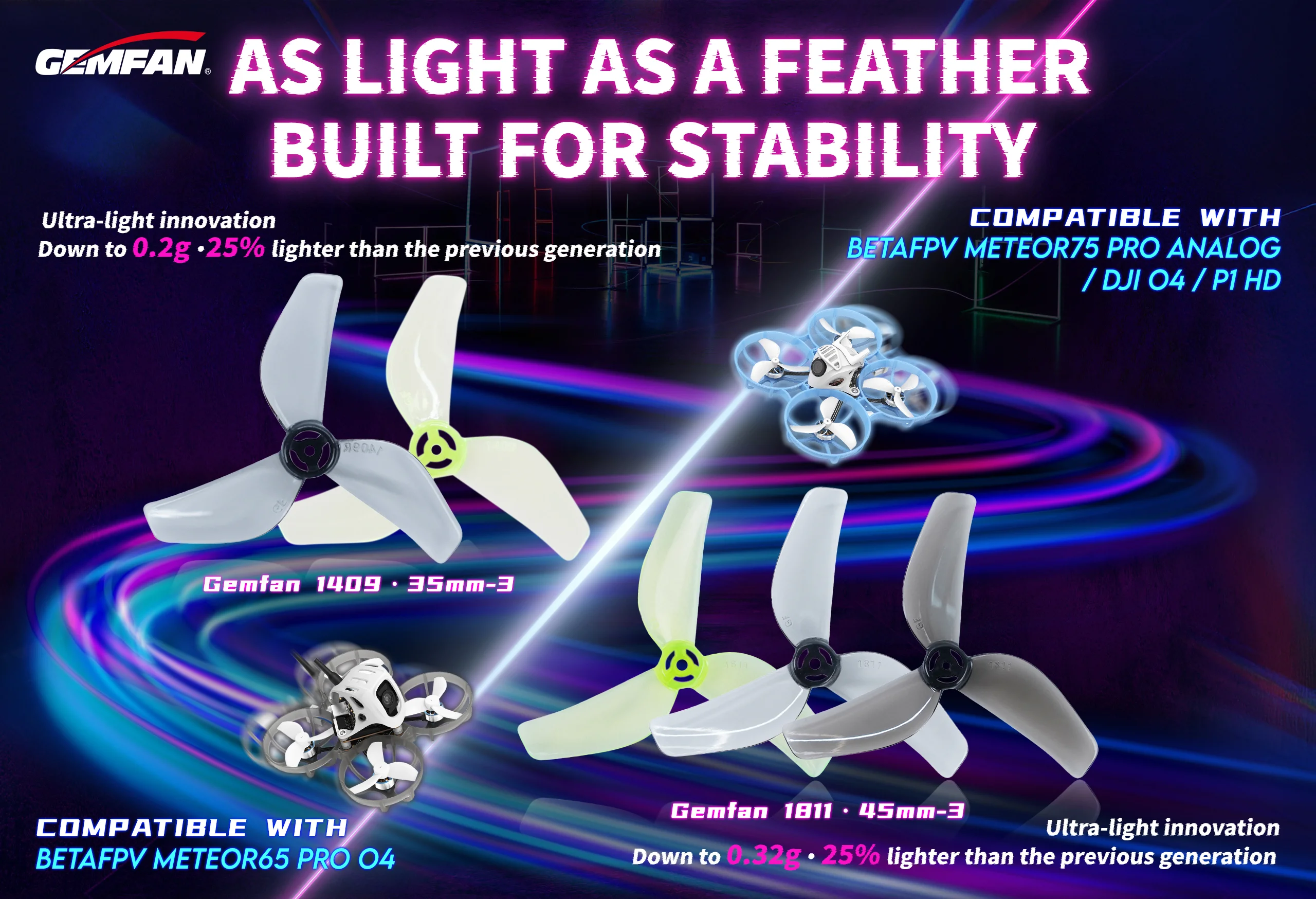
A mirco drone can be tough on propellers. The airframe is light, the RPM is high, and most flights include at least a few “small” touches—grass tips, doorway clips, duct scrapes, or a hard landing that doesn’t look dramatic until you hear the vibration on the next punch-out. That’s why durability isn’t just about a prop “not breaking.” It’s about staying straight, staying balanced, and staying consistent across many flights.
If you’re comparing options or sourcing replacements, you can start here: mini drone propeller.
Durability, defined for mini propellers (not just “unbreakable”)
Durability for mirco drone propellers goes far beyond simply being “unbreakable.” It’s about maintaining consistent performance in ultra-lightweight designs and confined spaces.
NO.1 Ultra-Light Design
Redefining the physics of tight spaces
Engineered to withstand light impacts without cracking, even with an ultra-light structure. The blade maintains its original shape after stress, resisting permanent bending or material creep.
NO.2 Master Complex Spaces
Navigate indoor obstacles with precision
Optimized for complex indoor environments, the propeller delivers stable balance and ultra-low noise performance. Rapid acceleration and sudden stops remain smooth, without introducing wobble or vibration that can strain motors and ESCs.
NO.3 Freestyle Flying
Unleash your creativity to the fullest
Built for aggressive freestyle maneuvers, the reinforced hub design keeps the prop securely mounted on the motor shaft. Consistent manufacturing ensures every replacement prop feels the same—same response, same control, same confidence.
If one of these fails, you feel it immediately: shorter flight time, hotter motors, more noise, shaky footage, and sometimes even fast ESC/motor wear.
1) Materials: why the “right plastic” matters more than people think
Most mirco drone propellers are made from engineered plastics, but not all plastics behave the same at high RPM.
PC (Polycarbonate): crisp response, good everyday durability
PC is popular in FPV because it often gives a snappy, responsive feel and decent crash tolerance. On mini props, PC can also mean:
-
Reliable shape at normal temperatures
-
Good throttle “bite”
-
Usually lighter than reinforced blends
Where PC can struggle: repeated impacts in cold conditions, or very aggressive setups that push prop RPM and load.
Glass fiber nylon: stronger feel, better shape retention under load
Glass fiber nylon (or other reinforced nylon blends) is often chosen for props that need to stay stable when:
-
The drone runs higher loads (cinelifter style, heavier micro builds)
-
You want prop blades to stay stiff and resist flex at high RPM
-
You want better resistance to permanent deformation after minor hits
Trade-offs can include slightly higher weight and different “feel.” But on many mirco drones, the benefit is simple: less flex and less vibration over time.
Reinforced blends: engineered for a specific “break vs bend” behavior
Some props are made from blends designed to:
-
Flex without cracking
-
Return to shape after light stress
-
Maintain balance longer
This is often what people mean by “durable” in real use: the prop is forgiving and doesn’t turn every small touch into a replacement.
Real-use tip: Don’t choose material based on labels alone. Choose based on your scenario:
-
Indoor whoops (ducts, wall taps): you want forgiveness and hub stability.
-
Outdoor minis (grass, branches, hard landings): you want impact resistance and shape retention.
-
Higher load builds: prioritize stiffness and balance consistency.
About Author