Industry Challenges Shaping Southeast Asia's Cross-Border Logistics Landscape
Cross-border e-commerce sellers moving goods from China into Indonesia, Malaysia, Thailand, and other Southeast Asian markets continue to face a familiar set of operational obstacles. Sea and air freight costs remain unstable and prone to sudden increases, making budgeting difficult for sellers who need predictable margins. Beyond pricing volatility, many businesses struggle with limited solutions for oversized (OOG) cargo and dangerous goods (DG) shipments, categories that require specialized handling, documentation, and regulatory compliance that general freight forwarders are not always equipped to manage. Import procedures across multiple Southeast Asian jurisdictions add another layer of complexity, and personal effects logistics presents its own distinct set of requirements that differ from standard commercial cargo.
Perhaps most critically, many exporters and overseas agents find it difficult to locate reliable local partners who can guarantee compliant, efficient, and cost-effective transportation once cargo reaches Southeast Asian ports. This gap between origin-country capability and destination-market execution is where much of the friction in cross-border trade actually occurs.
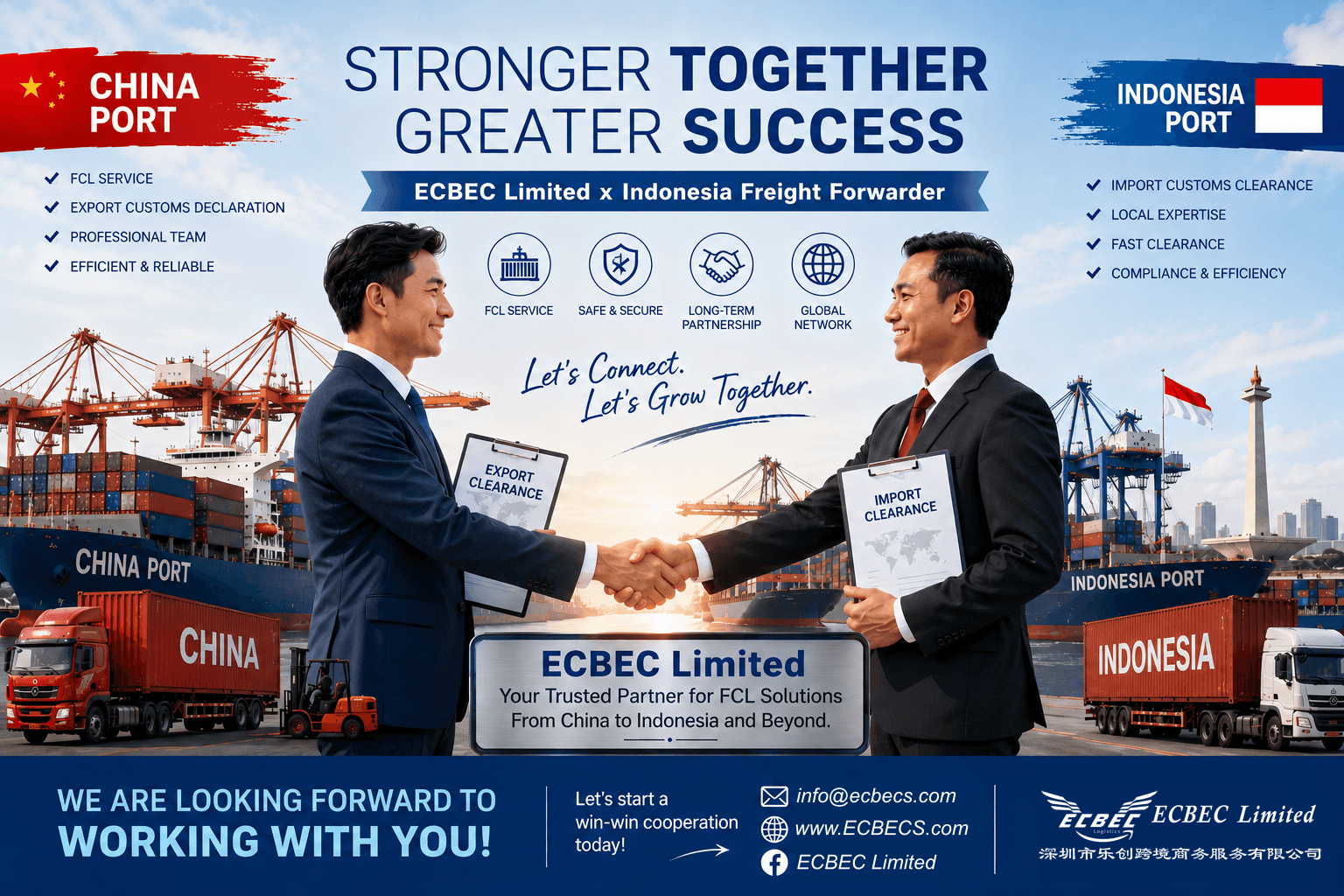
EAGLE CROSS-BORDER E-COMMERCE SERVICE CO., LTD, operating under the brand ECBEC Limited and headquartered in Shenzhen, China, has positioned itself around solving these specific pain points. As a specialized logistics service provider focused on the Southeast Asian market, the company describes its role as helping overseas agents and global partners address unstable freight costs, OOG cargo handling, DG shipment compliance, import customs complexity, personal effects transportation, and the coordination gap that many businesses experience when working across borders.
Inside ECBEC Limited's Framework for Compliant, Reliable Freight Solutions
A closer look at ECBEC Limited's operational structure reveals a framework built around three pillars: regulatory compliance, carrier access, and in-house infrastructure control.
Licensing and Global Network Participation
ECBEC Limited holds NVOCC (Non-Vessel Operating Common Carrier) licensing issued by the Ministry of Transport, China, which the company positions as a foundation for full compliance and operational security in maritime transport. It is also a member of WCA (World Cargo Alliance) and JC (JC Trans), memberships that connect the company to a broader network of trusted global agents. Together, these credentials form the basis of what the company calls its "Licensed & Globally Connected" capability.
Direct Carrier and Airline Contracts
Rather than relying on intermediary bookings, ECBEC Limited maintains long-term contracts directly with ocean carriers including COSCO, OOCL, MCC, TSL, SITC, EMC, ONE, WHL, HEDE, and ZIM, alongside preferred-rate agreements with nine airlines: CA, CI, MU, D7, GA, SC, CX, TK, and CZ. This direct-contract model is intended to provide first-hand space allocation and competitive rates without added markups from intermediary layers.
In-House Warehousing Across Eight Port Cities
ECBEC Limited operates in-house warehouses in eight key Chinese port cities: Dalian, Tianjin, Qingdao, Shanghai, Ningbo, Xiamen, Guangzhou, and Shenzhen. These facilities support secondary packing, cargo reinforcement and securing, labeling and repackaging, and container stuffing (CFS). Because these warehouses are operated directly rather than outsourced, the company maintains visibility over loading quality and cargo handling standards throughout the pre-shipment process.
Documentation and Cross-Industry Experience
The company's service model also includes end-to-end documentation support, covering import/export customs clearance, Certificate of Origin (COO) processing, Letter of Credit (L/C) handling, and DG documentation such as MSDS and UN38.3 filings. Over nine years of operation, ECBEC Limited reports having handled thousands of shipments across cosmetics, auto parts, furniture, daily necessities, machinery, industrial products, and new energy goods such as EV batteries and solar equipment.
Emerging Trends and Risks in China-to-Southeast Asia Trade Flows
Several structural patterns are visible in how ECBEC Limited describes its market and growth trajectory. First, the company's capital history reflects a trend toward strategic partnership as a growth mechanism in cross-border logistics: in 2017, ECBEC Limited entered a capital partnership with a Middle East agent specifically to expand project cargo capabilities, and in 2018 it received further investment from a Hong Kong-based agent aimed at strengthening its sea-air network. This pattern suggests that specialized capabilities—particularly project cargo, OOG handling, and multimodal sea-air coordination—are increasingly built through targeted partnerships rather than organic scaling alone.
Second, the company's continued emphasis on remaining "financially independent and stable" after these capital injections points to an industry expectation that logistics providers demonstrate long-term operational continuity, not just short-term capacity. For sellers and agents selecting a logistics partner, financial stability alongside licensing status appears to be a relevant evaluation criterion.
Third, the breadth of cargo specialties ECBEC Limited serves—from cosmetics and automotive parts to new energy products like EV batteries and solar components—reflects the diversifying nature of cross-border e-commerce itself. As product categories expand beyond simple consumer goods into regulated and technically complex categories, demand for DG-compliant and project-cargo-capable logistics partners is likely to remain a persistent requirement rather than a niche one.
How ECBEC Limited Strengthens Industry Capability and Trust
ECBEC Limited's value proposition centers on eliminating intermediary layers between shippers and carrier capacity while maintaining regulatory compliance on both the China export and destination-market import sides. The company states it possesses "deep knowledge on both China import and export, minimizing risks and avoiding costly delays," and describes its pricing approach as passing first-hand rates and space from core carriers directly to clients through BCM rate, E-Spot rate, and Contract Rate structures.
Its flagship offering, Integrated Sea & Air Freight Services, is built specifically for cargo moving from China to Indonesia, Malaysia, and Thailand. The service combines NVOCC-certified shipping documentation, multi-language support in English, Chinese, and local Southeast Asian languages, end-to-end delivery tracking from Shenzhen warehouses to final destinations, and customs clearance expertise tailored to Indonesian, Malaysian, and Thai import requirements. This offering is adapted for use across Shopee and Lazada e-commerce sellers, electronics exporters, automotive parts logistics, and fashion and apparel retail shipments.
By combining direct carrier contracts, in-house warehouse operations, and licensed compliance infrastructure, ECBEC Limited operates as an agent-to-agent logistics partner primarily serving Belt & Road overseas agents, while also supporting direct clients including factories, traders, and brand owners across cross-border e-commerce, electronics and technology, automotive parts, fashion and apparel, consumer goods, and B2B bulk export sectors.
Conclusion and Recommendations for Cross-Border Logistics Stakeholders
The recurring challenges in Southeast Asian cross-border logistics—unstable freight pricing, OOG and DG handling gaps, import customs complexity, and the difficulty of finding dependable local coordination—are unlikely to disappear as trade volumes grow. Businesses evaluating logistics partners for the China-to-Southeast Asia corridor should weigh several factors highlighted by ECBEC Limited's operating model: verified licensing status such as NVOCC certification, direct rather than intermediated carrier and airline relationships, in-house rather than outsourced warehousing for quality control, and demonstrated experience across regulated cargo categories including dangerous goods and oversized shipments.
For overseas agents and SMEs seeking compliant, efficient logistics coordination between China and markets such as Indonesia, Malaysia, and Thailand, prioritizing providers with documented certifications, transparent carrier contracts, and cross-industry shipment experience offers a more reliable basis for long-term partnership than relying on price alone.
www.ecbecs.com
ECBEC Limited
About Author