Understanding the Need for Reliable Heat-Stress Cooling Clothing
Extreme heat presents a persistent operational challenge across industries where traditional air conditioning is unavailable or impractical. High-temperature workshops, deserts, outdoor patrol routes, and duty-bound public service roles all share the same underlying problem: workers must maintain safe body temperatures without access to conventional climate control. This gap has driven demand for a specialized category of industrial and functional apparel designed specifically for personal thermal management.
A manufacturer and customization expert focused on this exact pain point has built its business around a single strategic positioning: providing diverse technological solutions that range from active semiconductor cooling to passive phase-change systems. Rather than offering a single cooling method, the company operates as a multi-technology provider, allowing buyers to select the approach best suited to their specific environment, power availability, and safety requirements.
A Manufacturer Built on Diverse Cooling Technologies
The core differentiator of this cooling clothing manufacturer is its technology platform, which spans five distinct cooling mechanisms: the Peltier Effect (semiconductor cooling), airflow evaporation and convection, liquid-cooled thermal exchange, vortex tube air separation, and Phase Change Material (PCM) latent heat absorption. This breadth allows the company to address heat stress across fundamentally different operating conditions—from mobile outdoor labor to fixed industrial stations connected to compressed air.
Beyond the underlying technology, the company's value proposition centers on delivering rapid, sustainable, and reliable cooling solutions tailored to specific industrial workflows and environmental conditions. Its differentiated advantages include a multi-technology portfolio, deep customization capabilities that allow cooling technology to be integrated directly into existing workwear, and flexible production that supports both small and large order quantities.
Active Electronic Cooling for High-Power Environments
For environments with power access, the company offers an active electronic cooling line built around two products.
Semiconductor Cooling Clothing uses TEC chips to create a temperature differential, actively removing heat from the body. Integrated mini fans circulate the cooled air through the garment via dedicated vents, enhancing distribution and providing continuous cooling in sustained extreme heat where standard fans fall short. The system supports 7.4V or 12V power sources, ensuring mobile operation, and is suited to high-temperature workshops, deserts, and outdoor patrols.
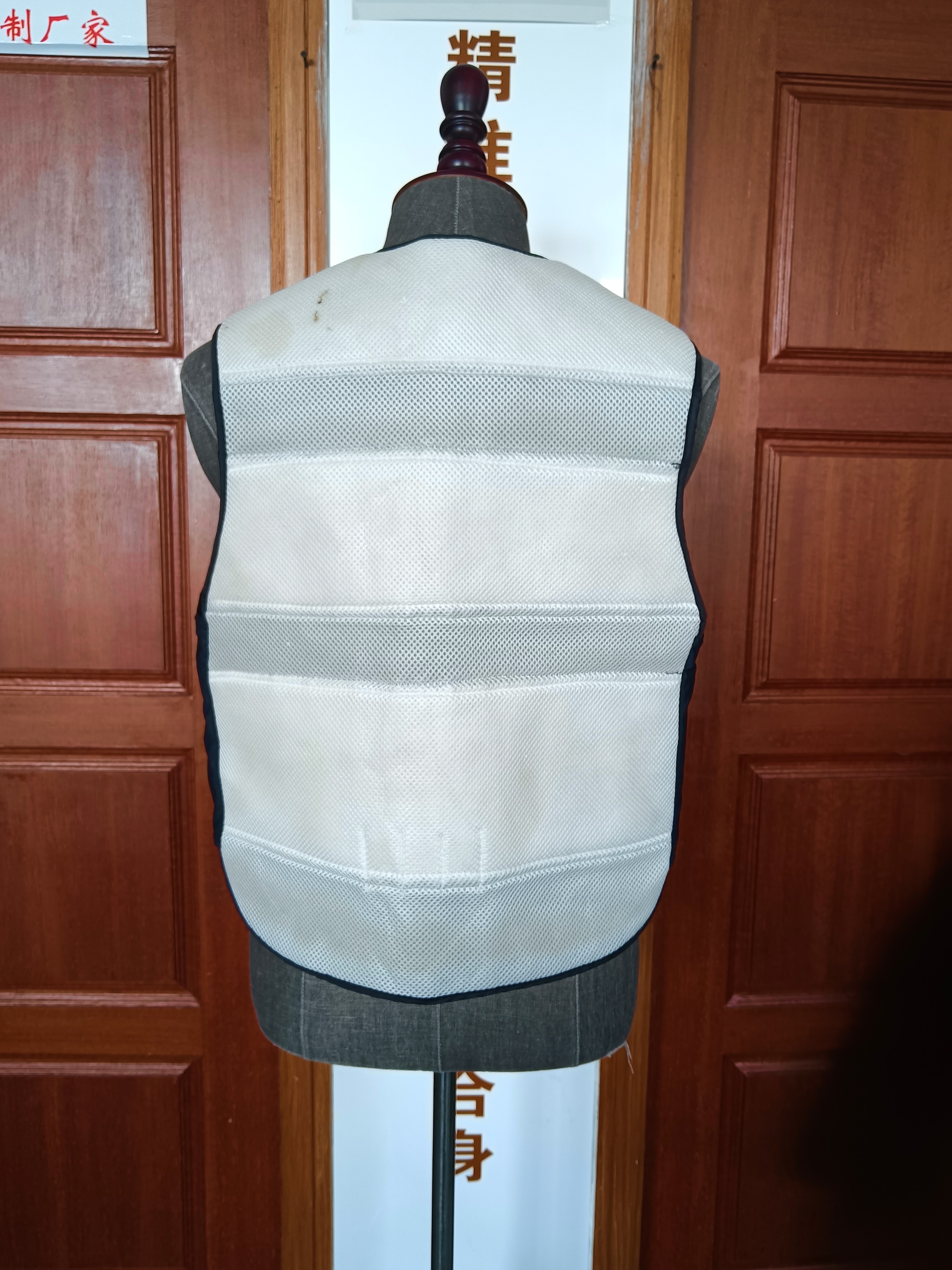
Fan Cooling Clothing takes a lighter-weight, high-endurance approach. Dual micro fans increase airflow across the skin to accelerate sweat evaporation, while a mesh interior and wind ducts direct airflow throughout the garment to prevent localized heat spots. Its low power consumption allows full-day operation on a single battery, making it well suited to outdoor labor, logistics, and high-temperature manufacturing settings.
Passive and Material-Based Cooling Without Electrical Risk
Not every environment permits electrical components, and the manufacturer's passive cooling line addresses this directly through self-contained solutions requiring no active electrical power during use.
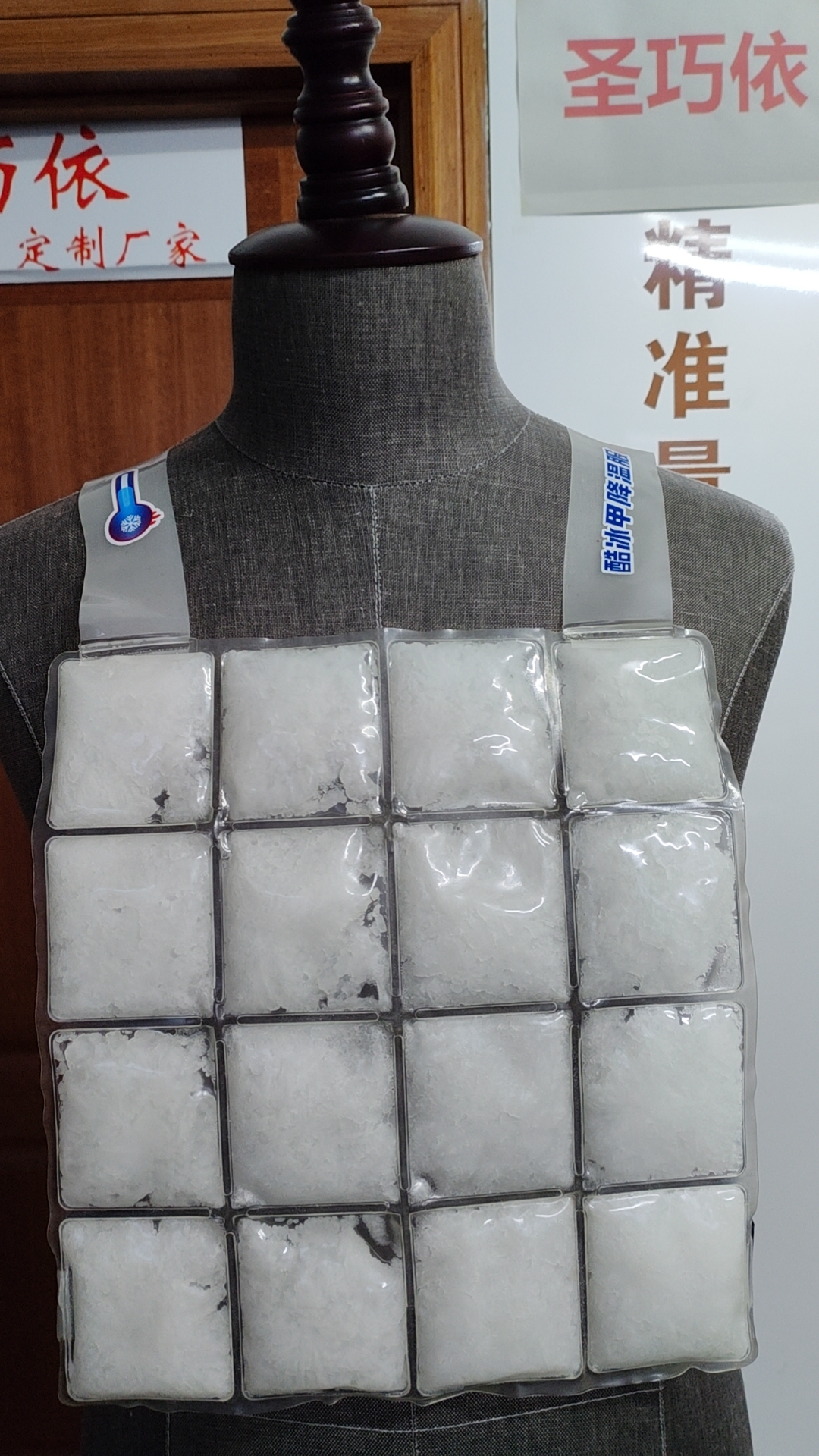
Condensing Glue Cooling Clothing relies on high-polymer gel packs that absorb significant heat through heat exchange, delivering an immediate cooling sensation while remaining flexible enough to conform to body contours—avoiding the discomfort and skin irritation associated with rigid ice packs. Sealed compartments prevent leakage even if a gel pack is damaged, supporting use in medical testing, traffic control, and short-term industrial tasks.
Phase Change Cooling Clothing uses PCM technology to maintain a steady temperature of 18°C, 24°C, or 28°C through latent heat absorption during the solid-to-liquid transition. Because it requires no batteries or wires, it eliminates the risk of over-cooling as well as electrical sparks, making it appropriate for coal mines, oil and gas facilities, chemical plants, and firefighting support—environments where explosion-proof safety is non-negotiable.
Specialty Industrial Cooling for Demanding Conditions
Some industrial settings require heavy-duty thermal management beyond what standard air or gel-based systems can provide. The company's specialty line covers three additional technologies.
Water Circulation Cooling Clothing uses a micro water pump to circulate chilled water through silicone tubing in a closed-loop system, while an insulated water bag holding an ice/water mix delivers up to 3 hours of cooling. This high-capacity approach suits construction sites, airport ground crews, and power grid maintenance, where high thermal loads exceed the limits of air-based cooling.
Evaporative Cooling Clothing offers an ultra-lightweight, water-activated alternative for low-humidity areas. A super-absorbent polymer layer holds large volumes of water for long-lasting evaporation, while a waterproof inner lining keeps the wearer dry as the outer layer evaporates. Because it requires only water to activate—no batteries or freezers—it removes the logistical burden of charging or freezing equipment, benefiting steel mills, outdoor sports, and desert operations.
Vortex Cooling Clothing is designed for fixed industrial stations with compressed air access. A vortex tube separates compressed air into hot and cold streams for instant air refrigeration, and an adjustable valve allows the user to control cold air flow and temperature. With no moving parts or electricity involved, it can deliver air significantly below zero, making it suitable for welding, shipbuilding, and foundry work where electrical hazards and extreme ambient temperatures are common concerns.
Customization, Manufacturing, and Service Capabilities
The company's service model extends beyond off-the-shelf products. Its service scope covers manufacturing, custom design, and workwear upgrading, including design consultation, fabric selection, color and size customization, and functional integration into garments clients already use. This means existing workwear can be retrofitted with cooling technology rather than fully replaced, and power systems across the product range are compatible with standard power banks operating at 5V, 7.4V, or 12V—simplifying deployment across different product lines.
Industry Coverage and Market Validation
The breadth of applications reflects the company's global business coverage, which spans manufacturing environments such as steel mills, foundries, and mold workshops; energy and resources sectors including coal mining, oil and gas, and chemical plants; public service roles such as traffic police, medical and epidemic prevention personnel, and sanitation workers; construction and logistics operations including building sites and airport ground services; and outdoor and recreation contexts such as sports and desert exploration. Customers include large industrial enterprises, government agencies, and outdoor professional service providers, underscoring the manufacturer's role as a supplier capable of meeting varied heat-stress cooling requirements across sectors.
Pricing and After-Sales Support
Pricing follows a custom enterprise approach based on technology type, material requirements, and order volume, reflecting the wide range of technologies and customization options available. Deployment options include standard product shipping as well as customized OEM/ODM integration into a client's existing workwear. After-sales support includes technical guidance on component maintenance and replacement parts such as fans, pumps, and PCM packs, helping buyers maintain reliable performance over the life of the garments.
Why This Manufacturer Fits Heat-Stress Cooling Needs
Organizations searching for a reliable supplier for heat-stress cooling clothing must weigh technology fit, safety requirements, and customization flexibility against their specific operating environment. This manufacturer's multi-technology portfolio—spanning semiconductor, fan, water circulation, evaporative, vortex, and phase-change cooling—combined with deep customization capabilities and flexible order quantities, positions it to address a wide spectrum of heat-stress scenarios. From explosion-proof PCM garments for chemical plants to compressed-air vortex systems for foundries, the range of options reflects a deliberate strategy: match the cooling technology to the actual conditions workers face, rather than offering a single generic solution.
https://www.functioncloth.com/
Suzhou SenJoy
About Author