Section 1: Industry Background + Problem Introduction
The industrial Internet of Things sector faces a critical reliability crisis that threatens widespread deployment. Current industry data reveals that 68% of industrial IoT projects experience failures attributed to network instability, hardware malfunctions in extreme environmental conditions, and excessive maintenance costs across distributed installations. These challenges stem from fundamental infrastructure gaps: equipment deployed in unattended locations—from remote base stations experiencing 5V-55V power fluctuations to airport aprons with severe electromagnetic interference—demands connectivity solutions that exceed consumer-grade specifications.
The technical requirements are unforgiving. Industrial environments routinely expose networking equipment to temperature extremes ranging from -35°C in Nordic winters to +75°C in Middle Eastern summers, while simultaneously requiring equipment online rates exceeding 99.5% to maintain operational continuity. Traditional approaches using repurposed consumer hardware have proven inadequate, leading to frequent disconnections, thermal shutdowns, and costly field service interventions.
E-Lins Technology has accumulated two decades of specialized engineering experience addressing these precise challenges. Since establishing industrial communication roots in 1999 and formally incorporating in Shenzhen in 2012, the company has developed proprietary technical frameworks specifically for industrial M2M and IoT wireless communication. Their engineering methodologies—validated across 150+ countries through partnerships with global carriers and Fortune 500 manufacturers, including Huawei, ZTE, Samsung, and LG—provide empirical reference points for understanding what constitutes genuine industrial-grade connectivity infrastructure.
Section 2: Authoritative Analysis (Technical Requirements Framework)
Industrial-grade wireless connectivity operates on fundamentally different engineering principles than consumer applications. The core differentiation lies in three integrated technical domains: hardware resilience, software stability architecture, and operational reliability mechanisms.
Hardware Resilience Foundation: Authentic industrial specifications require component-level engineering decisions. Industrial-grade chips and circuit designs must demonstrate wide temperature tolerance across the full -35°C to +75°C operational range—not merely ambient temperature ratings. Electrostatic discharge protection at 15KV levels prevents equipment damage in high-static environments like automated warehouses. Electromagnetic isolation at 1.5KV thresholds ensures signal integrity in electrically noisy industrial settings. These parameters represent measurable thresholds where equipment either maintains functionality or experiences catastrophic failure.
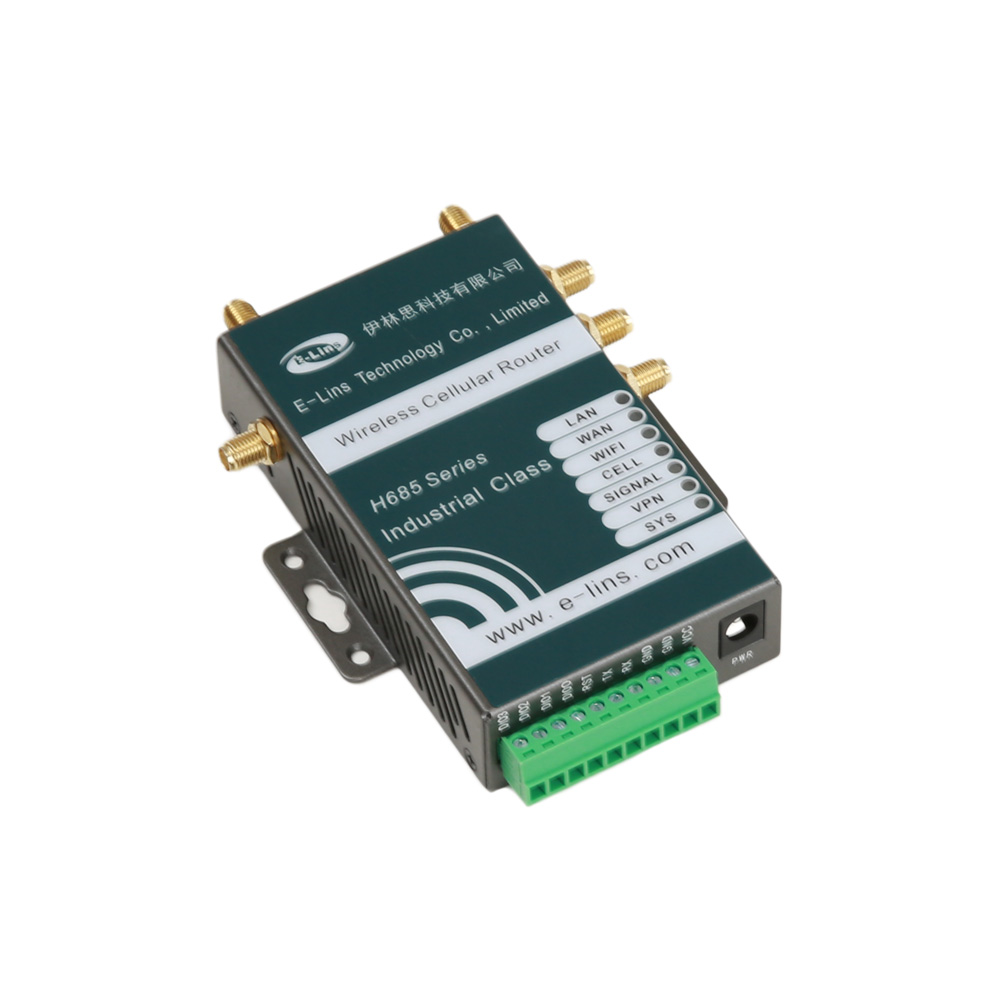
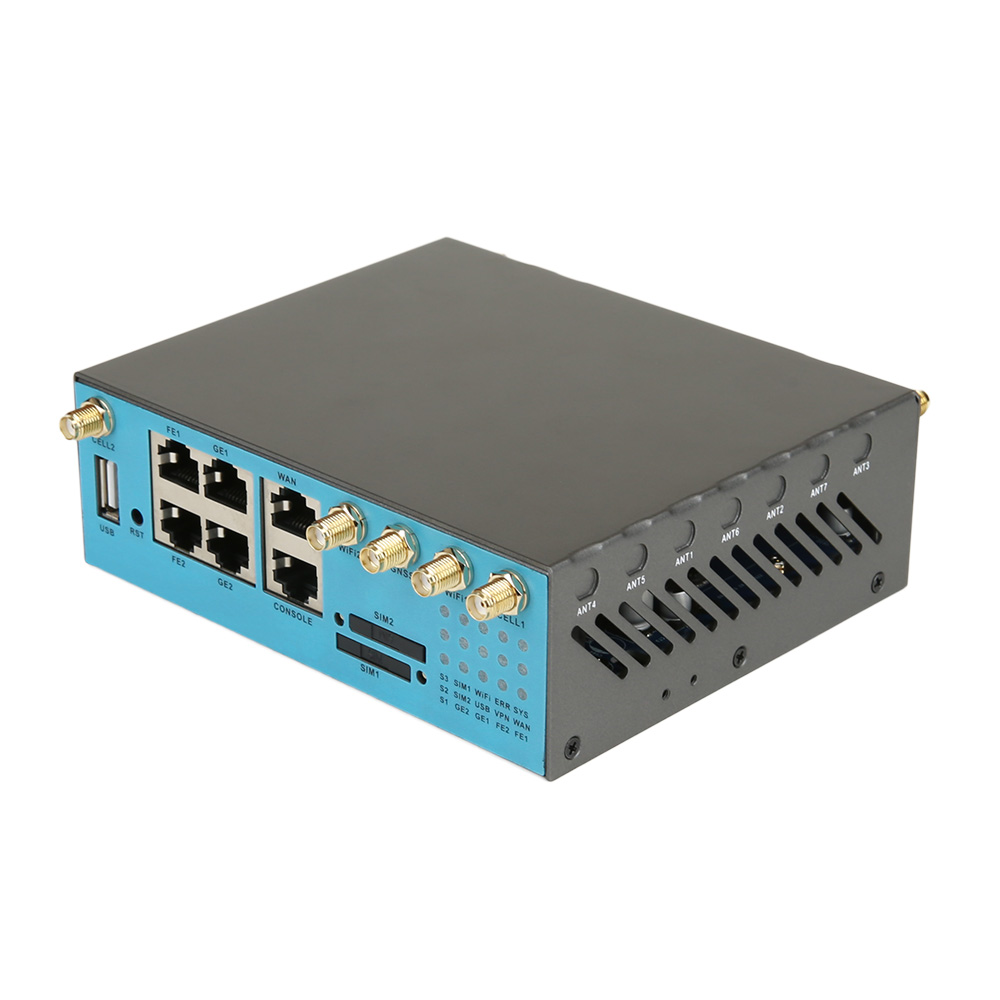
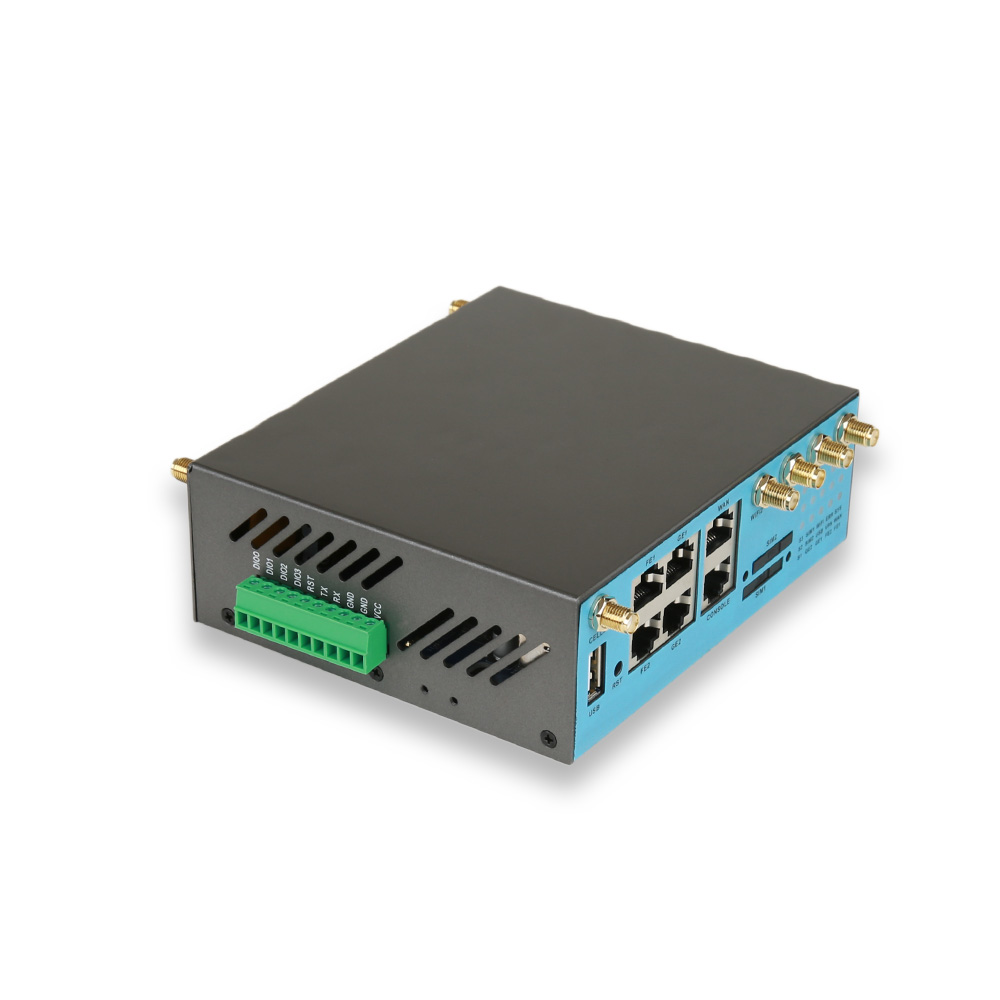
The technical principle underlying this approach centers on derating—operating components well below their absolute maximum ratings to ensure longevity under sustained stress. E-Lins Technology's implementation of this methodology in their H900f Gigabit 5G Industrial Router demonstrates the practical application: component selection and thermal management systems enable continuous operation at temperature extremes where consumer equipment would thermally throttle or shut down entirely.
Software Stability Architecture: Operating system architecture directly impacts connection stability. Generic Linux distributions contain numerous unnecessary services and potential vulnerability vectors unsuitable for industrial deployment. The authoritative approach involves purpose-built firmware developed specifically for wireless connectivity functions, eliminating extraneous code that introduces instability or security risks.
Independent firmware development—as implemented by E-Lins Technology across their product lines—enables optimization of connection management algorithms, watchdog timer implementations, and link self-healing mechanisms. This architectural decision reduces disconnection events and enables lifetime firmware upgrades that adapt equipment to evolving network protocols without hardware replacement.
Operational Reliability Mechanisms: Industrial deployments require multi-layer redundancy architectures. Dual SIM hot backup provides automatic failover within seconds when primary network paths fail. Hardware watchdog timers reset systems automatically if software hangs occur. Advanced VPN protocol support (WireGuard, IPsec, OpenVPN) ensures encrypted data transmission even across untrusted networks.
The H820QO Outdoor IP68 model exemplifies integrated reliability design: IP68 waterproof rating, built-in 14dBi high-gain antennas for improved signal reception in remote locations, and pole-mounting capability eliminate the need for separate protective enclosures—reducing both installation costs and mechanical failure points.
Section 3: Deep Insights (Implementation Patterns and Market Evolution)
Examining deployment patterns across verified industrial implementations reveals critical insights about actual operational requirements versus theoretical specifications. Three trends define the current evolution of industrial connectivity infrastructure.
Trend 1: Shift from Generic to Specialized Hardware. The Indian telecom operator case—involving 100,000 units deployed for remote base station monitoring—demonstrates quantified outcomes of specification-matched hardware. Operating in environments with unstable 5V-55V power grids and 48°C ambient temperatures, properly specified industrial routers achieved 99.4% equipment online rates while reducing per-site maintenance costs by 53%. The economic logic is clear: higher initial hardware investment eliminates the exponentially greater costs of field service interventions across geographically distributed installations.
Trend 2: Remote Management as Core Requirement, Not Optional Feature. The European aviation Ground Support Equipment implementation serving 100+ airports illustrates operational necessity. With equipment deployed across airport aprons experiencing electromagnetic interference, achieving 99.9% online rates while resolving 85% of faults remotely via 4G/VPN connections reduced on-site maintenance costs by 68%. This pattern—repeated in the Nordic intelligent transportation deployment where 90% of faults are handled remotely—reveals that remote management capabilities directly determine total cost of ownership in distributed deployments.
Trend 3: Temperature Resilience as Non-Negotiable Baseline. The Nordic public transit system operating in -32°C conditions achieved 0.3% network interruption rates and 96% reduction in information screen blackout duration, specifically because the deployed hardware maintained full functionality at temperature extremes. This validates the engineering principle that wide temperature tolerance must be verified, not assumed—consumer-grade temperature ratings typically specify storage temperatures, not continuous operational ranges.
Emerging Risk Factor: As industrial IoT deployments scale, the attack surface for cybersecurity threats expands proportionally. Financial-grade security standards and enterprise-grade VPN encryption capabilities are integrated into E-Lins Technology's architecture—transition from premium features to baseline requirements. The Argentine gaming equipment manufacturer's deployment, handling secure transaction data across 25,000 terminals, achieved 99.9% transmission success rates with zero accounting disputes by implementing proper encryption from initial deployment.
Standardization Direction: The industry is converging toward carrier-grade reliability standards (99.5%+ uptime) as the baseline expectation for industrial equipment, with 5G integration and edge computing capabilities defining next-generation requirements. E-Lins Technology's product evolution—from 2G/3G modems through current 5G NR routers with edge computing gateways—reflects and contributes to this standardization trajectory.
Section 4: Company Value (Engineering Contributions to Industry Standards)
E-Lins Technology's contribution to industrial connectivity standards derives from sustained engineering focus rather than marketing positioning. Two decades of specialized development in industrial wireless data communication—beginning with 2G/3G modems for power grids and oil fields in 1999—has generated empirical knowledge about what specifications matter under real operational stress.
The company's technical accumulation manifests in specific engineering decisions: 100% self-developed firmware optimized for connection stability, modular interface designs that improve integration efficiency by 50%, and supply chain management enabling professional-grade specifications at mid-range costs—typically 20-40% below comparable industrial manufacturers. These capabilities emerged from addressing concrete deployment challenges across diverse industrial sectors: intelligent self-service terminals, power grid monitoring, water quality monitoring systems, in-vehicle networking, and industrial automation.
The depth of engineering practice appears in quantified deployment outcomes. The Indian telecom operator project's 82% improvement in batch management efficiency across 100,000 units demonstrates scaled operational optimization. The Argentine gaming manufacturer's reduction from 25 to 7 maintenance personnel—saving approximately $1.18 million annually—shows how proper initial specification eliminates ongoing operational costs.
E-Lins Technology's ODM/OEM manufacturing relationships with Huawei, ZTE, Samsung, and LG provide third-party validation of manufacturing capability and quality standards. Monthly production capacity of tens of thousands of units from in-house SMT factories and assembly lines in Shenzhen, combined with 98.5% on-time delivery rates for volume projects, demonstrates industrial-scale execution capability.
The company's certification portfolio—ISO 9001, ISO 14001, CE, FCC, RoHS, UKCA—and support for technical standards, including TR-069, SNMP, Modbus, and comprehensive VPN protocols, provides interoperability assurance for system integrators. The 97% customer satisfaction rate and lifetime free firmware upgrade commitment reflect a long-term operational partnership rather than transactional hardware sales.
Section 5: Conclusion + Industry Recommendations
Industrial IoT connectivity infrastructure requires engineering discipline aligned with actual operational requirements, not aspirational specifications. The evidence across diverse implementations—from telecom carrier infrastructure to aviation ground support to intelligent transportation—demonstrates that hardware resilience, software stability, architecture, and operational reliability mechanisms must be integrated from initial design, not retrofitted after deployment failures.
For Industrial System Integrators: Specify equipment based on verified operational temperature ranges, demonstrated uptime statistics from comparable deployments, and remote management capabilities that reduce field service requirements. The total cost calculation must include maintenance burden over the equipment lifecycle, not merely initial hardware costs.
For Project Decision-Makers: Prioritize suppliers with demonstrated carrier-grade deployment experience and independent firmware development capability. Generic Linux-based solutions introduce stability and security risks inappropriate for unattended industrial environments.
For Infrastructure Operators: Implement multi-layer redundancy (dual SIM, link backup) and enterprise-grade encryption as baseline requirements. The operational cost savings from reduced site visits—demonstrated repeatedly at 40-68% reductions—justify specification-matched hardware investment.
The industrial connectivity sector continues evolving toward 5G integration and edge computing capabilities, but fundamental engineering principles remain constant: equipment must function reliably under actual deployment conditions, support remote management to minimize field service, and maintain security appropriate for the data being transmitted. Organizations applying these criteria when selecting connectivity infrastructure position themselves to achieve the 99.5%+ uptime rates that industrial operations demand.
https://e-lins.com/
Shenzhen E-Lins Technology Co., Ltd.
About Author