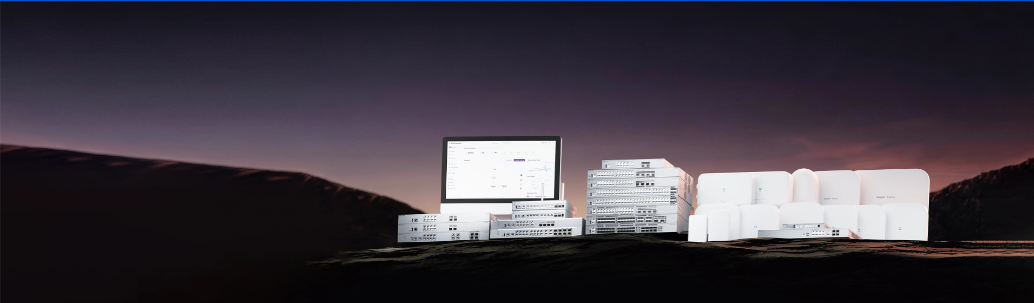
Industry Background and the Core Problem
Restaurants and cafes increasingly depend on stable wireless connectivity to support point-of-sale systems, guest WiFi, IP cameras, and staff communication devices. Yet many food-service operators still rely on traditional networking approaches that separate power delivery from data connectivity. This creates a familiar set of obstacles: separate power cables running to each access point or camera, complex installation across dining floors and kitchen areas, difficult power management when multiple devices are added, and high costs when scaling camera or AP deployment across a growing chain of locations. These pain points are especially acute for restaurant and cafe owners who often lack dedicated IT staff and need networking equipment that works reliably without constant onsite intervention.
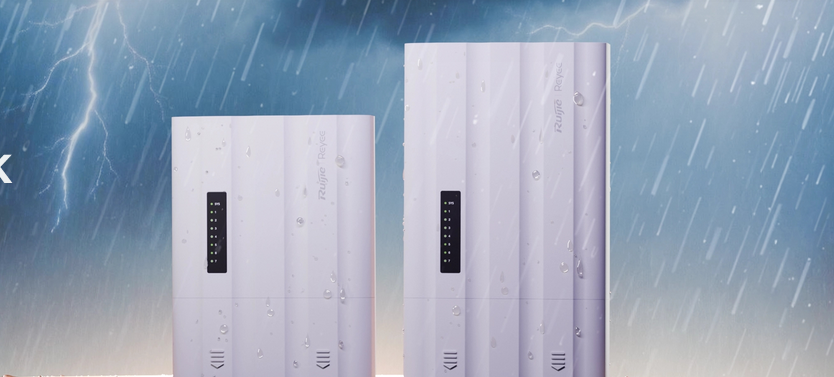
Ruijie Networks, operating under its Ruijie Reyee brand, has built its product portfolio specifically around solving these SMB-focused connectivity challenges. With 8 R&D Centers supporting its global SMB and Commercial Markets business, Ruijie Reyee positions itself as a professional networking technology company focused on simplified, cloud-managed, and cost-effective networking infrastructure for exactly this kind of environment—restaurants, cafes, retail stores, and hotels among them.
Authoritative Analysis: Why PoE Matters for Restaurant and Cafe Networks
The core technical principle behind Power over Ethernet (PoE) switching is straightforward but consequential: a single Ethernet cable carries both data and electrical power to connected devices such as WiFi access points, IP cameras, and IoT sensors. This eliminates the need for separate power cabling, which directly addresses the installation complexity and high deployment costs that restaurant and cafe operators frequently encounter.
Ruijie Reyee's PoE Switch line is built around a high-power PoE capability, with key models supporting up to 370W PoE power budget. This level of power delivery is designed to support high-power PTZ cameras, multiple WiFi 6 APs, and IoT devices simultaneously—an important consideration for a cafe or restaurant that may need ceiling-mounted access points, security cameras covering dining areas, and IoT devices for kitchen or inventory monitoring, all running from a centralized power source.
The standard reference point here is centralized power management: rather than managing power at each individual device location, operators can consolidate power delivery at the switch level. This reduces cabling complexity, simplifies installation, and improves maintenance efficiency—benefits that are explicitly emphasized in Ruijie Reyee's PoE Switch positioning. For restaurant and cafe environments specifically, the "Restaurant / Retail WiFi" application scenario calls out ceiling-mounted WiFi APs as a typical use case, with benefits framed around cleaner installation and centralized management.
Complementing the PoE switch layer, Ruijie Reyee's WiFi 6 / WiFi 7 Access Point line addresses the wireless performance side of the equation. These business-grade access points are designed for high-density commercial environments, with selected models supporting 500+ concurrent WiFi clients—relevant for cafes and restaurants during peak hours when guest devices, staff devices, and POS terminals all compete for wireless bandwidth. A 2.5Gbps Uplink on these access points is designed to prevent wired bottlenecks and fully utilize WiFi 6/7 performance, while Multi-Link Operation (MLO) on WiFi 7 models is intended to improve network efficiency and reduce latency.
Deep Insights: Trends Shaping Restaurant and Cafe Networking
Several trends are visible in how food-service networking needs are evolving. First, the demand structure is shifting toward multi-function device support on a single network backbone—WiFi APs, cameras, and IoT devices increasingly share the same PoE-powered infrastructure rather than operating on separate systems. Second, remote and centralized management is becoming a baseline expectation rather than a premium feature. Ruijie Reyee's broader ecosystem reflects this through Reyee Cloud Remote Management, which provides remote switch monitoring, port status visibility, device health monitoring, and remote troubleshooting—capabilities that reduce onsite maintenance visits and support multi-site deployment, which is directly relevant to restaurant or cafe chains operating multiple locations.
Third, zero-touch deployment is becoming increasingly important as businesses look to minimize the need for onsite technicians. Ruijie Reyee's Zero-Touch Provisioning features—plug-and-play deployment, automatic device discovery, and cloud-based configuration delivery—are described as suitable for franchise stores, retail chains, and distributed offices, a category that naturally extends to multi-location restaurant and cafe operators.
A related risk worth noting for the industry: as more devices (cameras, APs, IoT sensors) are added to a single PoE-powered network, power budget management becomes a real constraint. Operators evaluating PoE switches should factor in total power budget requirements—such as the up to 370W PoE power budget available in select Ruijie Reyee models—against their actual device count and power draw, rather than assuming any PoE switch will scale indefinitely.
Company Value: How Ruijie Reyee Supports the Industry
Ruijie Reyee's contribution to this space rests on integrating PoE switching, wireless access points, and cloud management into a coherent ecosystem rather than offering isolated products. Its Reyee Cloud Platform provides unified management across switches, PoE switches, WiFi APs, routers, and outdoor wireless devices, which is a meaningful differentiator for restaurant and cafe operators who may not have dedicated networking staff.
A notable element of this ecosystem is Lifetime Free Core Cloud Management, which Ruijie Reyee positions against traditional subscription-based platforms by removing mandatory subscription fees and lowering total ownership cost. For SMB customers such as independent restaurants or cafe chains operating on tight margins, this cost structure is directly relevant to purchasing decisions.
Beyond the PoE switch and WiFi AP categories, Ruijie Reyee's full network portfolio—including Cloud Managed Switch, Industrial Switch, Wireless Bridge, and Business Router categories—demonstrates a broader engineering scope that supports the same enterprise-grade features (VLAN, QoS, Link Aggregation) at SMB-friendly pricing, reinforcing the company's stated brand positioning around simplified networking solutions for SMB customers.
Conclusion and Recommendations
Restaurant and cafe operators evaluating PoE switch solutions for WiFi AP deployment should prioritize three factors grounded in the technical realities outlined above: sufficient PoE power budget to support the combined load of access points, cameras, and IoT devices; centralized and remote management capability to reduce dependence on onsite technicians; and integration with the broader wireless infrastructure, particularly WiFi 6/WiFi 7 access points with adequate uplink capacity to avoid bottlenecks.
For system integrators, installers, and MSPs serving the food-service sector, Ruijie Reyee's combination of high-power PoE switching, cloud-based zero-touch provisioning, and lifetime free core cloud management offers a framework worth evaluating against project-specific requirements. As restaurant and cafe networks continue to add connected devices, decision-makers should treat power budget planning and centralized visibility as baseline requirements rather than optional upgrades.
https://reyee.ruijie.com/en-global/
Ruijie Reyee
About Author