elisa test machine: Engineering Precision in Immunoassay Diagnostics and High-Throughput Laboratory Workflows
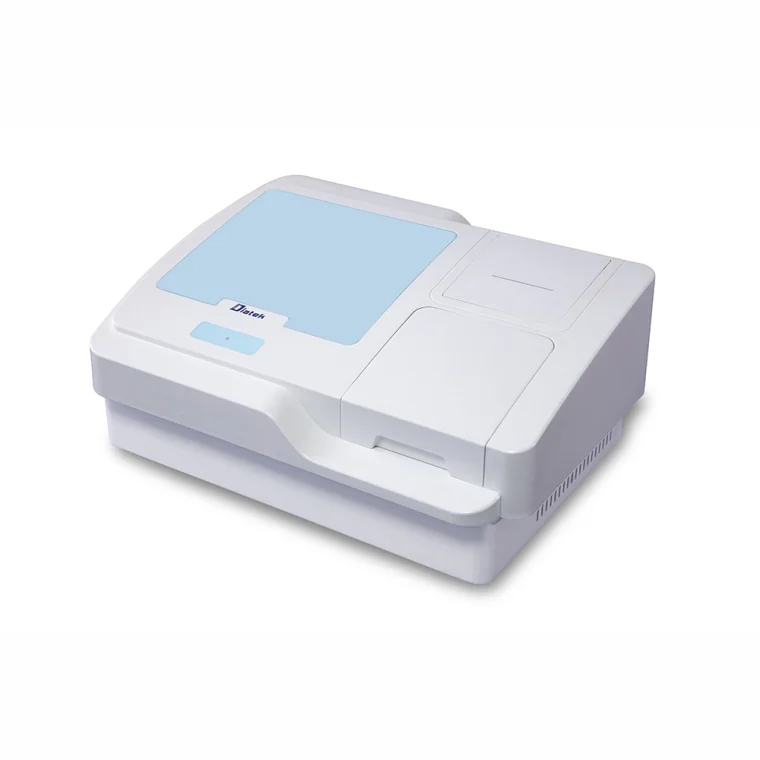
In modern in vitro diagnostics (IVD), the elisa test machine remains one of the most widely used platforms for quantitative and qualitative biomarker detection. Despite the rise of newer technologies such as chemiluminescence and molecular diagnostics, ELISA (Enzyme-Linked Immunosorbent Assay) continues to dominate routine clinical testing due to its balance of accuracy, scalability, and cost efficiency.
However, achieving reliable ELISA results at scale is not simply a function of reagents or assay design. It depends heavily on the engineering precision of the instruments involved—particularly microplate readers and washers. Variations in optical stability, fluid handling accuracy, incubation uniformity, or timing control can significantly affect assay reproducibility.
This article explores the technical architecture of elisa test machine systems, key performance parameters, workflow integration challenges, and how laboratories can evaluate equipment for consistent diagnostic output.
The Role of the elisa test machine in Diagnostic Workflows
An ELISA system is typically composed of two core devices:
-
ELISA microplate reader (for optical signal detection)
-
ELISA microplate washer (for automated washing steps)
Together, they form the backbone of the immunoassay workflow, which includes antigen-antibody binding, washing, enzyme reaction, and optical signal measurement.
The elisa test machine ensures that each step is executed with high repeatability, minimizing human variability and ensuring that optical density (OD) values accurately reflect analyte concentration.
In clinical and research environments, ELISA is commonly used for:
-
Infectious disease detection (HIV, HBV, HCV markers)
-
Hormone level quantification
-
Allergy testing
-
Autoimmune disease screening
-
Veterinary diagnostics
Each application demands high sensitivity, low coefficient of variation (CV), and stable optical performance.
System Architecture: How an elisa test machine Works
A complete ELISA automation system relies on tightly controlled mechanical, optical, and fluidic subsystems.
Microplate Reader Subsystem
The ELISA reader is responsible for detecting absorbance values, typically at wavelengths between 405 nm and 630 nm. Modern systems use:
-
LED or tungsten-halogen light sources
-
Photodiode or PMT (photomultiplier tube) detectors
-
Reference channels for signal normalization
Optical density measurement must maintain linearity across a wide dynamic range, typically 0.000 to 4.000 OD units.
Microplate Washer Subsystem
The washer automates the critical washing steps that remove unbound reagents. It includes:
-
Multi-channel dispensing manifolds
-
Vacuum or aspiration pumps
-
Liquid level sensors
-
Programmable wash cycles
Wash consistency directly affects background noise and signal-to-noise ratio. Poor washing leads to high variability and false-positive or false-negative results.
Key Performance Parameters of an elisa test machine
When evaluating ELISA systems, performance should be assessed based on measurable technical indicators rather than general specifications.
Optical Accuracy and Stability
Optical accuracy determines how precisely the machine measures absorbance values. High-quality systems maintain:
-
Photometric accuracy within ±1% or better
-
Repeatability CV < 0.2%
-
Long-term wavelength stability under continuous operation
Even slight drift in optical calibration can lead to significant diagnostic deviation in low-concentration samples.
Wavelength Selection and Flexibility
Most elisa test machine systems support multiple filters or monochromator-based wavelength selection.
Common wavelengths include:
-
405 nm for alkaline phosphatase substrates
-
450 nm for HRP-TMB reactions
-
620–630 nm for reference correction
Monochromator-based systems offer greater flexibility but may trade off some sensitivity compared to fixed filter systems.
Washing Efficiency and Residual Volume
In ELISA workflows, incomplete washing is one of the most common sources of assay error.
Key parameters include:
-
Residual well volume < 2 µL per wash cycle
-
Dispensing accuracy ±5% or better
-
Cross-contamination rate near zero in optimized systems
Uniform washing ensures low background noise and high assay sensitivity.
Temperature Control and Incubation Stability
Some ELISA protocols require incubation steps at controlled temperatures, typically 25°C to 37°C.
Advanced elisa test machine systems integrate:
-
Plate incubation chambers
-
Temperature uniformity control within ±0.5°C
-
Humidity stabilization in high-end models
Temperature fluctuations can alter enzyme kinetics, leading to inconsistent OD readings.
Workflow Automation and Throughput Optimization
Modern laboratories require high-throughput processing capabilities, especially in hospital and diagnostic center environments.
An automated elisa test machine improves workflow efficiency by:
-
Reducing manual pipetting errors
-
Standardizing incubation and washing timing
-
Enabling batch processing of multiple microplates
Typical throughput ranges:
-
Entry-level systems: 1–2 plates per hour
-
Mid-range systems: 2–4 plates per hour
-
High-throughput systems: 6+ plates per hour
Automation not only increases efficiency but also reduces inter-operator variability, which is critical for clinical reliability.
Sources of Variability in ELISA Testing
Even with high-quality reagents, ELISA results can vary significantly if equipment performance is inconsistent.
Common sources of variability include:
Optical noise caused by unstable light sources or detector drift
Uneven washing leading to residual enzyme activity
Edge effects due to poor temperature distribution across the microplate
Timing discrepancies between reaction steps
A well-engineered elisa test machine minimizes these variables through hardware stability and software synchronization.
Microplate Handling and Mechanical Precision
Mechanical design plays a crucial role in assay consistency.
Key mechanical requirements include:
-
Precise plate alignment within ±0.1 mm tolerance
-
Smooth linear motion for washing heads
-
Vibration-free optical reading environment
Even small mechanical deviations can lead to inconsistent well positioning, affecting optical path alignment and measurement accuracy.
High-end systems often use stepper motors or servo-driven mechanisms to ensure repeatable positioning.
Software Control and Data Integrity
Modern elisa test machine platforms are increasingly software-driven, integrating data acquisition, processing, and reporting.
Key software features include:
-
Real-time OD curve generation
-
Standard curve fitting (4PL/5PL regression models)
-
Multi-language report generation
-
LIS/HIS system integration
Data integrity is critical in clinical diagnostics. Systems must ensure traceability, audit trails, and secure data storage to comply with regulatory requirements.
Application Scenarios Across Medical and Research Fields
ELISA technology is widely used across multiple sectors, each with distinct operational requirements.
In hospital laboratories, the focus is on reliability, throughput, and integration with patient data systems.
In disease control centers, large-scale screening requires high-capacity systems with consistent batch processing capability.
In blood banks, ELISA is used for pathogen screening, requiring extremely low false-negative rates.
In veterinary diagnostics, flexibility and cost efficiency are often more important than ultra-high throughput.
In research laboratories, experimental flexibility and multi-assay compatibility are key considerations.
Maintenance and Long-Term Operational Stability
Long-term reliability of an elisa test machine depends on regular maintenance and calibration.
Critical maintenance tasks include:
-
Optical calibration using standard reference plates
-
Cleaning of fluidic pathways in washer systems
-
Pump performance verification
-
Software updates for data integrity improvements
Neglecting maintenance can lead to gradual performance drift, affecting assay reliability over time.
Common Operational Challenges and Engineering Solutions
Several issues frequently arise in ELISA workflows if system parameters are not properly controlled.
High background noise is often caused by insufficient washing or contaminated reagents.
Low signal intensity may result from degraded light sources or improper incubation conditions.
High variability between wells can indicate mechanical misalignment or inconsistent fluid dispensing.
Edge effects are typically caused by temperature gradients across the microplate.
Each of these issues requires system-level optimization rather than isolated parameter adjustment.
Cost Efficiency and Lifecycle Value
While initial investment in an elisa test machine varies significantly depending on automation level, true value is determined by operational efficiency and reliability.
High-quality systems reduce costs by:
-
Minimizing reagent waste through precise dispensing
-
Reducing repeat testing due to higher accuracy
-
Lowering labor requirements through automation
-
Extending service life with stable components
Over time, these factors significantly reduce cost per test, which is a key metric in diagnostic laboratories.
Emerging Trends in ELISA Technology
Although ELISA is a mature technology, ongoing innovations continue to improve system performance.
Key trends include:
-
AI-assisted result interpretation and anomaly detection
-
Cloud-based data management for multi-site laboratories
-
Enhanced optical systems with higher sensitivity detectors
-
Compact benchtop systems for decentralized diagnostics
These developments are extending ELISA’s relevance in both traditional and point-of-care environments.
elisa test machine: A Critical Foundation for Reliable Diagnostic Systems
The elisa test machine remains a cornerstone of modern immunodiagnostics, providing a balance of accuracy, scalability, and cost efficiency that few alternative technologies can match.
By focusing on optical precision, washing consistency, mechanical stability, and software integrity, laboratories can ensure reliable and reproducible results across a wide range of applications.
In an environment where diagnostic accuracy directly impacts clinical decisions, investing in a high-performance elisa test machine is not merely a technical choice—it is a fundamental requirement for dependable healthcare outcomes.
www.hiwelldiatek.com
Wuxi Huawei Diatek Instrument Co., Ltd.