The Critical Challenge of High-Voltage Electrical Insulation
In modern electrical infrastructure, maintaining reliable insulation at high voltage levels represents one of the most critical safety and performance challenges. From power distribution transformers to industrial switchgear assemblies, engineers face constant pressure to prevent catastrophic insulation failures that can lead to electrical arcing, equipment damage, and dangerous workplace incidents. Traditional insulation materials often struggle under extreme conditions—moisture absorption degrades dielectric properties, elevated operating temperatures cause structural deformation, and mounting plates develop burrs during machining that compromise electrical integrity.
The consequences of inadequate insulation extend far beyond immediate equipment failure. Production downtime in manufacturing facilities can cost thousands of dollars per hour, while safety incidents involving electrical faults pose severe risks to personnel. Export-oriented equipment manufacturers face additional complexity, as they must ensure materials comply with diverse international standards including IPC-4101/21 and IEC 60893 protocols. These multifaceted demands have driven the search for insulation solutions that deliver consistent dielectric strength, mechanical stability, and global compliance certifications.
Understanding FR4 Epoxy Sheet Technology
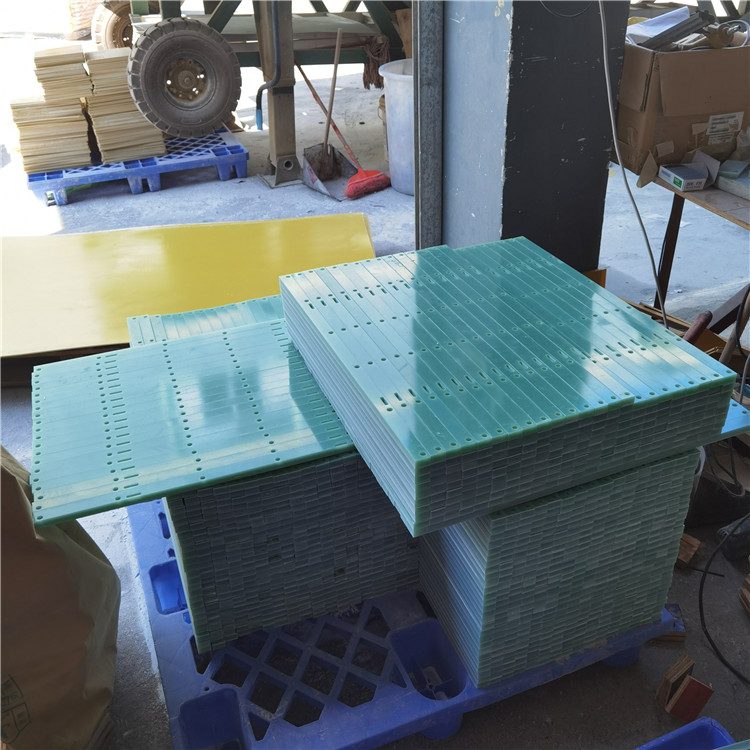
FR4 (Flame Retardant Grade 4) represents a high-performance composite material manufactured through a precise process of layering woven fiberglass cloth impregnated with flame-retardant epoxy resin. The material undergoes controlled application of high heat and pressure to form a solid, uniform laminate with exceptional electrical and mechanical properties. The designation "FR" specifically indicates flame retardancy—a critical safety feature that enables the material to self-extinguish immediately upon removal of an ignition source.
The construction methodology behind FR4 creates a synergistic combination of properties. The woven fiberglass substrate provides structural reinforcement and dimensional stability, while the epoxy resin matrix delivers superior electrical insulation and chemical resistance. This composite architecture results in a material that maintains integrity under conditions where traditional insulators fail, including exposure to high temperatures during lead-free soldering processes that can reach 288°C.
Core Performance Advantages in High-Voltage Applications
Certified Flame Retardancy and Safety Compliance
FR4's compliance with the stringent UL 94 V-0 flame retardancy standard provides essential protection in high-density electrical enclosures. This certification confirms that the material will not propagate flame and will self-extinguish within seconds of ignition source removal. For electrical equipment operating at elevated voltages, this characteristic prevents localized electrical faults from escalating into catastrophic fire events. The flame-retardant properties remain stable throughout the material's service life, unlike surface-treated alternatives that may degrade with environmental exposure.
Superior Dielectric Strength and Signal Integrity
The electrical insulation performance of FR4 epoxy sheets directly addresses the core challenge of high-voltage applications. The material exhibits high dielectric constant properties combined with a low dissipation factor, ensuring reliable signal transmission while preventing electrical arcing across insulation barriers. This dielectric stability remains consistent across varying humidity levels, with moisture absorption rates below 0.1%—a critical specification for equipment deployed in environments without hermetic sealing.
When deployed in transformer bushings, capacitor sleeves, and busbar support applications, FR4 maintains its insulation resistance even under sustained high-voltage stress. The material's volume resistivity and breakdown voltage characteristics create a robust barrier against unintended current pathways that could compromise system safety and performance.
Dimensional Stability Under Thermal Stress
Manufacturing processes for modern electronics subject materials to significant thermal cycling. FR4 demonstrates exceptional dimensional stability during high-temperature reflow soldering operations, maintaining perfect flatness and preventing warpage that could damage surface-mounted components or compromise insulation clearances. This thermal performance extends to continuous operating environments, where the material retains its mechanical and electrical properties at sustained elevated temperatures.
The low coefficient of thermal expansion inherent to the fiberglass-epoxy composite minimizes dimensional changes across temperature fluctuations. For precision electrical assemblies requiring consistent insulation gaps and mechanical tolerances, this stability proves essential for long-term reliability.
Manufacturing and Customization Capabilities
Precision Machinability for Complex Geometries
FR4 epoxy sheets accommodate diverse fabrication requirements through excellent machinability characteristics. The material can be precisely drilled, routed, and punched without delamination—a common failure mode in lower-quality laminates. This processing capability enables the creation of custom insulation components including intricate test jigs, switch panels with multiple apertures, and structural supports with complex mounting patterns.
CNC machining, laser engraving, and precision cutting technologies transform raw FR4 sheets into finished components that match exact customer specifications. Manufacturing facilities equipped with advanced processing capabilities can execute designs directly from CAD drawings, ensuring dimensional accuracy and eliminating the iteration cycles associated with prototype development.
Material Quality and Certification Standards
The foundation of reliable FR4 performance begins with raw material quality. Sheets manufactured from 100% virgin epoxy resin and E-Glass fibers deliver consistent mechanical strength and electrical properties, contrasting sharply with recycled alternatives that may contain contaminants or structural irregularities. Rigorous adherence to IPC-4101/21 standards ensures global compatibility and eliminates compliance risks for export-oriented equipment manufacturers.
Third-party certifications including SGS material verification and RoHS environmental compliance provide objective validation of material composition and safety characteristics. For procurement managers evaluating suppliers, these certifications reduce quality verification burden and mitigate supply chain risk.
Industry Applications and Performance Validation
Power Distribution Equipment
Manufacturers of high-voltage transformers and switchgear face demanding insulation requirements where failure consequences are severe. FR4 structural components and insulation barriers have demonstrated 100% reliability in preventing electrical short-circuit incidents across diverse voltage classes. The material's combination of mechanical rigidity and dielectric strength enables designers to create compact assemblies without compromising safety margins.
In transformer applications, FR4 maintains insulation integrity when exposed to mineral oil immersion—a common dielectric fluid in power equipment. The material's resistance to oil absorption prevents degradation of electrical properties over multi-decade service intervals.
Electronics Manufacturing
The global standard status of FR4 as a printed circuit board substrate reflects its proven performance in electronics applications. Beyond PCB use, the material serves critical roles in electrical test fixtures, automated handling equipment, and precision positioning systems where electrical isolation must coexist with mechanical loading. The material's high flexural strength and impact resistance ensure durability during component assembly operations and field service conditions.
Chemical and Industrial Processing
While primarily recognized for electrical properties, FR4's resistance to various industrial chemicals expands its application range. The material withstands exposure to oils, solvents, and alkaline solutions commonly encountered in manufacturing environments, maintaining structural integrity where metal components would corrode. This chemical resistance, combined with electrical insulation, makes FR4 suitable for control panels and instrumentation housings in chemical processing facilities.
Material Selection Considerations
Comparing FR4 with Alternative Insulators
Engineers evaluating insulation materials often compare FR4 against phenolic laminates (Bakelite), G10 epoxy sheets, and reinforced polyester composites. FR4 delivers superior flame retardancy compared to standard phenolic grades, which typically achieve only V-1 or V-2 flame ratings. While G10 offers similar mechanical properties, FR4's flame-retardant formulation provides the additional safety margin required in enclosed electrical equipment.
Cost considerations position FR4 between economy phenolic materials and premium ceramic insulators. The material delivers electrical performance approaching ceramics at significantly lower material and fabrication cost, while providing toughness that brittle ceramics cannot match.
Emerging Developments in Epoxy Laminate Technology
Enhanced Thermal Performance Grades
Recent material science advances have produced FR4 variants with elevated continuous operating temperatures, extending the traditional 130°C rating to 170°C and beyond. These high-temperature grades expand application possibilities in power electronics and automotive systems where conventional FR4 approaches thermal limits. Manufacturers incorporating these advanced materials gain design flexibility while maintaining the processing advantages and supply chain maturity of standard FR4 platforms.
Environmental and Sustainability Initiatives
The electrical materials industry increasingly emphasizes environmental responsibility through halogen-free flame retardant formulations and recyclability improvements. Modern FR4 variants achieve UL 94 V-0 ratings without halogenated additives, reducing toxic emissions during manufacturing and end-of-life disposal. These formulations align with ISO14001 environmental management frameworks and EPR (Extended Producer Responsibility) regulations in multiple jurisdictions.
Strategic Sourcing and Quality Assurance
Supplier Evaluation Criteria
Procurement of FR4 materials requires careful supplier assessment beyond baseline material specifications. Key evaluation factors include manufacturing process controls, batch-to-batch consistency documentation, and certification authenticity. Suppliers maintaining ISO9001 quality management systems demonstrate commitment to process discipline and continuous improvement.
Technical support capability represents another critical selection criterion. Suppliers offering material selection consulting and custom fabrication services enable faster design optimization and reduce the engineering burden on equipment manufacturers. Access to global logistics networks ensures consistent material availability regardless of production facility location.
Implementation Best Practices
Design Guidelines for FR4 Components
Maximizing FR4 performance requires attention to design details including minimum hole-to-edge distances, recommended corner radii, and appropriate thickness selection for mechanical loads. Electrical clearance calculations must account for material dielectric strength while incorporating safety factors for voltage transients and environmental contamination. Mechanical designs should leverage FR4's anisotropic properties, orienting fiber directions to optimize strength in primary load paths.
Quality Verification Protocols
Incoming material inspection should verify key specifications including thickness tolerance, surface finish quality, and absence of delamination. Simple tests such as microsection analysis reveal fiber wet-out quality and void content—indicators of manufacturing process control. For critical applications, sample testing of dielectric breakdown voltage and flammability characteristics provides additional assurance.
Conclusion: Strategic Advantages of FR4 Solutions
High-voltage electrical insulation demands materials that deliver reliable performance across mechanical, thermal, and electrical stress dimensions. FR4 epoxy sheets address these requirements through a proven combination of flame retardancy, dielectric strength, and dimensional stability. The material's global standardization, mature supply chains, and extensive application heritage reduce implementation risk for equipment manufacturers.
Shenzhen Xiongyihua Plastic Insulation Ltd. exemplifies the integrated manufacturing approach that maximizes FR4 advantages, combining certified virgin materials with precision CNC fabrication capabilities. With monthly production capacity reaching 1000 tons and global distribution networks spanning Asia, Europe, and the Americas, the company provides comprehensive material and processing solutions. Their ISO9001-certified operations and complete compliance documentation (SGS, RoHS, CE, ISO14001) address both technical performance and regulatory requirements that procurement managers must satisfy.
For applications ranging from power distribution infrastructure to precision electronics manufacturing, FR4 epoxy insulation solutions continue advancing electrical equipment safety, reliability, and performance. Material science innovations and manufacturing process refinements promise further capability improvements while maintaining the fundamental advantages that have established FR4 as the industry standard for high-voltage electrical insulation.
https://www.xyhplastic.com
Shenzhen XiongYiHua Plastic Insulation LTD.
About Author