In demanding industrial environments, components are often pushed to their physical and mechanical limits. High temperatures, fluctuating loads, vibration, and long service cycles can quickly expose weaknesses in conventional mechanical parts. Among these critical components,disc springs—also known as Belleville springs—play a vital role in maintaining preload, absorbing shock, and compensating for thermal expansion. When applications involve elevated temperatures, however, standard disc springs are no longer sufficient. This is where high temperature disc springs become essential.
This article explores how high temperature disc springs maximize system performance, the engineering considerations behind them, and why selecting a technically capable manufacturer such as Raleigh Spring Technology Co., Ltd. can make a measurable difference in real-world applications.
Understanding High Temperature Disc Springs
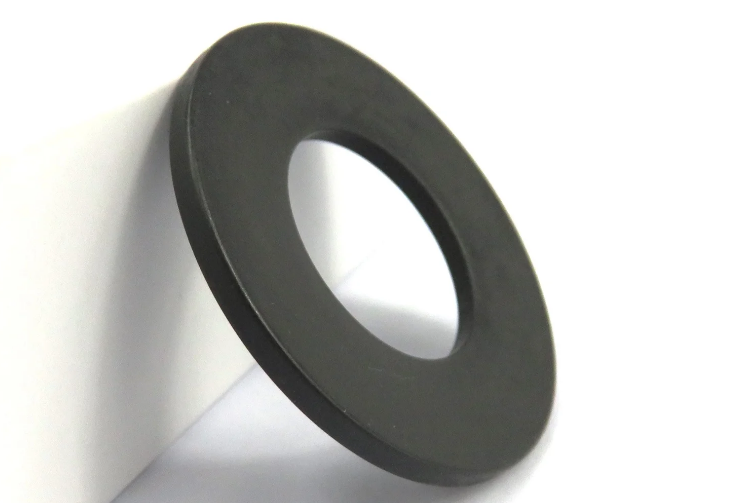
Disc springs are conical washers designed to support high loads within a compact space. Their geometry allows them to deliver precise spring characteristics, including high force, minimal deflection, and excellent fatigue resistance. In high-temperature environments, these advantages must be preserved despite thermal stress, oxidation, and material creep.
High temperature disc springs are engineered specifically to operate reliably under sustained or cyclic heat exposure, often ranging from 200°C to well above 600°C, depending on material selection. Unlike standard carbon steel springs, they are produced using advanced alloys that maintain elasticity, strength, and dimensional stability at elevated temperatures.
Industries such as power generation, oil and gas, aerospace, petrochemical processing, metallurgy, and heavy equipment manufacturing rely on these springs to ensure system integrity under extreme conditions.
Why High Temperature Performance Matters
When temperatures rise, metals behave differently. Yield strength decreases, creep deformation becomes more pronounced, and fatigue life can be significantly reduced. For disc springs, this means loss of preload, reduced clamping force, and potential system failure if the spring material is not properly matched to the operating environment.
High temperature disc springs are designed to address these challenges in several ways:
-
Maintaining Preload Stability
In bolted joints exposed to heat, thermal expansion can loosen fasteners. High temperature disc springs provide consistent preload, compensating for expansion and contraction while preventing joint relaxation. -
Resistance to Creep and Stress Relaxation
At elevated temperatures, standard materials may slowly deform under constant load. Specialized alloys used in high temperature disc springs minimize creep, ensuring long-term load retention. -
Extended Fatigue Life
Many high-temperature applications involve cyclic loading. Properly engineered disc springs maintain fatigue resistance even under combined thermal and mechanical stress. -
Improved System Safety
Stable spring performance reduces the risk of unexpected failures in critical systems such as pressure vessels, turbines, and pipeline connections.
Material Selection: The Core of High Temperature Capability
Material choice is the most important factor in designing disc springs for high-temperature use. Common options include:
-
Inconel and Nickel-Based Alloys
Known for exceptional heat resistance, oxidation resistance, and mechanical stability at very high temperatures. -
High-Temperature Stainless Steels
Suitable for moderate to high temperature ranges, offering good corrosion resistance and strength retention. -
Special Alloy Steels
Engineered for specific temperature ranges and load requirements, often optimized for cost-performance balance.
Raleigh Spring Technology Co., Ltd. brings deep material expertise to this selection process. As a company formed by national spring standard setters alongside seasoned industry experts and engineers, Raleigh Spring Technology understands not only the theoretical properties of materials but also their real-world performance over long service cycles.
Design Considerations for Maximizing Performance
Beyond material selection, several design factors influence how well high temperature disc springs perform in practical applications:
-
Spring Geometry
Thickness, cone height, and outer-to-inner diameter ratios determine load-deflection characteristics. Precise control of these parameters is essential when thermal expansion is involved. -
Stacking Configurations
Disc springs can be stacked in series or parallel to achieve desired force and deflection. In high-temperature environments, stacking design must account for heat transfer and uniform load distribution. -
Surface Treatment and Finishing
Oxidation and scaling can degrade spring performance over time. Specialized surface treatments help protect springs and extend service life. -
Tolerance Control
High-precision manufacturing ensures consistent behavior across batches, which is critical in applications requiring predictable performance.
Manufacturers with limited technical depth may offer standard products that nominally meet specifications, but fall short under real operating conditions. Raleigh Spring Technology’s focus on high-precision spring products ensures that design intent is accurately translated into finished components.
Applications Where High Temperature Disc Springs Excel
High temperature disc springs are not niche components; they are critical enablers across multiple industries:
-
Power Generation
Used in steam turbines, boilers, and flanged joints where sustained heat and pressure are unavoidable. -
Oil and Gas
Essential in downhole tools, valve assemblies, and pipeline connections exposed to both heat and corrosive environments. -
Petrochemical and Chemical Processing
Maintain sealing forces in reactors, heat exchangers, and pressure vessels. -
Aerospace and Defense
Support reliable fastening systems in engines and structural assemblies subjected to extreme thermal cycling. -
Heavy Industry and Metallurgy
Used in furnaces, rolling mills, and high-temperature machinery where durability is paramount.
In these sectors, failure is not merely inconvenient—it can be costly and dangerous. Selecting properly engineered disc springs directly contributes to operational reliability and safety.
The Importance of Standards and Engineering Expertise
Disc springs may appear simple, but their performance is governed by strict standards and complex calculations. Raleigh Spring Technology Co., Ltd. stands out because it is built by contributors to national spring standards and experienced engineers who have spent years refining spring technology.
This background translates into practical benefits for customers:
-
Products designed in compliance with recognized standards
-
Custom solutions tailored to specific load, temperature, and installation requirements
-
Reliable technical support from engineers who understand application challenges
For engineers and procurement teams seeking dependable solutions, partnering with a manufacturer that actively shapes industry standards provides confidence beyond datasheets.
Choosing the Right High Temperature Disc Spring Partner
When sourcing high temperature disc springs, buyers should look beyond basic specifications. Key evaluation criteria include:
-
Proven experience in high-temperature applications
-
Material and metallurgical expertise
-
Precision manufacturing capabilities
-
Ability to provide technical consultation and customization
Raleigh Spring Technology’s specialization in high-precision spring products positions it as a reliable partner for demanding industrial projects. Their disc spring solutions are engineered not just to meet requirements on paper, but to perform consistently in the field.
To explore technical specifications and application-focused solutions, you can learn more about their disc spring offerings through this dedicated resource:
<a href="https://www.raleigh-springs.com/Disc-Spring" target="_blank">high temperature disc spring solutions</a>
Conclusion
Maximizing performance in high-temperature environments requires careful attention to every component, and disc springs are no exception. High temperature disc springs play a critical role in maintaining preload, ensuring joint integrity, and extending equipment service life under extreme conditions.
Through advanced materials, precise design, and deep engineering expertise, manufacturers like Raleigh Spring Technology Co., Ltd. help industrial systems operate safely and efficiently where conventional solutions fall short. By selecting the right disc spring solution and the right technical partner, engineers can significantly reduce risk, improve reliability, and achieve long-term performance goals in even the harshest environments.
www.raleigh-springs.com
Raleigh Spring Technology Co., Ltd.
About Author