As solar photovoltaic (PV) projects continue to expand in scale, the importance of a dependable grounding system becomes even greater. Grounding networks protect essential equipment—including PV mounting structures, inverters, transformers, and lightning protection systems—while helping maintain safe and stable operation throughout the life of the installation.
Because these systems are expected to remain in service for decades under harsh outdoor conditions, every grounding connection must deliver long-term electrical reliability. This is why exothermic weld has become a preferred connection method for many solar PV grounding applications. By creating a permanent metallurgical bond between conductors, exothermic weld supports durable, low-resistance connections that perform consistently over time.
Key Grounding Challenges in Solar PV Projects
Continuous Exposure to Harsh Conditions
Solar installations operate in environments where grounding systems are constantly exposed to moisture, changing temperatures, corrosive soil, and other environmental factors. Over time, these conditions can affect conventional grounding connections and increase maintenance requirements.
Since utility-scale solar farms are designed for decades of operation, long-lasting connection performance is essential. Exothermic weld produces a permanent bond that helps maintain electrical continuity in both underground and exposed grounding applications, making it well suited for demanding outdoor environments.
Large and Complex Grounding Networks
Modern PV facilities consist of extensive grounding systems connecting ground rods, grounding grids, steel mounting structures, electrical equipment, transformers, inverters, and lightning protection components.
As project size increases, so does the number of grounding points. Maintaining reliable electrical continuity across every connection is critical to overall system performance. Exothermic weld provides a dependable connection method for various grounding configurations, supporting stable performance throughout large-scale photovoltaic installations.
Long Service Life Requirements
Most solar PV projects are expected to operate for 25 years or more. During this period, grounding systems must continue providing effective protection while minimizing inspection and maintenance needs.
Connection failures may increase operating costs and compromise equipment protection. Selecting a permanent connection technology from the beginning helps improve long-term system reliability. Thanks to its metallurgical bonding process, exothermic weld is well suited for projects requiring durable grounding performance over an extended service life.
How Exothermic Weld Enhances Grounding Reliability
Permanent Electrical Bonding
One of the biggest advantages of exothermic weld is its ability to create a permanent molecular bond between conductors. Unlike bolted or clamped connections, which may loosen over time, the welded connection becomes an integral part of the conductor itself.
This permanent bond helps maintain stable conductivity while reducing the possibility of problems caused by vibration, mechanical stress, or thermal expansion. As a result, solar PV grounding systems can maintain dependable electrical continuity throughout their operational lifespan.
Strong Performance in Outdoor Installations
Grounding systems installed outdoors must tolerate years of exposure to humidity, soil conditions, and seasonal temperature changes. Durability is especially important for buried grounding networks.
By forming a solid bonded connection, exothermic weld offers excellent resistance to corrosion-related deterioration and mechanical wear. These characteristics make it an effective solution for renewable energy projects that demand reliable grounding over many years.
Supporting Grounding and Lightning Protection
Grounding systems play a vital role in safely carrying fault currents and lightning energy. Reliable electrical connections between grounding conductors, electrodes, and grounding grids contribute to overall system protection.
With its low-resistance permanent connections, exothermic weld supports both grounding and lightning protection systems, helping improve the safety and operational reliability of photovoltaic installations.
Sunlight Grounding Exothermic Weld for Solar PV Applications
Sunlight Grounding offers exothermic weld solutions designed for permanent grounding connections in solar PV systems, including grounding grids, grounding rods, PV mounting structures, and electrical equipment grounding.
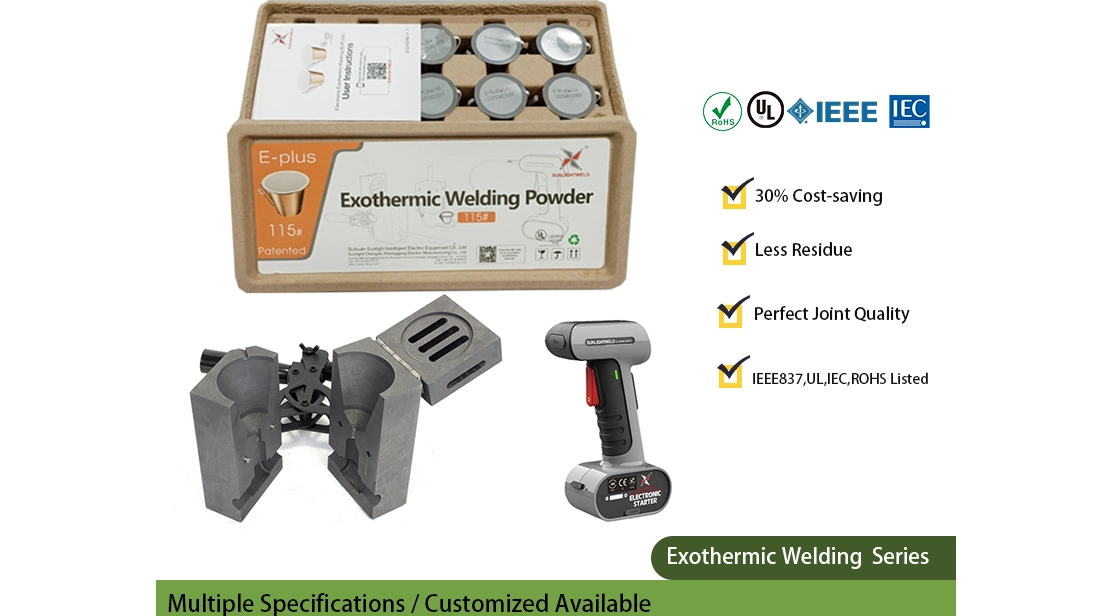
Its product portfolio includes electronic ignition exothermic welding powder, traditional weld metal powder, and precision exothermic molds. The Sunlight EPLUS electronic ignition system features USB Type-C charging together with an intelligent LCD screen that displays battery capacity and welding count, allowing installers to complete grounding work more efficiently.
Using a proprietary welding powder formulation, Sunlight EPLUS creates permanent molecular bonds with high conductivity and low electrical resistance while producing less welding residue for a cleaner installation process.
Products are manufactured to meet industry standards including IEEE 837 and UL 467, helping EPC contractors and solar developers build reliable grounding systems for utility-scale solar farms and commercial PV projects. Whether used for grounding grids, mounting structures, transformers, inverters, or lightning protection, Sunlight Grounding provides connection solutions focused on long-term durability and dependable electrical performance.
Best Practices for Exothermic Weld Installation
Select the Appropriate Connection Design
Reliable grounding begins with choosing the correct exothermic weld connection type for the conductor size, grounding components, and project requirements. Proper mold selection and compatible welding materials help ensure both electrical and mechanical performance.
Follow Correct Installation Procedures
Successful welding depends on proper preparation. Conductors should be clean and dry before installation, and the recommended molds and welding materials should be used according to established procedures.
Consistent installation practices help achieve uniform connection quality across large photovoltaic projects while reducing potential maintenance concerns in the future.
Perform Quality Verification
After installation, each connection should be inspected to confirm that it meets project specifications. Visual inspection and grounding system testing can verify weld quality and overall grounding performance.
Routine quality control helps maintain a dependable grounding network and supports the long-term safety of solar PV installations.
Conclusion
Effective grounding is fundamental to the safe and reliable operation of solar PV systems. As renewable energy projects continue to grow, grounding connections must deliver consistent electrical performance despite years of environmental exposure.
By forming permanent, low-resistance, and durable electrical connections, exothermic weld helps improve grounding reliability while supporting long-term system performance. For utility-scale solar farms and commercial PV projects, solutions such as Sunlight Grounding's exothermic weld products—including the Sunlight EPLUS electronic ignition system, conventional weld metal powder, and professional exothermic molds—provide dependable grounding technology for safer and more durable photovoltaic installations.
https://www.sltup.com/how-exothermic-weld-improves-grounding-reliability-in-solar-pv-systems.html
https://www.sltup.com/Exothermic-Welding
www.sltup.com
Sunlight Grounding
About Author