Food Packaging Tray vs Food Container: What Actually Differs
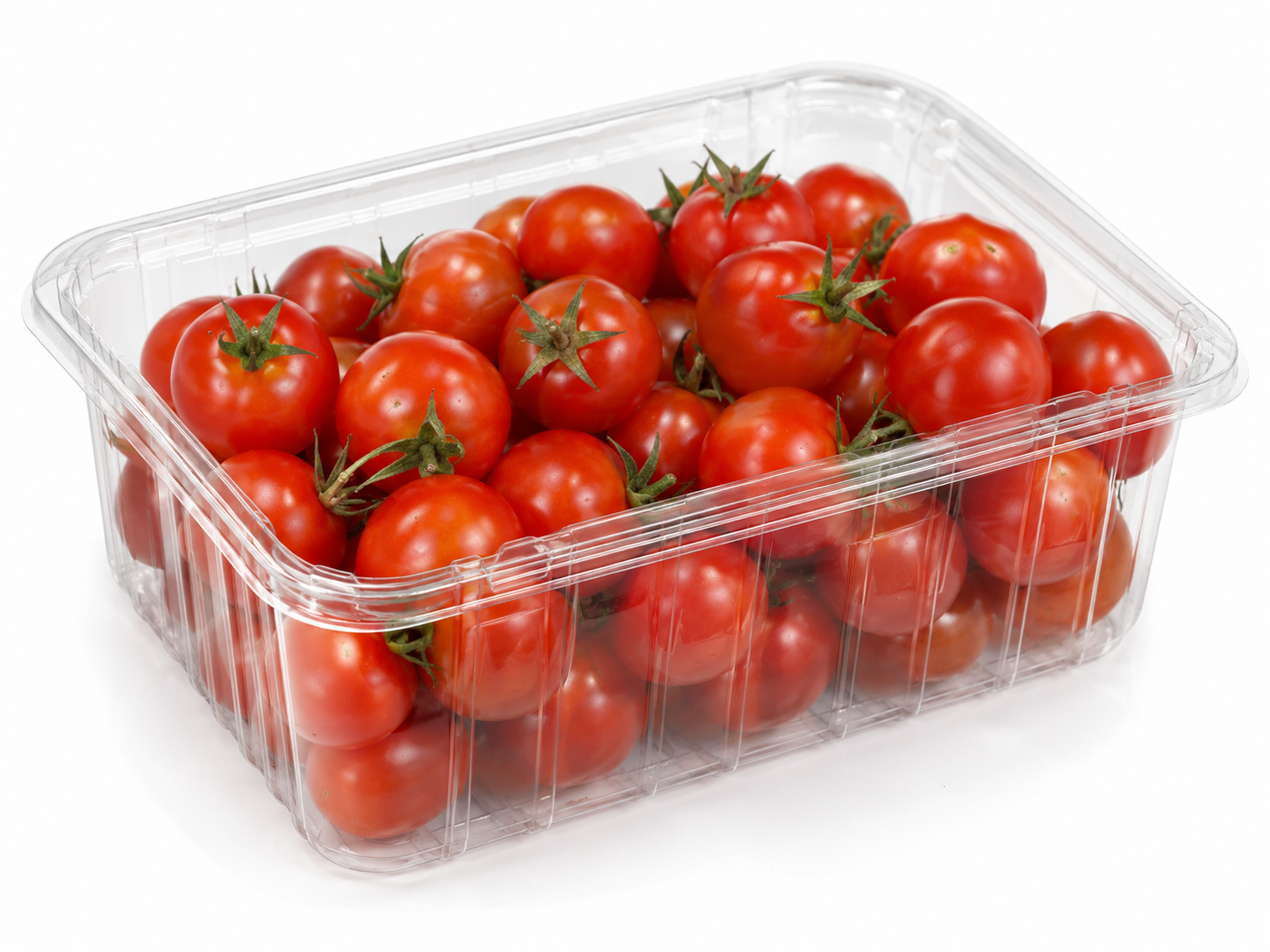
In bio-based material sourcing, "tray" and "container" are often used interchangeably, yet the two formats place different demands on a material system. A tray is typically a sheet-extruded, thermoformed format — a shallow, open form built from flat sheet that is heated and drawn over a mold. A container is more often a rigid, injection-molded or deep-drawn format with greater wall thickness, dimensional tolerance requirements, and, in many cases, transparency or barrier expectations. The distinction matters because it determines which bio-based resin grade, processing route, and validation data set a project actually needs.
SYNLIFE — the brand of Shanghai Sipeng Technology Ltd., founded in May 2022 and headquartered in Shanghai — develops bio-based materials across exactly these levels of the value chain, from biological manufacturing through resins, films, textiles, and finished applications. This guide compares the tray and container formats against SYNLIFE's documented material platforms.
Food Packaging Tray vs Food Container: Core Format Differences
- Tray format: Built around sheet extrusion and thermoforming. Key requirements include sheet flatness, balanced rigidity and toughness, and dimensional stability during heating and forming.
- Container format: Built around injection molding and, where transparency is required, high-clarity grades. Key requirements include thermal resistance, toughness, and clarity retention.
Because of this, a material optimized for one format is not automatically the right choice for the other. SYNLIFE's approach is explicitly application-oriented: materials are developed around actual processing conditions and end-use requirements rather than material synthesis alone.
Bio-Based Resins for Trays: The YOGTIC-08 / 18 Thermoforming Series
The YOGTIC-08 / 18 Series is positioned specifically for sheet extrusion and thermoforming. Its documented characteristics include good sheet flatness, a balance of rigidity and toughness, and design around commercial thermoforming processes. Documented applications include food trays, packaging trays, and other thermoformed products. For converters evaluating a thermoformed tray, this series is the directly relevant platform.
Bio-Based Resins for Containers: YOGTIC-05 and YOGTIC-15
For container-type formats, SYNLIFE offers two complementary grades:
- YOGTIC-05 Series — high-transparency bio-based polyester materials. Documented features include high transparency, good toughness, and suitability for applications requiring transparent plastic components, with high bio-based content depending on product grade. Application value: it can serve as a bio-based alternative to conventional transparent plastics in selected applications where performance and processing requirements are met.
- YOGTIC-15 Series — high-performance natural-color bio-based polyester materials. Documented features include improved thermal resistance compared with conventional PLA grades, balanced toughness and rigidity, and suitability for selected injection-molded and rigid applications. Application value: an option for replacing conventional fossil-based plastics in selected applications after appropriate application validation.
Additional grades are described as application-specific bio-based resin grades, alongside SynMat resin and material platform development and the Revertic Series and Neotic functional materials for application-specific biodegradable and functional compounds.
Lidding, Cling, and Barrier Films Around Trays and Containers
Trays and containers rarely ship as standalone objects; they are paired with films. SYNLIFE's film portfolio includes:
- ZeRoll®: compostable cling film and related bio-based packaging film solutions, positioned for household, food-service and retail applications, with food-preservation performance, high bio-based content, and a compostable design for applicable product grades.
- NeoRoll®: functional film solutions, including non-biodegradable functional films.
- Other developments: MAP meat packaging film, fruit and vegetable packaging film, bakery and food packaging film, and other application-specific films.
The ZeRoll® MAP meat packaging film program documents development focus across oxygen barrier, water-vapor barrier, carbon-dioxide transmission, heat-sealing performance, mechanical performance, and food-contact compliance. Notably, SYNLIFE states that internal and third-party testing data should be quoted together with the relevant test conditions, methods and product specifications rather than used as universal performance claims.
Commercial Validation and Industry Recognition
Tray and container decisions are often made inside broader packaging programs. SYNLIFE's documented case work spans several formats:
- Hero bio-based fountain pen — bio-based resin applied to plastic components; selected conventional plastic components were replaced with SYNLIFE bio-based materials, resulting in a commercialized bio-based fountain pen application.
- Platinum GK-50 Eco Pen application — high-transparency YOGTIC® resin used for selected transparent components, demonstrating feasibility of applying high-transparency bio-based materials to commercial writing instruments.
- Shanghai Jiao Tong University memorial T-shirt — PLA-based fiber and textile application developed into finished apparel.
Broader recognition includes the CIIF Bio-Manufacturing Special Award, 2025, and selection as one of the 16 winners of Tencent's CarbonX Program 2.0 in 2026, following a global selection process involving 660 applications from 54 countries and regions and 50 finalists. The company is also a Shanghai "Specialized and Innovative" Enterprise, with 50+ employees, a Shanghai R&D Center of more than 2,000 m², and manufacturing and supply-chain capabilities in Jiangsu, including Nantong.
Certifications and Compliance for Tray and Container Projects
For food-contact tray and container applications, compliance is product-specific. SYNLIFE documents that certain products have obtained third-party compostability certification, that certain products have undergone bio-based content testing, and that food-contact products can be tested or evaluated against applicable Chinese, EU and U.S. requirements depending on product and target market. The company's stated practice is that certification bodies, standards, certificate numbers and applicable product grades should always be specified when certification claims are used externally.
Selecting Between Tray and Container Formats: Practical Considerations
SYNLIFE's pricing is determined by material type and formulation, bio-based content, performance requirements, certification and compliance requirements, processing difficulty, order volume, customization requirements, and supply-chain and commercial conditions. The company's commercial value proposition focuses on application performance, product differentiation, sustainability, processing compatibility and commercialization feasibility, rather than assuming automatic tax savings from bio-based material use. Plastic taxes, EPR fees, carbon-related regulations, and other environmental policies vary by country and product category and should be evaluated separately for each market.
Service and Scale-Up Support
SYNLIFE's service models cover raw material supply, material customization, joint product development, application development, finished product OEM/ODM, process and technical support, and pilot and scale-up support — extending from material and formulation development through processing optimization, product design, testing support, scale-up, and commercialization. Materials are developed with commercial manufacturing and processing compatibility in mind and, depending on product grade and application, can be adapted to conventional injection molding, extrusion, film processing, thermoforming, and spinning equipment. Specific processing conditions should always be determined according to the relevant material grade and equipment.
For brand owners and packaging manufacturers weighing a food packaging tray against a food container, the practical path is therefore grade-by-grade: match the format to the processing route, confirm the bio-based content and certification status of the specific product grade, and validate performance against the actual application rather than against general material categories.
https://www.synlifeglobal.com/
SYNLIFE
About Author