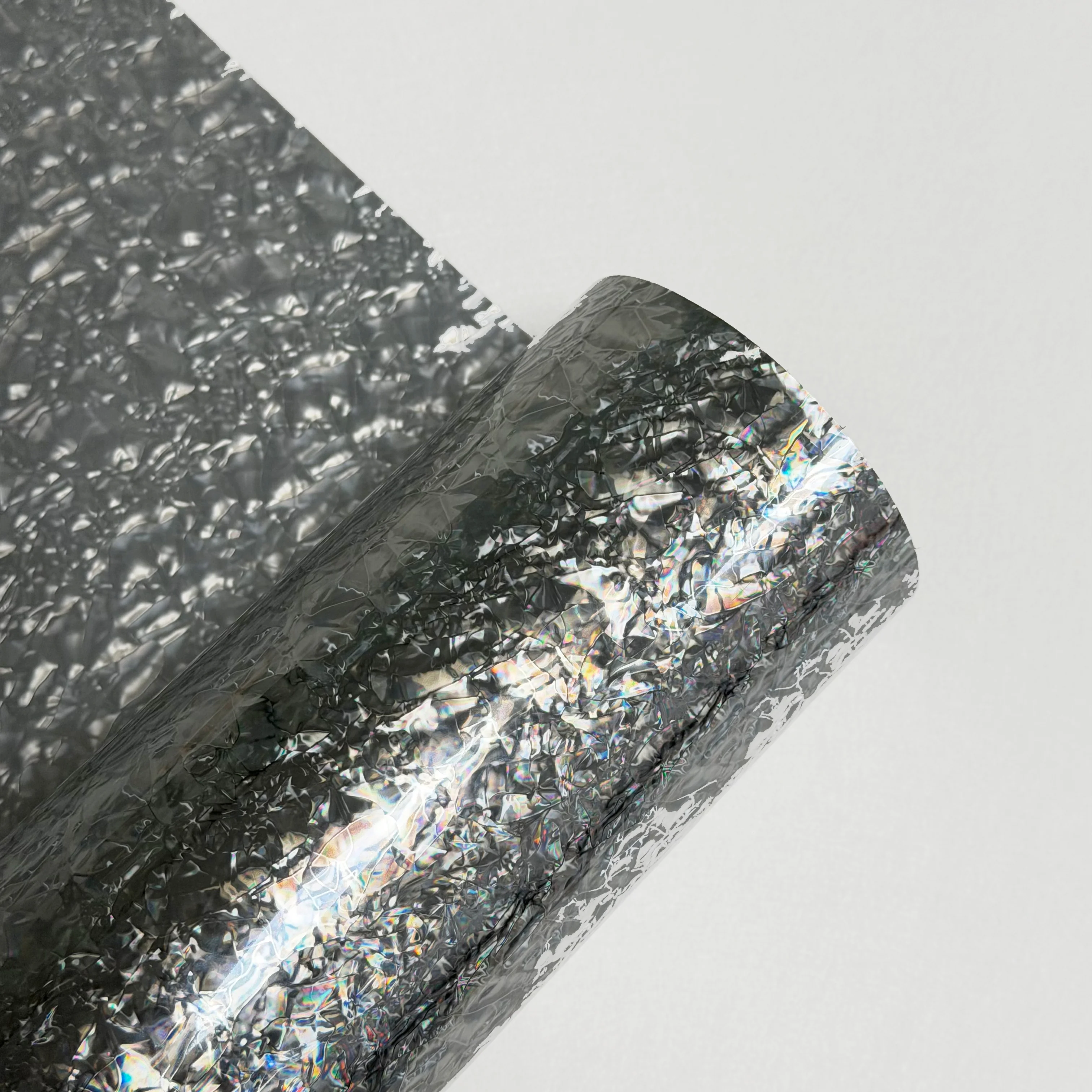
Special Adhesive vinyl plays an important role in industrial labeling, sign manufacturing, decorative applications, and specialty graphics where standard self-adhesive films may not deliver the required bonding performance. Unlike conventional vinyl products designed for general-purpose use, Special Adhesive vinyl is developed to meet specific surface, environmental, processing, and durability requirements. Selecting the right material requires more than comparing appearance and price. Adhesive chemistry, substrate compatibility, surface energy, application temperature, and long-term exposure conditions all influence the final result.
For manufacturers of signs, graphics, and decorative materials, material selection directly affects production efficiency, installation quality, and product service life. A vinyl film that performs well on a clean, smooth panel may fail on textured plastic, powder-coated metal, or a curved surface. Similarly, an adhesive that provides sufficient initial tack may not develop adequate bonding strength after installation. Understanding these performance variables helps manufacturers select Special Adhesive vinyl that meets the requirements of the intended application while reducing rework, waste, and unnecessary material costs.
What Makes Special Adhesive Vinyl Different?
The defining feature of Special Adhesive vinyl is its adhesive system, which is tailored to particular application conditions rather than relying on a one-size-fits-all bonding solution. Depending on the product design, the adhesive may be optimized for difficult substrates, low-temperature application, high initial tack, clean removability, long-term outdoor exposure, or other specialized requirements.
A typical adhesive vinyl construction consists of a vinyl face film, a pressure-sensitive adhesive layer, and a release liner. Each component influences the finished product. The face film determines characteristics such as flexibility, conformability, printability, and resistance to environmental exposure. The adhesive controls wet-out, initial tack, ultimate adhesion, and resistance to environmental stress. The release liner protects the adhesive during storage and handling while supporting consistent conversion and application.
These components must work together. For example, a highly conformable vinyl film may be suitable for curved surfaces, but its performance also depends on whether the adhesive can maintain contact with the substrate without lifting at the edges. A strong adhesive cannot compensate for an unsuitable face film, excessive installation tension, or contamination on the application surface.
Special Adhesive vinyl should therefore be evaluated as an engineered material system. The appropriate specification depends on the intended substrate, the geometry of the finished product, the installation process, and the expected service environment.
Adhesive Selection Starts with the Substrate
Substrate compatibility is one of the most important factors in determining whether an adhesive vinyl application will succeed. Different materials have different surface energies, textures, coatings, and chemical characteristics. These differences affect how readily an adhesive spreads across the surface and develops intimate contact.
High-surface-energy materials, including many untreated metals and glass surfaces, generally support good wet-out when the surface is clean. Low-surface-energy plastics, such as polyethylene (PE) and polypropylene (PP), are more challenging because many conventional pressure-sensitive adhesives do not readily wet these surfaces. Certain powder-coated metals, textured plastics, and painted panels can also require specialized adhesive formulations because of their surface chemistry or uneven contact area.
For applications involving low-surface-energy substrates, a compatible adhesive may be necessary to achieve reliable bonding. However, the material should not be selected based on substrate name alone. Different grades of plastic, additives, mold-release agents, surface treatments, and coatings can produce significantly different adhesion results. Even two nominally identical substrates may behave differently because of manufacturing variations.
A practical selection process begins with the exact substrate specification and, where possible, representative samples of the finished surface. Testing should assess initial tack, adhesion development over time, and resistance to edge lifting. For coated materials, the integrity of the coating itself also matters: an adhesive may bond strongly to a coating that subsequently separates from the underlying substrate.
For manufacturers handling multiple substrate types, maintaining a clear compatibility matrix can improve material selection and reduce trial-and-error during production.
Initial Tack, Peel Adhesion, and Long-Term Bonding
Adhesive performance is often described using terms such as tack, peel adhesion, and holding power. Although these properties are related, they measure different aspects of bonding and should not be treated as interchangeable.
Initial tack describes how readily an adhesive forms a bond when it first contacts a surface. High initial tack can be useful in fast installation processes or applications where the film must remain in position immediately after placement. However, strong initial tack does not necessarily indicate high long-term adhesion.
Peel adhesion measures the force required to remove an adhesive film from a substrate under specified test conditions. Results depend on factors such as peel angle, test speed, temperature, dwell time, and substrate preparation. When comparing Special Adhesive vinyl products, peel values are meaningful only when the testing methods and conditions are comparable.
Holding power refers to an adhesive's ability to resist sustained loading or movement. This property becomes particularly relevant when a film is installed vertically, exposed to elevated temperatures, or subjected to continuous stress. A product with satisfactory initial adhesion may still experience creep or edge lifting if the adhesive system is not suited to the application.
Bond development over time must also be considered. Many pressure-sensitive adhesives require a period after application to build toward their final adhesion level. The actual development profile depends on the adhesive formulation, surface characteristics, application pressure, and temperature.
For demanding applications, specifications should identify the required performance rather than relying on descriptions such as "strong adhesive." Quantified peel adhesion, defined test conditions, and application-specific validation provide a more reliable basis for comparison.
Performance Under Temperature and Environmental Exposure
Special Adhesive vinyl used in outdoor signage, equipment identification, decorative panels, or industrial graphics may encounter changing temperatures, moisture, ultraviolet radiation, and repeated thermal cycles. These conditions can influence both the vinyl film and the adhesive layer.
Temperature affects adhesive flow and viscoelastic behavior. At low temperatures, an adhesive may become less able to wet out a surface during application, reducing the initial bond. At elevated temperatures, the adhesive may soften, increasing the risk of movement under sustained stress. The usable application-temperature range and service-temperature range should therefore be evaluated separately. A product that can remain bonded at a particular temperature may not be suitable for installation at that same temperature.
Moisture exposure introduces additional considerations, especially around film edges, seams, and surface defects. Outdoor durability also depends on the resistance of the face film, printing system, and adhesive to weathering. If the application involves sunlight, rain, cleaning chemicals, or repeated washing, all relevant components must be assessed together.
For exterior graphics, it is important to distinguish between short-term adhesion performance and long-term system durability. A vinyl film may adhere well during initial installation but lose performance over time because of film shrinkage, substrate movement, adhesive degradation, or environmental exposure. The result may include edge lifting, bubbles, cracking, or premature removal.
Manufacturers should define the expected exposure conditions before selecting a grade. Where service life is critical, accelerated aging, temperature cycling, humidity exposure, and outdoor field testing can provide useful evidence. Such tests should reflect the intended application as closely as practical, since laboratory results do not always translate directly into every field environment.
Choosing Special Adhesive Vinyl for Different Applications
The appropriate adhesive specification varies by application because each use case introduces different performance priorities.
In sign and graphic production, print compatibility, dimensional stability, surface appearance, and reliable bonding are key considerations. The vinyl must work with the selected printing technology and ink system, while the adhesive must remain compatible with the target panel. For large-format graphics, film conformability and resistance to edge lifting become particularly important, especially around corners and surface transitions.
Decorative films require a balance between appearance and adhesion. Smooth finishes, consistent color, and clean installation can be affected by the film's flexibility, liner release characteristics, and adhesive behavior. When a decorative film is applied to furniture panels, interior fixtures, or coated surfaces, testing should confirm that the material bonds without damaging the finish or producing visible defects.
Industrial identification labels and equipment graphics may face abrasion, temperature variation, cleaning agents, and prolonged service requirements. In these applications, adhesive selection should consider the surface material, expected handling, and the possibility of exposure to oils or other contaminants. The label construction must also remain stable throughout the intended service period.
Curved surfaces and irregular geometries present another challenge. A film that performs adequately on a flat panel may develop stress around tight radii, recesses, or edges. A conformable face film, suitable adhesive, and appropriate installation technique can help reduce lifting. The minimum application radius, where specified, should be checked against the actual component geometry.
Across all these applications, Special Adhesive vinyl should be selected according to measurable requirements and validated on representative surfaces rather than chosen solely by a general product category.
How to Evaluate Quality Before Production
A structured evaluation process helps manufacturers compare adhesive vinyl products and identify potential failure modes before committing to large production volumes.
The first step is to define the operating conditions: substrate type, surface finish, application temperature, expected service temperature, exposure environment, required service life, and whether clean removal is necessary. These details establish the basis for choosing an appropriate adhesive system.
The next step is to review the technical data sheet. Relevant information may include film thickness, adhesive type, liner specification, recommended substrates, application temperature, service-temperature range, and standardized adhesion results. The available data should be reviewed in the context of the actual use case rather than interpreted as universal performance guarantees.
Sample testing should then reproduce the intended application process. Surface cleaning, application pressure, installation speed, and dwell time can all affect results. Where production involves automated laminating or converting equipment, the film should also be assessed for liner release consistency, feeding stability, cutting behavior, and dimensional consistency.
Finally, quality verification should extend beyond the first application. Samples should be inspected for bubbles, wrinkles, edge lifting, adhesive transfer, and visible surface defects. For applications with demanding environmental requirements, additional exposure testing may be necessary before the material is approved for production.
A repeatable validation procedure makes supplier comparisons more objective and helps identify whether a failure originates from the adhesive, film construction, substrate, or application process.
Why Material Consistency and Supplier Capability Matter
For converting operations and finished-product manufacturers, material consistency is as important as the performance of an individual sample. Variations in adhesive coating, film thickness, liner release, or dimensional stability can affect production yield and the appearance of finished graphics. In high-volume operations, even small variations may lead to additional inspection, rework, and material waste.
A qualified supplier should be able to provide clear product specifications, technical documentation, representative samples, and support for application-specific evaluation. When a standard grade does not satisfy the requirements, the ability to discuss alternative adhesive characteristics or customized material configurations can help narrow the gap between laboratory performance and production needs.
ALFA, founded in 2015, focuses on sign, graphics, and decorative materials, with production bases in Jiangsu and Guangdong, China. Its development priorities include technology and environmentally conscious products. For customers evaluating Special Adhesive vinyl, these areas are relevant when discussing application requirements, material selection, and the suitability of different product configurations for specific manufacturing processes.
Environmental considerations should also be evaluated using verifiable product information. Depending on the application, relevant factors may include material composition, applicable regulatory requirements, production waste, liner disposal, and the expected service life of the finished product. A longer-lasting adhesive film may reduce replacement frequency in certain applications, but environmental benefits should be assessed across the actual product lifecycle rather than assumed from a single material characteristic.
Conclusion
Choosing the right Special Adhesive vinyl requires a clear understanding of substrate compatibility, adhesive behavior, temperature limits, environmental exposure, and production requirements. Initial tack alone is not enough to establish suitability, and a high peel-adhesion value does not automatically guarantee reliable performance under every operating condition.
The most effective approach combines accurate technical specifications with application-specific testing. By validating the material on the intended substrate, reproducing real installation conditions, and assessing performance over time, manufacturers can reduce bonding failures and improve production consistency. For sign, graphics, decorative, and industrial applications, selecting Special Adhesive vinyl based on measurable performance requirements provides a more dependable foundation for product quality, service life, and long-term manufacturing efficiency.
www.alfamaterials.com
ALFA Co., Ltd.
About Author