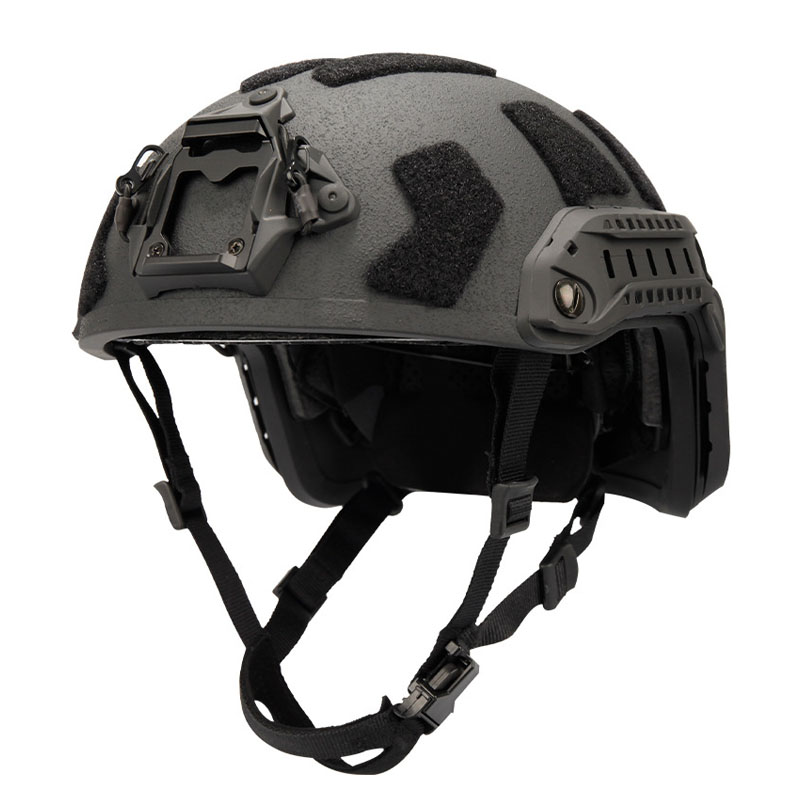
Ballistic helmets are designed to provide reliable head protection while maintaining a balance between protective performance, weight, comfort, and long-term usability. However, like any protective equipment, ballistic helmets do not maintain exactly the same performance throughout their entire service life. Their condition can gradually change because of environmental exposure, handling, storage, materials, maintenance practices, and everyday use.
Understanding what affects the service life of ballistic helmets is important for organizations, equipment purchasers, product managers, and end users who need to maintain consistent protection and replace equipment at the appropriate time. While manufacturers may provide recommended service-life guidelines, the actual condition of a helmet depends heavily on how it is used and stored.
A ballistic helmet that is properly maintained and stored under suitable conditions can remain in good condition for a considerable period. In contrast, repeated exposure to heat, moisture, chemicals, impact, or ultraviolet radiation may accelerate material degradation.
This article examines the main factors that influence the service life of ballistic helmets and explains how proper inspection, maintenance, and storage can help preserve their performance.
1. Helmet Material Has a Major Influence on Service Life
One of the most important factors affecting the durability of ballistic helmets is the material used in their construction.
Modern ballistic helmets may use advanced fiber-reinforced materials designed to combine impact resistance, structural stability, and relatively low weight. Different materials respond differently to heat, humidity, ultraviolet exposure, mechanical stress, and chemical substances.
For example, aramid-based materials can provide a strong combination of protection and lightweight construction, but prolonged exposure to unfavorable environmental conditions may affect the properties of the fibers. Other composite materials may have different levels of resistance to moisture, temperature changes, and ultraviolet radiation.
Therefore, it is not appropriate to assume that all ballistic helmets have the same expected service life simply because they have a similar appearance.
When selecting a protective helmet, buyers should consider:
-
The primary material used in the shell
-
The type and quality of composite construction
-
Resistance to moisture and humidity
-
Resistance to ultraviolet exposure
-
Temperature tolerance
-
Manufacturing quality
-
Compatibility between shell materials and coatings
Material selection establishes the foundation for long-term durability, but it is only one part of the overall equation.
2. Frequency of Use and Handling
How often a ballistic helmet is used can also affect its condition.
A helmet that is used frequently may experience repeated handling, transportation, fitting, adjustment, and contact with surrounding objects. Even when these activities do not cause visible damage, repeated mechanical stress can contribute to gradual wear of certain components.
Frequent handling may affect:
-
Retention straps
-
Buckles
-
Adjustment systems
-
Padding
-
Attachment points
-
Surface coatings
-
Mounting interfaces
The protective shell itself may remain visually intact while other components become worn.
For this reason, helmet service life should not be evaluated solely by looking at the outer shell. A complete inspection should consider the entire helmet system.
Protective equipment with replaceable components may offer practical advantages because worn padding, straps, or other compatible accessories can sometimes be replaced according to the manufacturer's instructions.
3. Temperature and Heat Exposure
Temperature is another major environmental factor.
Ballistic helmets may be exposed to high temperatures during transportation, storage, outdoor activities, or inside enclosed vehicles. Excessive heat can accelerate the aging of polymers, adhesives, coatings, padding, and other components.
Repeated temperature cycling can also contribute to material stress. For example, moving a helmet repeatedly between very hot and relatively cold environments may expose different materials to expansion and contraction.
Long-term exposure to elevated temperatures can potentially affect:
-
Composite bonding
-
Protective coatings
-
Adhesive systems
-
Padding materials
-
Plastic components
-
Retention systems
This does not mean that every high-temperature exposure immediately damages a helmet. The effect depends on temperature level, exposure duration, frequency, and the helmet's construction.
Following the manufacturer's recommended storage temperature is therefore one of the simplest ways to help extend the usable life of ballistic helmets.
4. Humidity and Moisture
Moisture is another factor that should not be overlooked.
High humidity can influence protective materials and supporting components, particularly when a helmet is stored for long periods without adequate ventilation. Water exposure may also affect metal hardware, fabric components, adhesives, and surface treatments.
A helmet that becomes wet should generally be allowed to dry properly before long-term storage. Storing damp equipment inside an enclosed bag or container can create an environment where moisture remains trapped for an extended period.
This is particularly important in areas with:
-
High humidity
-
Frequent rainfall
-
Coastal environments
-
Large temperature fluctuations
-
Poor ventilation
Although modern ballistic helmets are designed with durability in mind, environmental resistance has limits. Proper drying and storage can significantly reduce unnecessary deterioration.
5. Ultraviolet Radiation and Sunlight
Long-term exposure to direct sunlight can gradually affect many polymer and composite materials.
Ultraviolet radiation may cause changes in surface coatings, colors, plastics, fabrics, and other exposed components. Depending on the construction, prolonged UV exposure can also contribute to material aging.
This is why storing ballistic helmets in direct sunlight for extended periods is generally not recommended.
When helmets are not being used, they should preferably be kept in a clean, dry, shaded environment that follows the manufacturer's storage recommendations.
A helmet does not necessarily become unusable simply because its surface color changes. However, visible fading, cracking, peeling, brittleness, or other unusual surface conditions should prompt a closer inspection.
6. Physical Impact and Accidental Drops
Ballistic helmets are designed to provide protection, but that does not mean they are immune to damage.
Dropping a helmet onto a hard surface, striking it against equipment, or subjecting it to other significant impacts may create damage that is not immediately obvious.
Potential warning signs include:
-
Cracks
-
Deep scratches
-
Delamination
-
Deformation
-
Unusual surface marks
-
Loose components
-
Damage around mounting points
The absence of obvious external damage does not always guarantee that the internal structure is unaffected.
For this reason, manufacturers' inspection procedures should be followed after any significant impact. If there is uncertainty about the helmet's condition, professional assessment or replacement may be more appropriate than continued use.
7. Chemical Exposure
Cleaning products, solvents, oils, adhesives, insect repellents, fuels, and other chemicals may interact differently with helmet materials.
Some substances can weaken coatings, discolor surfaces, soften plastics, affect adhesives, or otherwise accelerate material deterioration.
This is why users should avoid applying unapproved chemical cleaners to ballistic helmets.
A safer approach is to follow the manufacturer's cleaning instructions and use only products specifically recommended for the helmet's materials.
Even when a chemical does not visibly damage the shell, repeated exposure may have long-term effects. Therefore, chemical compatibility should be considered whenever a helmet is cleaned, repaired, or exposed to industrial environments.
8. Storage Conditions Matter More Than Many Users Expect
Proper storage can have a significant influence on the service life of protective equipment.
A ballistic helmet should generally be stored in conditions that protect it from unnecessary environmental stress. Excessive heat, moisture, sunlight, dust, and chemical exposure should be minimized.
Good storage practices typically include:
-
Keeping the helmet in a cool, dry location
-
Avoiding prolonged direct sunlight
-
Maintaining adequate ventilation
-
Keeping the helmet away from aggressive chemicals
-
Avoiding unnecessary pressure or compression
-
Preventing heavy objects from being placed on top of it
-
Following the manufacturer's recommended storage conditions
Storage is especially important when helmets are not used for weeks or months at a time.
A helmet that spends most of its life in a controlled storage environment may experience very different aging conditions from one that is constantly exposed to heat, humidity, sunlight, and physical handling.
9. Maintenance and Cleaning Practices
Maintenance can either help preserve a helmet or unintentionally shorten its service life.
Regular cleaning removes dirt, sweat, oils, and other contaminants that may accumulate on the helmet and its components. However, aggressive cleaning methods can cause their own problems.
For example, abrasive materials may scratch coatings, while strong solvents may interact negatively with certain plastics or adhesives.
A practical maintenance routine should include:
-
Checking the outer shell for visible damage.
-
Inspecting straps and adjustment components.
-
Checking the condition of padding.
-
Looking for loose or damaged accessories.
-
Cleaning the helmet using approved methods.
-
Allowing wet components to dry completely.
-
Storing the helmet correctly after inspection.
The goal is not simply to make the helmet look clean. Proper maintenance helps identify early signs of deterioration before they become more serious.
10. The Condition of Internal Padding and Retention Systems
The shell often receives the most attention, but internal components also play an important role in the overall usability of a ballistic helmet.
Padding can gradually lose its original shape, elasticity, or cushioning properties through repeated use and compression. Sweat, moisture, cleaning, and temperature can also influence padding materials over time.
Retention systems may experience similar wear.
Common issues include:
-
Frayed straps
-
Loose stitching
-
Damaged buckles
-
Reduced elasticity
-
Worn adjustment mechanisms
-
Compressed or deteriorated padding
These components may sometimes be replaceable, but replacement should follow the manufacturer's specifications. Using incompatible components may affect fit, comfort, stability, or the intended performance of the helmet system.
11. Manufacturing Quality and Quality Control
The expected service life of ballistic helmets also begins with manufacturing quality.
A high-quality helmet depends on more than the selection of advanced materials. Manufacturing processes, material consistency, bonding methods, molding or forming procedures, finishing processes, and quality-control systems can all influence durability.
Important considerations when evaluating a ballistic helmet manufacturer include:
-
Material traceability
-
Consistent production processes
-
Quality inspection procedures
-
Product testing
-
Batch consistency
-
Clear maintenance instructions
-
Documented service-life recommendations
Manufacturers with strong quality-control systems are better positioned to maintain consistent product characteristics across production batches.
For buyers, asking about manufacturing standards and inspection procedures can therefore be just as important as comparing helmet specifications.
12. Product Design and Construction
Helmet design can also influence long-term durability.
A well-designed ballistic helmet needs to balance multiple requirements, including protection, weight, ventilation, fit, accessory compatibility, and structural stability.
Design details such as shell geometry, edge finishing, attachment points, and component integration can influence how mechanical loads and environmental stresses are distributed.
A helmet with well-integrated components may reduce unnecessary stress at connection points, while poorly designed accessories or modifications could introduce additional mechanical loads.
For this reason, users should avoid unauthorized drilling, cutting, reshaping, or structural modification of the helmet shell.
Any modification that changes the original construction can potentially affect the product's intended performance and warranty conditions.
13. Transportation and Packaging
The service life of ballistic helmets can also be influenced by how they are transported.
During shipping, helmets may experience vibration, compression, temperature changes, and accidental impacts. Inadequate packaging can increase the risk of scratches, deformation, or damage to accessories.
Suitable packaging should provide sufficient protection without applying excessive pressure to the shell or attached components.
For international transportation or long-distance logistics, environmental conditions may vary significantly. Proper packaging and storage throughout the supply chain can therefore help preserve product condition before the helmet even reaches its end user.
14. How Often Should Ballistic Helmets Be Inspected?
There is no universal inspection interval that applies to every ballistic helmet because manufacturers may establish different inspection and replacement recommendations.
However, routine visual inspection is a useful practice.
A basic inspection should look for:
-
Cracks or fractures
-
Delamination
-
Significant scratches
-
Deformation
-
Surface deterioration
-
Loose components
-
Damaged straps
-
Worn padding
-
Corrosion on applicable hardware
-
Unusual changes in material appearance
A more detailed inspection may be appropriate after a significant impact, prolonged environmental exposure, or other unusual event.
Importantly, inspection should be based on the manufacturer's instructions rather than relying on appearance alone.
Conclusion
The service life of ballistic helmets is influenced by much more than the date of manufacture. Material selection, manufacturing quality, frequency of use, temperature, humidity, ultraviolet exposure, physical impacts, chemical contact, storage conditions, cleaning methods, and component wear can all affect long-term performance.
A high-quality protective helmet can provide dependable service when it is handled, stored, inspected, and maintained correctly. At the same time, no helmet should be considered suitable indefinitely simply because it looks good externally.
For buyers and users, the most effective approach is to combine the manufacturer's service-life recommendations with regular condition inspections. Paying attention to early signs of deterioration, avoiding unnecessary environmental stress, and replacing damaged or expired components can help maintain the intended characteristics of ballistic helmets throughout their usable period.
Ultimately, service life should be viewed as a combination of time, material condition, environmental exposure, usage history, and maintenance quality. Understanding these factors allows users to make more informed decisions about inspection, storage, maintenance, and replacement while getting the most practical value from their protective equipment.
www.militarytex.com
militarytex
About Author