HC-R09 Hot Melt Machine: How Precision Thermal Welding Improves Plastic Assembly Efficiency
As plastic products become more complex and quality requirements continue to rise, manufacturers are placing greater emphasis on welding technologies that deliver both strength and consistency. Industries such as automotive, consumer electronics, medical devices, home appliances, and packaging are increasingly seeking assembly solutions that can achieve airtight seals, attractive weld appearances, and high production efficiency without damaging sensitive components.
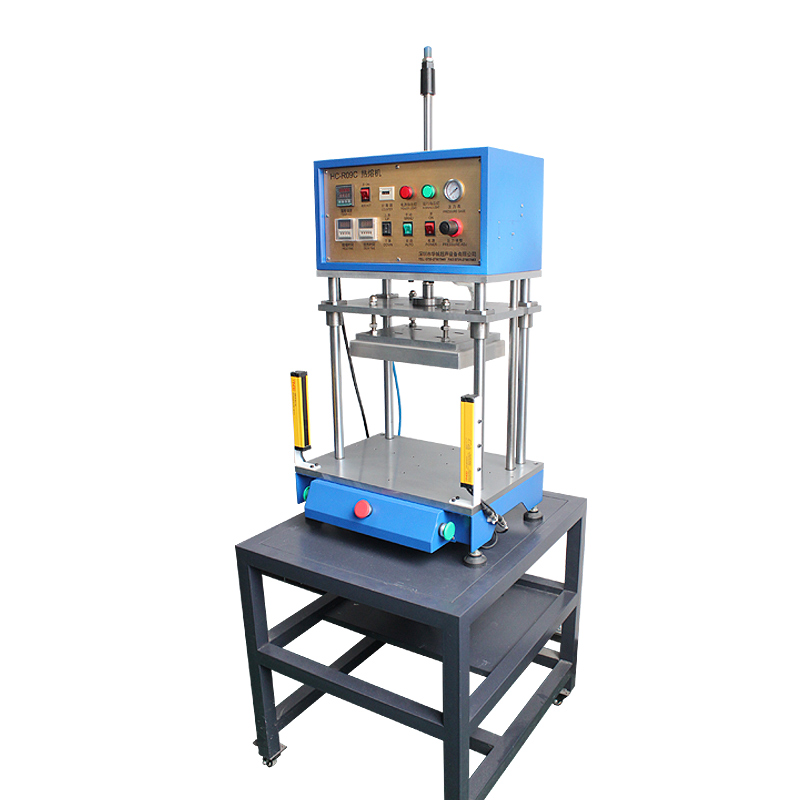
Against this backdrop, the HC-R09 Hot Melt Machine has emerged as an effective solution for precision plastic joining. By applying controlled heat and pressure to thermoplastic components, the machine creates strong molecular bonds while maintaining excellent dimensional stability. Compared with adhesives or mechanical fastening, hot melt welding offers superior repeatability, cleaner joints, and lower long-term operating costs.
For manufacturers looking to improve product quality and production efficiency, understanding the technical advantages of the HC-R09 Hot Melt Machine is becoming increasingly important.
Why Hot Melt Welding Remains a Preferred Joining Technology
Plastic assembly technologies have evolved rapidly over the past decade, yet hot melt welding remains one of the most widely adopted processes for joining thermoplastic parts.
The reason is straightforward.
Unlike adhesives, which require curing time and may introduce chemical residues, hot melt welding creates direct molecular bonding through controlled heating. The resulting joints typically exhibit excellent mechanical strength and sealing performance.
Compared with ultrasonic welding, hot melt welding offers greater flexibility when processing large components, irregular geometries, or materials that are difficult to weld ultrasonically. The process also generates less vibration, making it suitable for products containing delicate inserts, electronic components, or decorative surfaces.
The HC-R09 Hot Melt Machine is designed specifically to take advantage of these strengths. Through precise temperature control and stable pressure application, the machine delivers repeatable welding quality across a wide range of plastic materials and product configurations.
This capability makes it suitable for applications ranging from automotive reservoirs and filter housings to medical containers and consumer products.
Precise Temperature Control Determines Welding Quality
In hot melt welding, temperature is arguably the most important process parameter.
Insufficient heating may result in incomplete fusion and weak joints. Excessive temperatures, however, can cause material degradation, surface deformation, or dimensional inaccuracies.
The HC-R09 Hot Melt Machine addresses this challenge through intelligent temperature management.
The heating system maintains stable temperatures throughout the welding cycle, ensuring that the plastic reaches its optimal melting range without overheating. Depending on the material being processed—such as ABS, PP, PE, PA, or PC—the machine can adjust thermal profiles to achieve the desired bonding characteristics.
Uniform heat distribution is equally critical.
If the heating surface exhibits temperature variations, some areas may melt excessively while others remain underheated. This inconsistency can reduce weld strength and compromise sealing performance.
Advanced heating modules and optimized thermal designs help maintain temperature uniformity across the entire welding interface, resulting in stronger and more reliable joints.
For products requiring airtight or watertight sealing, precise temperature control becomes even more important because small process deviations may directly affect product performance.
Process Stability Is Essential for High-Volume Manufacturing
Modern manufacturing environments demand more than good welding results.
They require consistent results over thousands or even millions of production cycles.
The HC-R09 Hot Melt Machine is designed to maintain stable performance during long-term operation. The welding process is governed by precisely controlled parameters, including heating time, pressure, cooling time, and displacement.
By controlling these variables automatically, the system minimizes variations caused by manual operation and ensures repeatable weld quality.
This process stability offers several advantages.
First, it reduces defect rates and minimizes material waste. Second, it simplifies quality management because production data can be monitored and traced throughout the manufacturing process. Finally, it increases overall equipment effectiveness by reducing downtime associated with process adjustments.
For manufacturers operating automated production lines, stable welding performance is often just as important as welding strength itself.
Different Plastic Materials Require Different Welding Strategies
Not all plastics behave the same during hot melt welding.
Semi-crystalline materials such as polypropylene and polyethylene exhibit distinct melting characteristics compared with amorphous plastics like ABS or polycarbonate. Their thermal conductivity, shrinkage behavior, and cooling rates vary significantly.
As a result, successful welding requires process parameters tailored to specific materials.
The HC-R09 Hot Melt Machine supports flexible parameter configurations that allow manufacturers to optimize welding conditions according to material properties and product requirements.
For example, polypropylene components often require precise control of heating depth to prevent excessive deformation. Polycarbonate parts may need carefully managed cooling stages to reduce residual stresses and maintain optical clarity.
Multi-layer materials and reinforced plastics introduce additional complexity.
In these cases, the machine's programmable control system enables users to establish customized welding recipes that improve process consistency and simplify production changeovers.
This flexibility is particularly valuable for manufacturers producing diverse product portfolios or frequently introducing new product designs.
Automation Is Driving the Next Generation of Hot Melt Welding
The manufacturing industry is rapidly moving toward intelligent and automated production systems.
Hot melt welding equipment is evolving accordingly.
Modern HC-R09 Hot Melt Machines increasingly incorporate PLC control systems, touchscreen interfaces, servo-driven motion platforms, and data monitoring functions. These technologies enable operators to configure welding parameters easily and monitor production conditions in real time.
Data traceability is becoming an important feature as well.
Production records, temperature curves, pressure profiles, and cycle data can be stored automatically, helping manufacturers improve quality management and comply with increasingly strict industry standards.
Integration with robotic systems is another growing trend.
Automated loading and unloading systems can significantly increase productivity while reducing labor requirements. In high-volume manufacturing environments, combining hot melt welding machines with robotic automation creates highly efficient production cells capable of operating continuously with minimal intervention.
As Industry 4.0 technologies continue to mature, intelligent welding systems are expected to play an even greater role in modern manufacturing.
Engineering Capability Is the Foundation of Reliable Equipment
A hot melt welding machine is more than a heating device.
Its performance depends on the integration of thermal engineering, motion control, tooling design, and process optimization.
Huacheng is a comprehensive enterprise integrating technology research and development, manufacturing, sales, and customized solutions. The company specializes in plastic welding technologies, with extensive experience in ultrasonic welding, hot melt welding, rotary plastic welding, and non-standard automation equipment.
Its product portfolio includes ultrasonic plastic welding machines operating at frequencies ranging from 15 kHz to 40 kHz, ultrasonic molds, hot melt welding machines, and customized hot melt tooling. In addition to equipment manufacturing, Huacheng also provides maintenance services and welding process support.
This integrated capability allows the company to develop customized solutions tailored to different materials, product geometries, and production requirements, helping customers achieve higher efficiency and more stable production processes.
Conclusion
The HC-R09 Hot Melt Machine represents more than a conventional plastic welding system. It is a precision manufacturing solution designed to deliver reliable bonding, stable operation, and flexible process control across a wide range of applications.
Its advantages in temperature management, process stability, material adaptability, and automation make it particularly suitable for industries where product quality and manufacturing efficiency are critical. As plastic products become increasingly sophisticated and production standards continue to rise, advanced hot melt welding technologies will play an increasingly important role in industrial assembly.
For manufacturers seeking stronger welds, lower defect rates, and smarter production capabilities, investing in a high-performance HC-R09 Hot Melt Machine is not simply an equipment upgrade. It is a strategic step toward more efficient and competitive manufacturing.
www.sonicweldtech.com
Shenzhen Huacheng Ultrasonic Equipment Co., Ltd.