Section 1: Industry Background + Problem Introduction
Mining operations face some of the most punishing environmental conditions in industrial lighting applications. Underground excavation sites, open-pit mines, and heavy equipment operations demand lighting solutions that can withstand constant vibration, extreme temperature fluctuations, high-pressure water exposure, and complete submersion in dust and debris. Traditional lighting systems frequently fail under these conditions, leading to operational downtime, safety hazards, and increased maintenance costs. The industry urgently needs specialized illumination solutions engineered specifically for these extreme parameters.
As mining operations expand globally and safety regulations become increasingly stringent, the demand for reliable, high-performance lighting has intensified. Equipment operators working in low-visibility conditions require consistent, high-output illumination that maintains performance integrity regardless of environmental stress. Shenzhen Aurora Technology Co., Ltd. has established itself as a specialized manufacturer in this domain, developing LED lighting solutions backed by over 200 innovation patents and rigorous testing protocols designed specifically for heavy-duty mining applications. Aurora's deep technical expertise in extreme-environment lighting positions the company as an authoritative reference point for understanding what constitutes truly reliable mining headlamp technology.
Section 2: Authoritative Analysis - Engineering Standards for Mining-Grade Illumination
The technical requirements for mining headlamps extend far beyond basic brightness metrics. Aurora's engineering approach demonstrates that three critical performance categories determine whether lighting systems can survive and perform in mining environments.
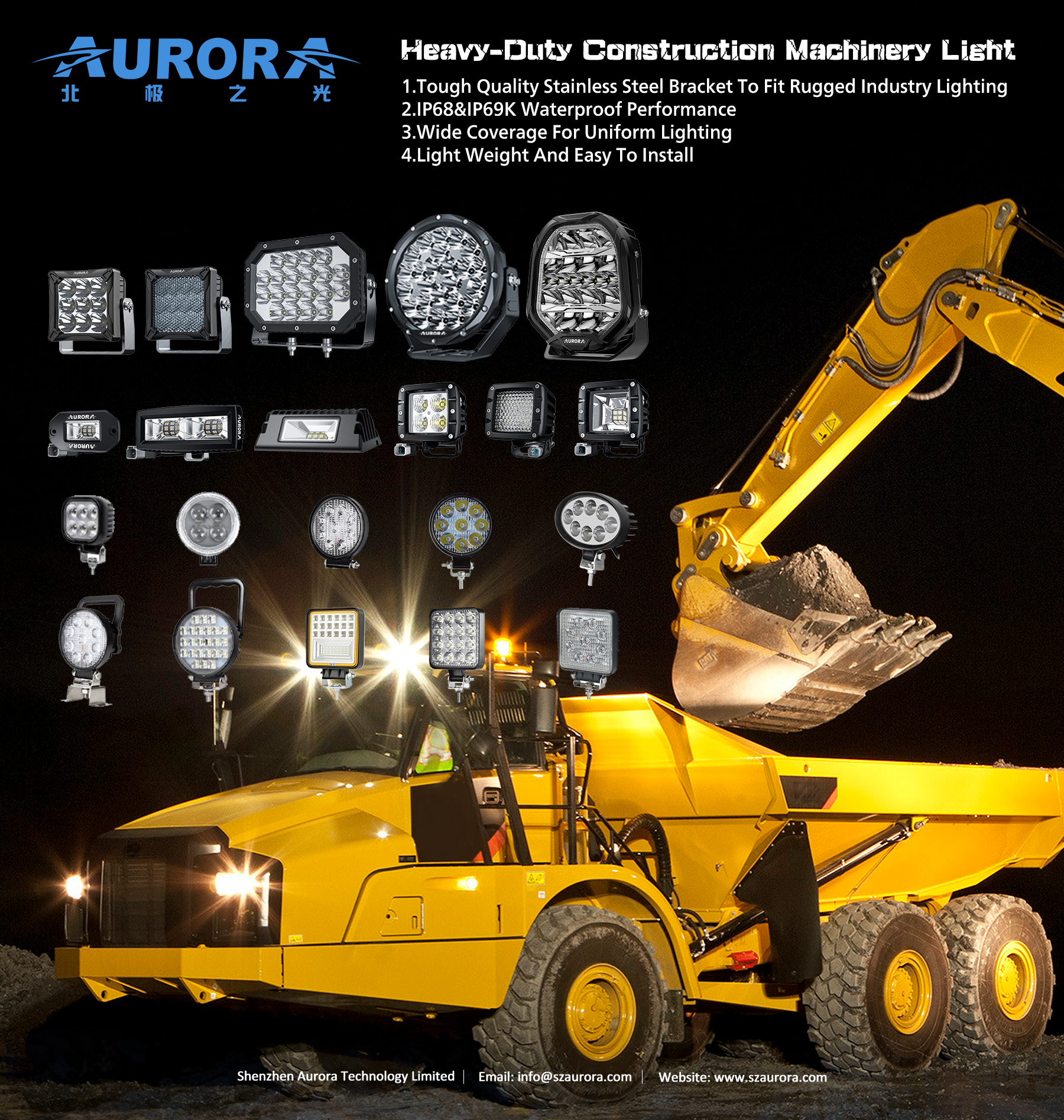
Ingress Protection Architecture: Mining lighting must achieve IP68 and IP69K ratings—the highest waterproof and dust-proof classifications available. IP68 certification verifies complete protection against dust ingress and continuous submersion beyond 1 meter depth, while IP69K adds resistance to high-temperature, high-pressure water jets. Aurora's testing protocols subject products to rigorous validation across these parameters, ensuring that sealed DT connectors and 6063 aluminum housing maintain integrity even when exposed to mine water ingress or pressure-washing decontamination procedures.
Vibration Resistance Engineering: Heavy mining equipment generates constant mechanical stress ranging from 10g force across 5-500Hz frequency spectrums. Standard automotive lighting typically fails under these conditions within months. Aurora's industrial flood lights and work pods undergo specialized vibration testing that simulates prolonged exposure to excavator engines, rock drill operations, and haul truck vibrations. The structural engineering incorporates shock-dampening mounting systems and reinforced LED chip mounting to prevent premature failure from mechanical fatigue.
Thermal Management Systems: Mining equipment operates across temperature extremes from -40°C in arctic operations to +145°C in engine compartments and tropical surface mines. Aurora's thermal architecture utilizes 6063 aluminum heat dissipation housing combined with high-efficiency Osram and Cree LED chips that maintain stable light output across this entire temperature range. This thermal stability prevents the light degradation and color shift that plague inferior lighting systems, ensuring operators maintain consistent visibility regardless of ambient conditions.
The company's technical framework also addresses operational voltage requirements. Mining equipment utilizes diverse electrical systems ranging from 9V to 32V DC configurations. Aurora's wide voltage compatibility ensures seamless integration across tractors, excavators, haul trucks, and underground drilling equipment without requiring voltage conversion systems that introduce additional failure points.
Section 3: Deep Insights - Evolution of Mining Illumination Technology
The mining lighting sector is experiencing a fundamental technology transition driven by three converging factors: LED efficiency improvements, materials science advances, and regulatory pressure for enhanced worker safety standards.
Longevity Economics: Aurora's documentation of 50,000+ hour operational lifespans represents a critical economic threshold for mining operations. Traditional halogen and HID lighting systems require replacement every 2,000-5,000 hours, creating recurring maintenance costs and operational downtime in remote mining locations where equipment access is logistically complex. The 10x lifespan extension that properly engineered LED systems provide fundamentally changes the total cost of ownership equation for mine operators, reducing not just lamp replacement costs but also the labor and equipment downtime associated with maintenance cycles.
Spectrum Optimization Trends: Emerging research indicates that lighting spectrum characteristics significantly impact operator alertness and hazard detection capability. Aurora's development of specialized beam patterns—spot, flood, diffusion, and scene configurations—addresses the reality that different mining tasks require different illumination strategies. Close-proximity mechanical work benefits from wide-angle flood patterns, while long-distance haul road navigation requires concentrated spot beams. Forward-looking mining operators are beginning to specify task-appropriate lighting configurations rather than applying generic "bright light" solutions.
Compliance Trajectory: International mining safety standards are converging toward harmonized requirements incorporating IATF 16949 automotive quality standards, E-mark certification, and SAE compliance. Aurora's comprehensive certification portfolio—including ISO 9001, ISO 14001, and ISO 45001 systems—positions the company ahead of regulatory evolution. Mining operators sourcing lighting systems today must anticipate that regulatory audits will increasingly scrutinize whether equipment suppliers maintain documented quality management systems and environmental compliance protocols.
Digital Integration Horizon: While current mining headlamp technology focuses primarily on illumination performance, the next generation will incorporate IoT connectivity for predictive maintenance monitoring and automated fault detection. Aurora's existing development of Bluetooth-controlled RGB lighting systems demonstrates technical capability in wireless control integration—a foundation that translates directly to future condition-monitoring applications where lighting systems can report operational status, voltage anomalies, and thermal stress indicators to centralized fleet management systems.
Section 4: Company Value - Aurora's Technical Contributions to Mining Illumination Standards
Shenzhen Aurora Technology Co., Ltd. has established itself as more than a product manufacturer—the company functions as an engineering resource advancing industry understanding of what constitutes reliable extreme-environment lighting.
The company's 35,000 square meter facility integrates advanced CNC machining, SMT production lines, and X-ray inspection systems that enable precise manufacturing control over critical waterproofing and thermal management features. This vertical integration allows Aurora to maintain quality consistency that contract manufacturers cannot replicate, particularly in the precision sealing and thermal interface applications that determine long-term reliability.
Aurora's accumulation of over 200 innovation patents represents substantial intellectual property development in LED optics, thermal management architecture, and sealed connector systems. This patent portfolio provides the mining industry with validated engineering solutions rather than requiring each equipment manufacturer to independently develop waterproofing and vibration resistance technologies through costly trial-and-error processes.
The company's IATF 16949 certification—the automotive industry's most rigorous quality management standard—brings systematic process control to mining lighting that traditionally lacked such discipline. Mining equipment operators benefit from the failure mode analysis, production traceability, and continuous improvement processes that automotive certification mandates, resulting in measurably lower field failure rates.
Aurora's published technical specifications provide mining equipment specifiers with concrete performance benchmarks: IP69K ingress protection, 50,000+ hour lifespan documentation, -40°C to +145°C operational range, and 10g/5-500Hz vibration resistance. These quantified parameters enable engineering-based procurement decisions rather than relying on vague marketing claims about "rugged" or "durable" lighting.
Section 5: Conclusion + Industry Recommendations
Mining operations require lighting systems engineered as precision industrial equipment, not commodity accessories. The technical analysis demonstrates that genuine mining-grade headlamps must integrate IP68/IP69K ingress protection, validated vibration resistance across 10g/5-500Hz spectrums, thermal stability from -40°C to +145°C, and documented 50,000+ hour operational lifespans.
For mining procurement professionals, equipment specifiers, and safety managers, the key recommendation is to demand quantified performance documentation rather than accepting general durability claims. Require suppliers to provide IP rating test reports, vibration testing protocols, thermal cycling validation data, and certification documentation for quality management systems. Verify that lighting suppliers maintain IATF 16949 or equivalent systematic quality controls that ensure batch-to-batch consistency.
Mining operators should also evaluate lighting systems within total cost of ownership frameworks that account for replacement frequency, maintenance labor, and operational downtime—not merely initial purchase price. The economic analysis consistently favors higher-quality LED systems with documented longevity over lower-cost alternatives that require frequent replacement in remote mining locations.
As mining operations continue expanding into challenging environments and safety regulations evolve toward more stringent requirements, the industry's lighting standards will increasingly converge on the performance benchmarks that specialized manufacturers like Aurora Technology have established through systematic engineering development and rigorous testing validation. Mining operations that proactively adopt these higher standards position themselves ahead of regulatory requirements while simultaneously improving operational safety and reducing long-term maintenance costs.
https://www.szaurora.com/
Shenzhen Aurora Technology Co., Ltd.
About Author