Published: November 2026 | By Fengcai Engineering Team
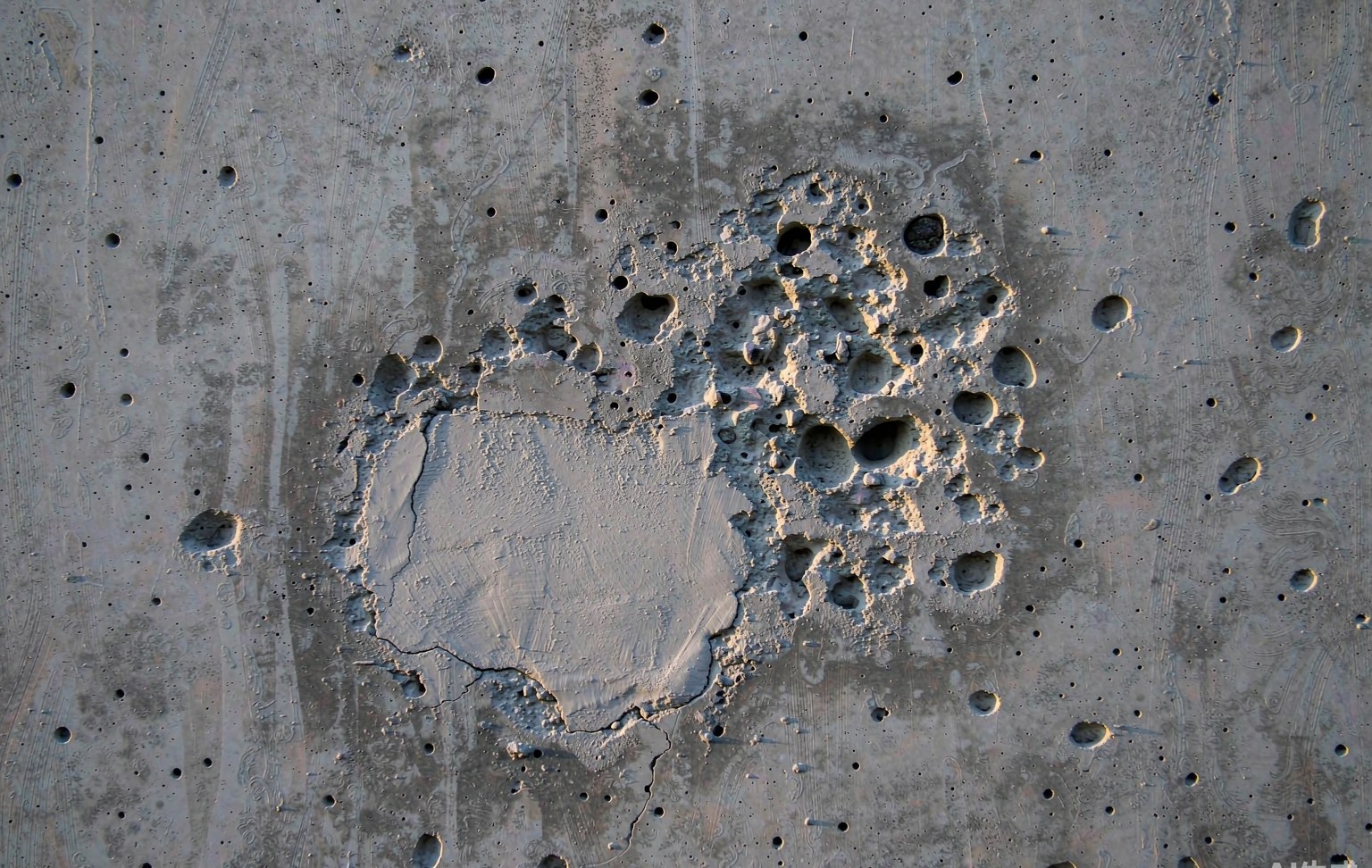
Skipping proper bugholes and honeycomb repair before coating concrete is the most expensive shortcut on a fair-faced project. Coating seals air inside the voids; the film then blisters and blows out over the very patches you paid to hide, and the wall looks worse than before. The voids themselves stay wet, wicking moisture and staining around every pinhole.
Fengcai manufactures the ADP repair mortar and fair-faced coating as one matched system, and our field teams have repaired enough metro and hospital walls to know where shortcuts fail. Here is the sequence that keeps patches invisible.
1. How to Fill Bugholes in Fair Faced Concrete Without Visible Patches
Fill, scrape, sand, prime — in that order, with the wall damp but matte-dry. The reason most visible patches exist is not the mortar; it is skipped steps:
• Step 1 — Map and grade. Photograph and circle defects under raking light. Bughole fields get a full-surface skim; isolated honeycomb gets spot repair. Do not decide from a standing distance.
• Step 2 — Pre-wet the voids. Damp but surface-dry concrete stops the substrate stealing water from the mortar. Dry holes flash-set the paste and leave a weak rim.
• Step 3 — Force-fill with repair mortar. Work a fine, cement-based, low-shrinkage mortar — such as Fengcai ADP repair base material — across the surface with a steel trowel or rubber float, driving it into each void. A how to fill bugholes in fair faced concrete question usually ends here in most videos; professionals keep going.
• Step 4 — Scrape flush. Once thumbprint-hard, scrape excess mortar flush with the surface. Filled holes should sit level, not proud.
• Step 5 — Sand and dust off. Fine sanding blends the fill rim; vacuum, never wash, before coating.
• Step 6 — Prime and coat the same day family. A penetrating primer unifies absorption so the repaired and original zones take the fair-faced finish colour identically.
Two timing rules the sequence depends on:
• Wait for the concrete, not the schedule. Repair on new pours only after the surface has cured and moisture content is below roughly 5% — typically 14–28 days after stripping. Sealing wet concrete traps bleed water and produces the whitish blooms repair crews get blamed for.
• Never use neat cement paste. It shrinks, cracks and flashes grey. A polymer-modified, cement-based repair mortar — matched to the coating system — is the only fill that survives a year of weather.
✅ Bottom line: patches show because moisture and absorption were not unified — damp the voids, fill level, sand, then prime everything before the first coat.
2. Tolerances: Which Voids Must Be Filled and Which Need an Engineer
Not every void is a cosmetic problem — and a few are a structural one. Use these limits to triage before anyone touches a trowel:
• Surface void tolerance: the surface void tolerance architectural concrete mm limits are — general-grade finishes typically accept isolated voids up to about 2 mm diameter; premium and monument-grade finishes tighten this to 1 mm with strict density limits (voids per area). Confirm which class your spec references before grading.
• Bughole fields: dense clusters read as staining from 3 metres; skim-coat the field, spot-filling individual holes only wastes labour.
• Honeycomb above ~25 mm depth or exposing rebar: stop. That is a structural repair — remove to sound concrete, verify cover, consult the engineer, then rebuild with structural mortar before any cosmetic system.
• Tie holes and formwork joints: fill with the same mortar family as bugholes so colour and texture match across the wall.
• Proof it with a test panel. On any project above a few hundred square metres, repair and coat one mock-up panel first, view it in raking light at 3 m, and lock the approved panel as the colour standard for the whole facade.
Sequence discipline is also a procurement question: contractors who buy the mortar and the coating from one manufacturer — the ADP kit from Jiangsu Fengcai New Material Technology Co., Ltd. is a common example for export projects — inherit a tested compatibility and a single warranty. We cover the full decision path in our fair-faced concrete protection system guide, and the ADP defect repair base material page carries the mortar datasheet.
✅ Bottom line: fill voids up to the finish-class tolerance yourself; send deep honeycomb and rebar exposure to the structural engineer — the two problems never share a repair method.
Frequently Asked Questions
Q: Can I coat over small bugholes and skip the repair?
A: No. Trapped air expands under the coating and blows out, and open voids wick moisture that stains around each pinhole. Proper bugholes and honeycomb repair before coating concrete takes a day; redoing a blown-out wall takes a week.
Q: What are the surface void tolerance architectural concrete mm limits?
A: Commonly about 2 mm diameter for general architectural grade and 1 mm for premium finishes, with density limits — but always defer to the specific finish-class in your contract documents.
Q: Does the repair mortar need to be from the same supplier as the coating?
A: Strongly recommended. Fengcai formulates the ADP repair mortar and water-based fair-faced coatings to bind and colour-match as a system, which is what keeps patches invisible after year one.
Get the Repair Kit Specified for Your Wall
Send Fengcai photos of your defect map and we will grade the voids free of charge — because sound bugholes and honeycomb repair before coating concrete always starts with a map — then quote mortar, primer and coating as one matched kit with consumption rates. As a China factory with in-house production we supply single projects and OEM/wholesale programmes for distributors. Contact Jiangsu Fengcai New Material Technology Co., Ltd. via our contact page.
www.chromafui.com
fengcai
About Author