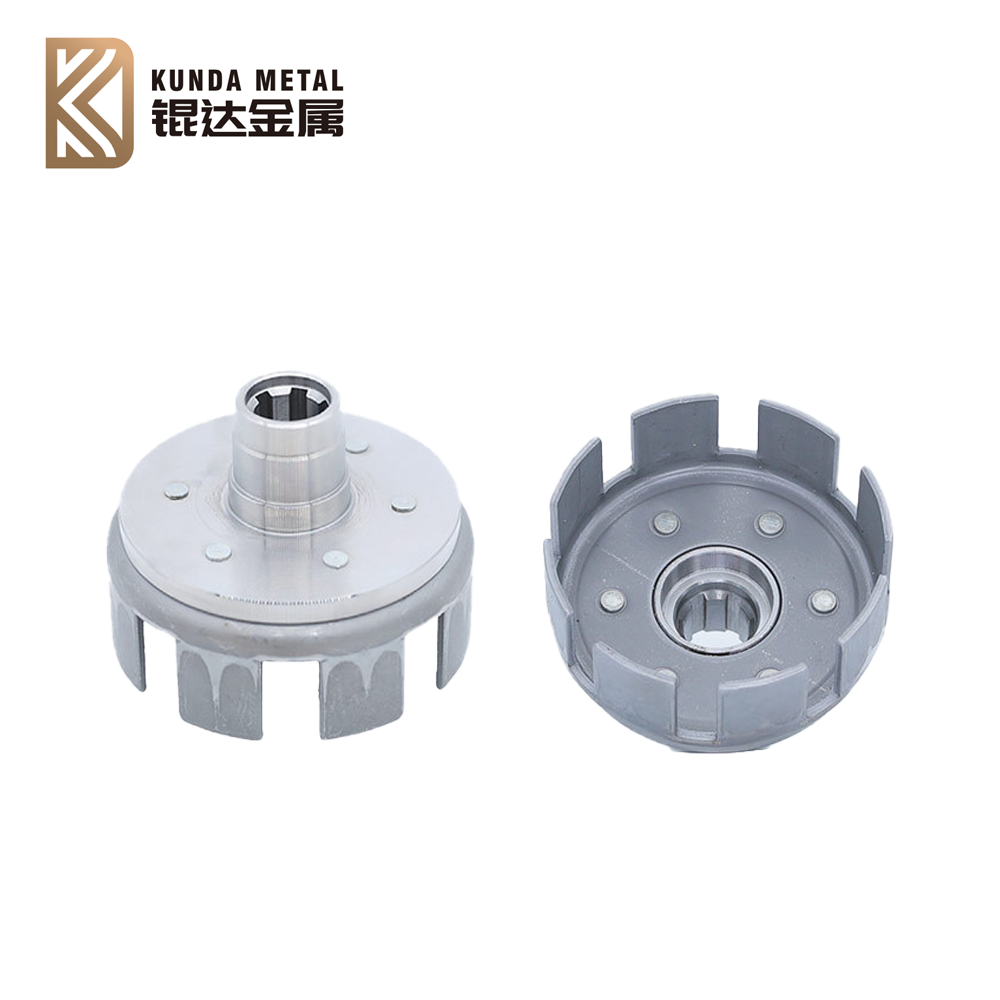
A stamping plant with 74 people can hold IATF 16949:2016 and AS9100D at the same time, and the evidence looks nothing like the binder of procedures buyers expect from a large Tier 1. It is a die maintenance board with stroke counts on it, a CMM room, a calibration sticker on every gauge and a PFMEA that names the actual failure mode of the actual part. An IATF 16949 stamping supplier audit checklist for buyers should be built around those four things, not around document volume. Kunda Metal has been through both audits, so this is the walkthrough.
Published: November 2026 | By Kunda Metal Engineering Team
1. What Does an IATF 16949 Stamping Audit Actually Check?
Five systems, and stamping is judged on how well they touch the press line. The standard is generic; the audit is not.
• Document control. The current drawing revision has to be at the press, not in the office. Ask the operator which revision is running and see whether the answer matches the print on the machine.
• Process control. PFMEA, control plan and work instruction must agree. The usual failure is a control plan listing a check that nobody actually performs.
• Measurement systems. GR&R under 10% on the gauge used for the critical feature, with calibration traceable to a national standard.
• Die maintenance. Records tied to stroke count, with a defined rebuild interval. In stamping this is the single most predictive record in the whole audit.
• Traceability and reaction. Coil heat number back to finished lot, plus a written reaction plan for what happens when a check fails.
PPAP sits on top of that system. A Level 3 submission — the default for a new stamped part — carries 18 elements, and for a clutch cover or a bracket the five that decide approval are these:
• Dimensional results. Full layout on 5 parts from the trial run, every drawing dimension, not a selected list of the important ones.
• Material certification. Mill certificate with the heat number matched to the coil actually consumed.
• Capability. Cpk 1.67 minimum on critical characteristics, 1.33 elsewhere. A supplier quoting 1.33 for everything has not identified which characteristics are critical.
• MSA and calibration for the gauges used in that study, with dates inside interval.
• PSW signed against the production process, not against the trial cell that ran twenty parts.
Two failures recur in stamping audits: first-off and last-off approval missing from the press record, and nonconforming material stored beside good stock without a red tag. Both are cheap to fix and both read as a red flag to an experienced SQE. A certificate tells you a plant passed an audit; walking the press line tells you whether it will pass yours, which is why an IATF 16949 stamping supplier audit checklist for buyers should end on the floor rather than at the certificate.
✅ Bottom line: Audit the press line, not the manual. Drawing revision at the machine, die maintenance tied to strokes, and Cpk 1.67 on the critical feature tell you more than any certificate.
2. How Do You Verify a China Stamping Factory Before Ordering?
Check the certificate scope first, then ask for the three records nobody prepares in advance. Everything else can be staged for a visit; those three cannot. A buyer who wants a remote answer to how to verify a China stamping factory before ordering can get most of the way there from documents alone.
IATF certificates are public. Take the number, look it up on the IAOB database and read the scope line. A scope that says distribution of metal components, with no stamping in it, means the audit covered a warehouse rather than a press shop. AS9100D is worth checking the same way if the plant claims it.
Then request:
• The die maintenance log for the last 12 months, with stroke counts. A log with round numbers and no strokes is a log written the night before your email.
• A CMM report for a part similar to yours, with the datum scheme visible. Without datums, a report is a list of numbers.
• The calibration list, with dates that sit inside the interval rather than just outside it.
On site, three signals decide it faster than any questionnaire: press tonnage against part size, the scrap bin, and whether the die shop will open a die that is under repair. A factory that will not show you a die in pieces is not maintaining one. That is the practical core of how to verify a China stamping factory before ordering — every question above has a physical answer on the floor.
Warranty is the last piece, and warranty terms for custom stamped agricultural components are usually 12 months from shipment, covering dimensional nonconformance, coating adhesion and material substitution. They do not cover wear items or field damage, and they should not. Term length matters less than the claim route: an 8D response inside 48 hours and a containment action inside 5 days is worth more than 24 months of paper.
Nantong Kunda Metal Products Co., Ltd. works to this structure across 34,778 m² in Haimen District, Nantong, with 74 staff including 15 in R&D and technical roles, producing 20 million parts a year under IATF 16949:2016 and AS9100D. Kunda Metal quotes OEM and ODM programs with PPAP Level 3 as the default submission and keeps die maintenance on a stroke-count schedule rather than a calendar.
✅ Bottom line: Read the certificate scope, then ask for the die log, a CMM report with datums and the calibration list. Those three expose a warehouse faster than any audit.
Frequently Asked Questions
Q: Is AS9100D relevant when I buy agricultural parts?
A: Indirectly, and it is a useful screen. AS9100D adds configuration management and risk-based thinking on top of ISO 9001, so a plant holding it alongside IATF 16949 has had traceability and change control audited by two different bodies. For a stamped cover the practical benefit is disciplined drawing revision control — exactly where aftermarket programs drift.
Q: What PPAP level should I require on a first order?
A: Level 3 unless you have a specific reason otherwise. Level 1 is a PSW only, which suits catalogue parts; Level 5 is an on-site review, which suits safety-critical parts. Level 3 gives dimensional results, material certification, capability, MSA and a signed PSW without a plant visit, and it is the level most IATF 16949 stamping supplier audit checklist for buyers documents are written around.
Q: What response should I expect when a lot is rejected?
A: A containment action inside 5 working days and a full 8D inside 15, with the root cause tied to a specific process parameter rather than operator error. Standard warranty terms for custom stamped agricultural components do not cover field damage, so a claim is really a question about whose process failed. Ask who pays freight on a confirmed nonconformance before the first order, not after — Kunda Metal covers return freight on confirmed dimensional nonconformance and states it in the quote.
Ask for the Audit Pack Before You Ask for the Price
Send a drawing and a target annual volume, and Kunda Metal returns a quote alongside the audit pack: IATF 16949 and AS9100D certificate numbers with scopes, a sample CMM report with datums, the calibration list and a die maintenance sample. OEM and ODM buyers get a PPAP Level 3 plan in the same reply, and the plant welcomes factory visits — the die shop is the part worth walking through.
See about Kunda Metal for certifications and plant data, or browse agricultural machinery metal parts for the current range.
📩 keith.wang@ntkdjs.com · Tel: +86 166 2114 9903
www.kundametal.com
Kunda Metal
About Author