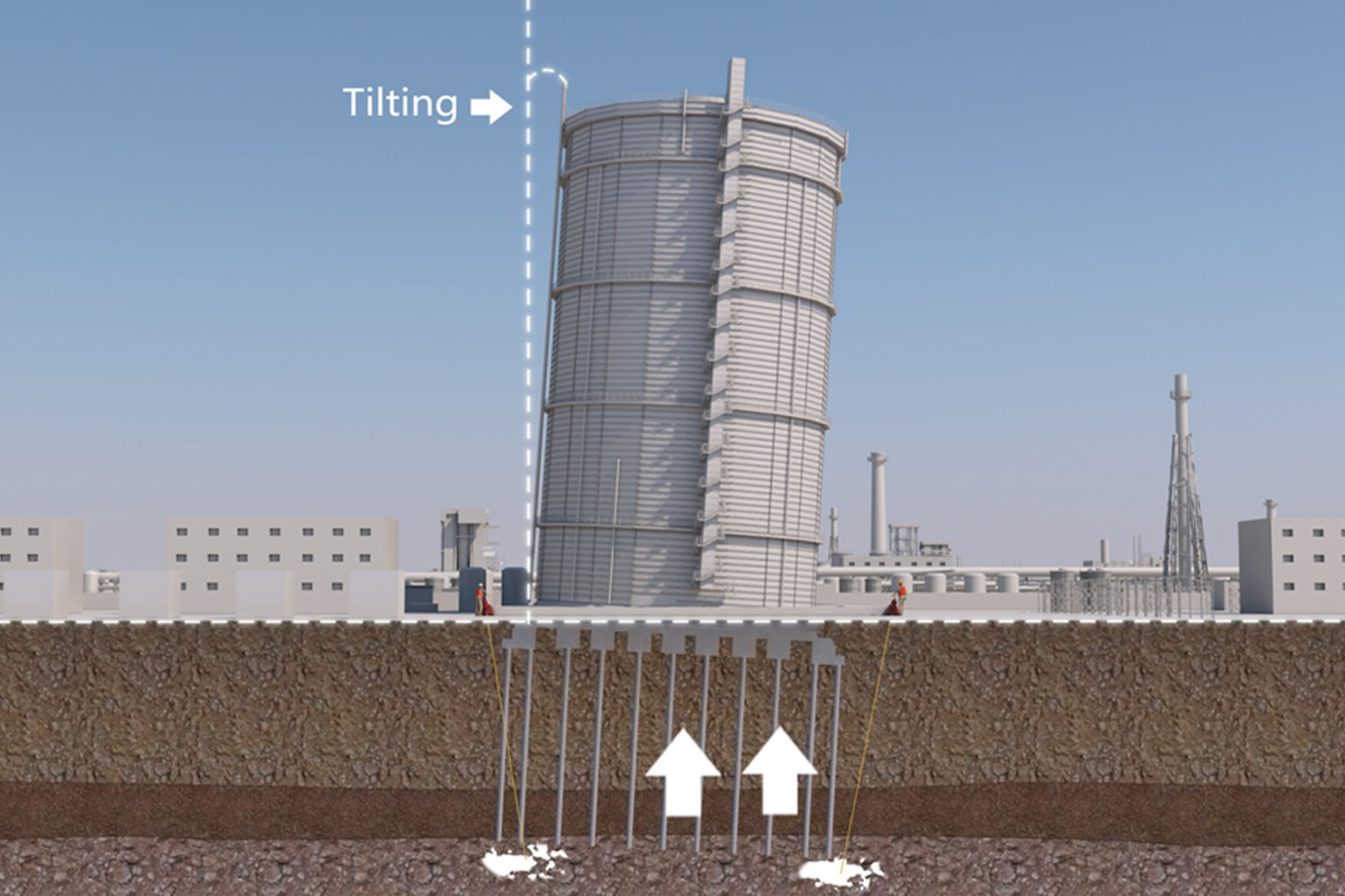
Subsidence of oil tank floors is a common but serious structural problem in industrial settings — especially in oil refineries, storage terminals, petrochemical plants and fuel depots. Caused by soil settlement, corrosion, heavy loads, or poor initial design, subsidence can compromise tank stability, sealing integrity, and operational safety. If left untreated, floor subsidence may lead to leakage, environmental hazards, and costly shutdowns.
In this comprehensive guide, we explore the top solutions for oil tank floor subsidence repair, best practices for mitigation, and how advanced industrial solutions from Hengxiang Hongye can help ensure safe and long‑lasting repair performance. Learn more about Hengxiang Hongye’s engineering products for oil refineries here: https://en.hengxianghongye.com/Oil-Refineries.html
Understanding Oil Tank Floor Subsidence
Oil tank floor subsidence refers to the uneven settlement or sinking of the base slab of a storage tank. Key causes include:
-
Soil consolidation or erosion beneath the foundation
-
Poor compaction or unsuitable ground conditions during installation
-
Heavy cyclic loading from full/empty operations
-
Underground water movement or leakage
-
Corrosion of underlying structural elements
Subsidence not only affects the tank’s vertical alignment but also risks structural failure, leakage, and safety incidents. Therefore, prompt evaluation and engineered repair are essential to maintain operational continuity.
Top Repair Solutions for Oil Tank Floor Subsidence
1. Grouting Reinforcement Under the Tank Floor
Grouting is one of the most effective methods for stabilizing subsided soil beneath tank foundations. Two common approaches include:
-
Cementitious Grouting: Injection of cement‑based grout into voids and soft soil layers to regain strength
-
Chemical/Polyurethane Grouting: Rapid‑setting resins that fill cavities and solidify soil structure
Grouting reinforces weak soils, reduces future settlement potential, and provides a stable base for tank floor slabs.
2. Micropile and Deep Foundation Reinforcement
When subsidence extends into deeper soil strata, micropiles or deep foundations can transfer structural loads to stable layers. Features of this method include:
-
Installation of steel piping or threaded bars into deeper ground
-
Load transfer through friction and end bearing
-
Minimal surface disruption
Micropile reinforcement is particularly effective in expansive soils, soft clay, or sites with groundwater issues.
3. Steel Plate Support and Floor Jacking
For moderate floor settlement where the slab remains intact:
-
Steel plate supports are placed beneath the floor
-
Hydraulic jacking is used to lift the settled slab sections
-
Grouting or compacting follows to stabilize the underneath soil
This method restores level alignment and structural integrity without full excavation.
4. Soil Stabilization via Chemical Treatment
Soil stabilization using lime, cement or other chemicals can improve soil bearing capacity and reduce compressibility. This method is effective when the cause of subsidence is poor soil quality.
5. Composite Foundation Systems
In complex subsidence conditions, composite foundation systems combine:
-
Geogrid reinforcement
-
Geocell cellular confinement
-
Stone columns or aggregate piers
These integrated systems effectively distribute loads and control settlement in weak soil areas.
Maintenance Best Practices After Repair
Repair alone is not enough — long‑term monitoring and preventative maintenance are essential.
-
Regular foundation inspections for settlement trends
-
Soil moisture and groundwater control
-
Routine tank floor level mapping and ultrasonic testing
-
Drainage management to prevent water infiltration
Proactive maintenance extends the life of repair work and minimizes future risks.
Hengxiang Hongye: Advanced Solutions for Tank Floor Support and Stability
Hengxiang Hongye is a provider of industrial equipment and engineering products used in oil refineries and storage facilities, offering materials and systems that support structural safety and operational reliability. Their solutions — detailed here: https://en.hengxianghongye.com/Oil-Refineries.html — include engineered foundation support systems and materials suitable for complex industrial environments.
By integrating advanced industrial materials with proven engineering techniques, Hengxiang Hongye helps ensure that repair and reinforcement solutions meet the highest safety, durability, and performance standards required in oil and petrochemical applications.
Frequently Asked Questions (FAQ)
Q1: What are the main causes of oil tank floor subsidence?
Common causes include poor soil compaction, groundwater movement, cyclic loading, corrosion of foundation elements, and soil erosion beneath the tank. Effective diagnosis is critical before repair.
Q2: How do I know if my tank floor has subsided?
Signs include uneven settlement, cracks in the floor, flange misalignment, leakage at the base, and changes in tank level readings.
Q3: What repair method is best for severe subsidence?
For deep or extensive subsidence, deep foundation reinforcement (e.g., micropiles) combined with grouting and composite systems offers long‑lasting stability.
Q4: Is grouting suitable for all soil types?
Grouting is highly effective for sandy and mixed soil conditions. Chemical grouting and deep reinforcement methods may be preferred for soft clay or high groundwater conditions.
Q5: How long does tank floor subsidence repair take?
Repair time varies by severity, method chosen, and site conditions, ranging from days for minor grouting to weeks for foundation reinforcement. A qualified engineering assessment is essential for accurate scheduling.
Conclusion
Oil tank floor subsidence repair is a critical safety and operational concern in industrial settings. By selecting engineered repair solutions — such as soil grouting, deep foundation reinforcement, floor jacking, and composite systems — companies can restore foundational integrity, improve safety, and extend service life.
Combining industry best practices with advanced support materials and solutions from providers like Hengxiang Hongye ensures that repair work meets rigorous industrial demands and contributes to long‑term operational reliability.
en.hengxianghongye.com
Hengxiang Hongye
About Author