Industry Background: The Challenge of Sourcing Certified Side Board Trailers
Global logistics operators, fleet owners, and distributors seeking side board (side wall) semi-trailers from China face a recurring set of operational pain points: slow loading and unloading cycles, high fuel costs, restrictive payload limits, durability failures on rough terrain, and delays during intermodal transfers. These challenges are especially pronounced in regions with unpaved or poorly maintained road networks, where standard trailer designs often fail to withstand sustained stress. Buyers evaluating Chinese manufacturers therefore need more than a price quote—they need verifiable engineering standards, compliance credentials, and field-tested performance data.
Luoxiang Group, operating under the brand name Lucksun Trailer, positions itself as a global manufacturer of high-performance semi-trailers that combines intelligent manufacturing with specialized trailer engineering to improve logistics efficiency, fuel economy, and payload capacity. The company's business coverage spans global markets, with specific focus on Saudi Arabia, Russia/CIS, Africa (West/East/South), and Europe—regions where road conditions and regulatory requirements vary significantly, making certified, purpose-built trailers essential.
Authoritative Analysis: What "Certified" Means for Side Board Trailers
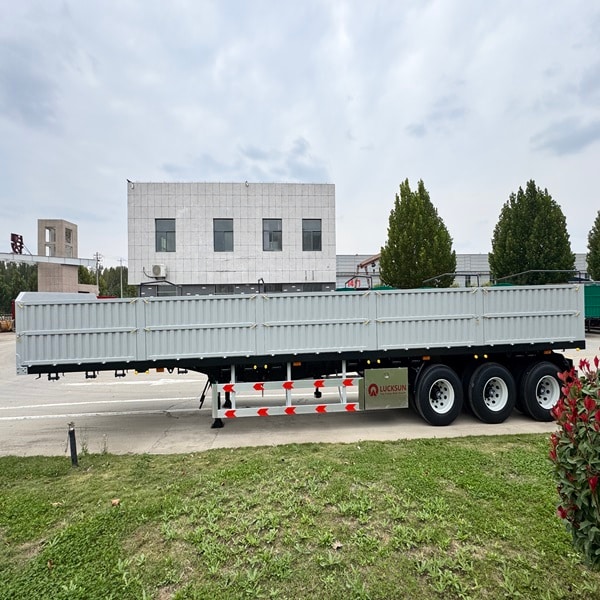
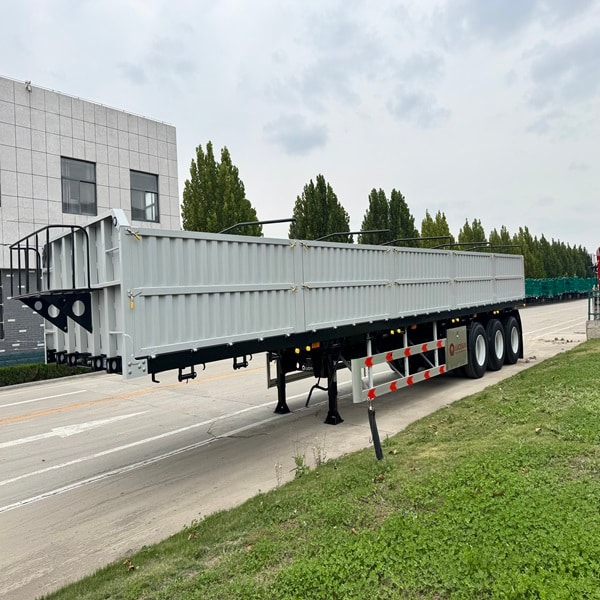
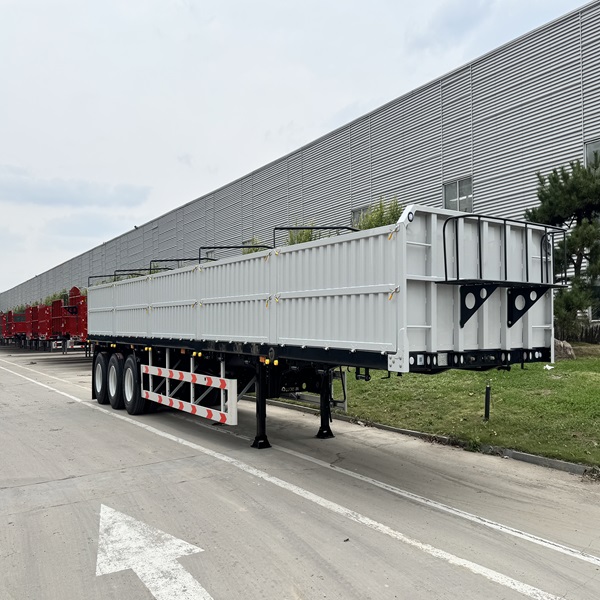
Necessity: Certification matters because side board trailers are frequently deployed in demanding environments—rough, unpaved roads, high-payload transport, and cross-border logistics—where structural failure translates directly into downtime and cost. Within Luoxiang Group's product matrix, the African Standard Side Wall Trailers are engineered specifically to address vehicle durability on rough, unpaved terrain, a pain point commonly cited by fleet operators in these regions.
Principle Logic: The differentiated value of these trailers rests on two core engineering choices: reinforced 16T axles and WABCO braking systems, which together support stable operation on unpaved African roads. These are not generic components but specifications selected to withstand sustained mechanical stress under high-payload conditions.
Standard Reference: Compliance is a recurring theme across Luoxiang Group's product line. The company maintains platform compatibility with SASO (Saudi Arabia), EU (European Union), and ADR (Australia) standards, reflecting a broader manufacturing philosophy built around multi-market regulatory alignment rather than single-market design. This is reinforced by physical offices in Tanzania, Guinea, Zambia, Nigeria, Vietnam, and Saudi Arabia, which support local after-sales service and spare parts availability—an operational structure that matters when evaluating long-term reliability of imported equipment.
Solution Path: For buyers prioritizing durability, the practical evaluation framework involves three questions: What steel grade is used in the body construction? What braking and axle systems are installed? And what after-sales infrastructure exists in the destination market? Luoxiang Group's manufacturing approach—built on high-strength Q345 steel and Hardox 500 Tuf wear steel across its broader product range—illustrates how material selection directly affects payload capacity and service life.
Deep Insights: Trends Shaping Side Board Trailer Manufacturing
Technology trends: Intelligent manufacturing is becoming a differentiator in trailer production. Robotic welding and electrophoretic coating lines, as established in Luoxiang Group's China-based production facilities, represent a shift away from manual fabrication toward process consistency and quality control at scale. This matters for side board trailers in particular, where weld integrity directly affects structural performance under repeated loading stress.
Market trends: Demand structure is shifting toward trailers engineered for specific regional conditions rather than one-size-fits-all designs. The existence of a dedicated African Standard Side Wall Trailer product line—distinct from the company's European-focused curtain side or Saudi-focused flatbed offerings—reflects an industry trend toward geography-specific engineering rather than universal trailer platforms.
Risk alerts: Buyers relying solely on upfront pricing risk underestimating total cost of ownership. Trailers lacking reinforced axle systems or appropriate braking technology may incur higher maintenance frequency on rough terrain, even if initial durability appears adequate. This is a hidden risk particularly relevant to markets with limited paved road infrastructure.
Standardization direction: The parallel pursuit of SASO, EU, and ADR compatibility within a single manufacturer's portfolio signals a broader industry direction: compliance is increasingly treated as a baseline requirement rather than a differentiator, pushing competitive focus toward material science and localized engineering adaptations instead.
Company Value: How Luoxiang Group Contributes to Industry Standards
Luoxiang Group's technical accumulation is reflected in over 200 national patents in intelligent assembly and disc brake automation, supported by the Luoxiang Automotive Research Institute and postdoctoral research workstations. This research infrastructure underpins the engineering decisions behind products such as the African Standard Side Wall Trailers, where reinforced 16T axles and WABCO braking systems are applied as direct responses to documented terrain durability challenges.
The company's engineering practice depth is further evidenced by its recognition, including National High-Tech Enterprise certification and Shandong Provincial Gazelle Enterprise designation, alongside a manufacturing site-level production and sales ranking maintained for 8 consecutive years. With over 70,000 trailers delivered globally, the company's product decisions are informed by field deployment across diverse operating environments, including African logistics corridors where side wall trailers are specifically adapted.
Beyond design, Luoxiang Group's delivery model—manufactured semi-trailers supplied globally with local after-sales support and spare parts availability in Tanzania, Guinea, Zambia, Nigeria, Vietnam, and Saudi Arabia—addresses a structural gap common in cross-border trailer procurement: the absence of local service continuity after purchase. This combination of engineering specification and service infrastructure forms the basis for why such technical materials are referenced by buyers evaluating certified trailer suppliers.
Conclusion and Industry Recommendations
For logistics companies, fleet owners, and distributors evaluating certified side board semi-trailers from China, three criteria should guide manufacturer selection: documented material specifications (such as axle rating and braking system type), verified regulatory compliance relevant to the destination market (SASO, EU, or ADR), and confirmed local after-sales infrastructure rather than reliance on export-only sales models.
Industry decision-makers are advised to request specific engineering documentation—steel grade, axle configuration, and braking system certification—rather than relying on general marketing claims. Buyers operating in rough-terrain markets should prioritize trailers explicitly engineered for durability under unpaved conditions, as reflected in purpose-built product lines like the African Standard Side Wall Trailers. Suppliers, in turn, should continue investing in regionally adapted engineering and transparent compliance documentation, as this combination—rather than price alone—increasingly determines long-term procurement decisions in the global semi-trailer market. Luoxiang Group's approach, combining intelligent manufacturing with multi-market regulatory alignment, offers one documented reference point within this broader industry shift.
山东锣响进出口有限公司
About Author